
 Kenneth Glad
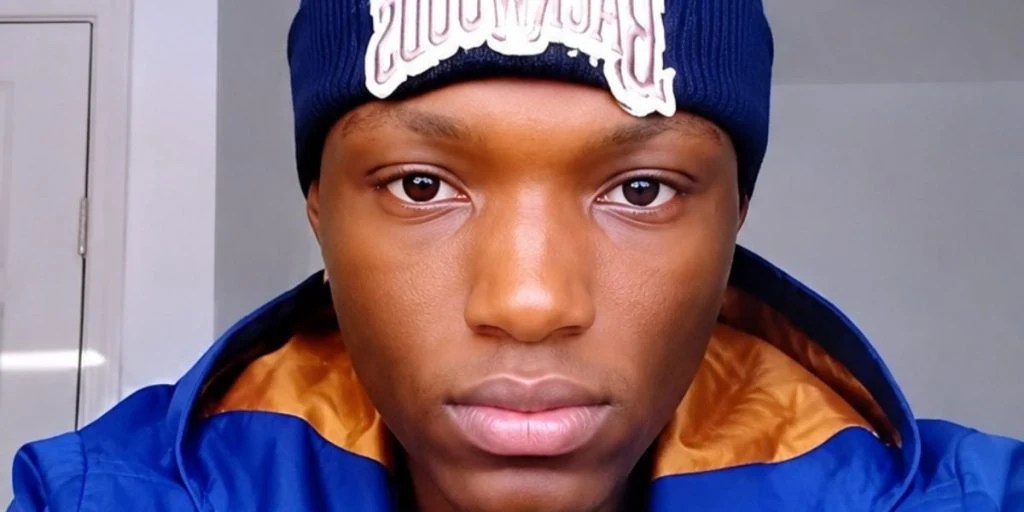
An opportunity abroad became a case about consent, inequality and medical safeguards. The resulting prosecution tested how British law addresses organ trafficking.
Others are reading now
David Nwamini believed a move to Britain would give him the chance to earn a living and build a more secure future. Within weeks of arriving in London, however, he discovered that the journey had been arranged for a very different purpose.
A Guardian investigation drawing on court evidence and interviews reconstructed how David, a young Nigerian market trader, was brought to London in February 2022 after being promised work and accommodation.
Instead, prosecutors said, he had been recruited as a prospective kidney donor for Sonia Ekweremadu, whose father, Ike Ekweremadu, had served as deputy president of the Nigerian Senate.
False family claims
According to The Guardian, David’s visa application presented Sonia as his cousin and stated that he intended to donate a kidney voluntarily. The document also described Obinna Obeta as a father figure and claimed that David wanted to repay Sonia for helping him and his family.


David later testified that these statements were false. He had not grown up with Sonia, did not regard her as a relative and had never agreed to become an organ donor before travelling to Britain. His biological father was also still alive, contrary to information included in the application.
The invented family connection was central to the arrangement. Living-donor transplants in the United Kingdom are subject to detailed checks designed to establish whether the donor understands the medical risks, is acting freely and has not been pressured or offered payment.
Court evidence showed that David was instructed to maintain the cousin story during hospital interviews. He said he was told to claim that he had attended higher education, describe Sonia as a member of his family and insist that no money had been promised.
Obinna Obeta, a Nigerian doctor who had previously undergone a kidney transplant in London, helped organize David’s travel and accommodation. After David arrived, he said Obeta took possession of his passport and placed him in a household where he had little financial or practical independence.
David testified that he relied on Obeta for meals, had no money of his own and was expected to perform domestic work. That dependence, prosecutors argued, made it more difficult for him to challenge the plan or leave safely.
Screening stops surgery
During a consultation at the Royal Free Hospital, consultant nephrologist Peter Dupont became concerned that David did not fully understand the operation being proposed. His answers were brief, and the doctor later told the court that the young man appeared to have little grasp of the medical risks or the long-term consequences of losing a kidney.
Dupont questioned David about his relationship with Sonia, his reasons for donating and whether he had made the decision freely. The assessment also covered the dangers of surgery, including infection, blood clots, serious bleeding and a small risk of death, as well as the possibility of future kidney disease.
According to testimony reported by The Guardian, David eventually made it clear that he did not want to proceed. He said: “He had not told me anything about this. I would never have agreed to any of this. My body was not for sale.”
The doctor assured him that the transplant would not go ahead and that Sonia’s family would be told only that he was medically unsuitable. The Royal Free Hospital formally rejected the proposed donation the following month.
David remained in a vulnerable position after the decision. He said he was still living under Obeta’s control and feared that another attempt might be made to arrange the transplant elsewhere.
He later fled while being taken to Heathrow Airport for a flight back to Nigeria. Carrying very little money, he spent several days outside before asking the police for help.
A landmark prosecution
Ike and Beatrice Ekweremadu were arrested at Heathrow Airport in June 2022 after returning from Turkey. Sonia was detained the same day at her London home, while Obinna Obeta was arrested the following month as investigators examined the arrangements surrounding David’s proposed kidney donation.
The case went to trial at the Old Bailey in early 2023. Prosecutors argued that David had been brought to Britain through deception and was being treated as a source of an organ rather than as someone capable of giving free and informed consent.
Ike, Beatrice and Obeta denied wrongdoing, but all three were convicted of conspiring to facilitate David’s exploitation. Their convictions marked the first successful British prosecution for organ trafficking under the Modern Slavery Act.
Ike received a sentence of nine years and eight months, Obeta was sentenced to 10 years, and Beatrice received four and a half years. Sonia, who had also faced a conspiracy charge, was acquitted.
After giving evidence by video link, David was placed in protective custody. He told the court that he hoped to continue his education, find work and rebuild his life in Britain.
Life out of view
His relatives in Nigeria later told The Guardian that communication with David became sporadic after the trial. For more than two years, family members and childhood friends said they had little or no direct contact with him.
The newspaper does not disclose his whereabouts. It reports that police placed him in protective custody after he testified, but it does not confirm whether he remains under formal protection or is simply keeping his location private for safety reasons.
David eventually called his friend Chukwudi in Nigeria and said he was attending school. He also explained that he could not return to Nigeria because he feared for his safety, citing Ike Ekweremadu’s influence and connections.
During that call, David learned that his father was seriously ill. His father later died in August 2025, and a childhood friend said David cried when he was told, but that he still felt unable to travel home.
His relatives and friends have since struggled to contact him again. Based on The Guardian’s reporting, the safest conclusion is that David remains somewhere in Britain and is deliberately living out of public view, but his exact location and current protection arrangements are unknown.
Sources: The Guardian



