
 Anna Hartz
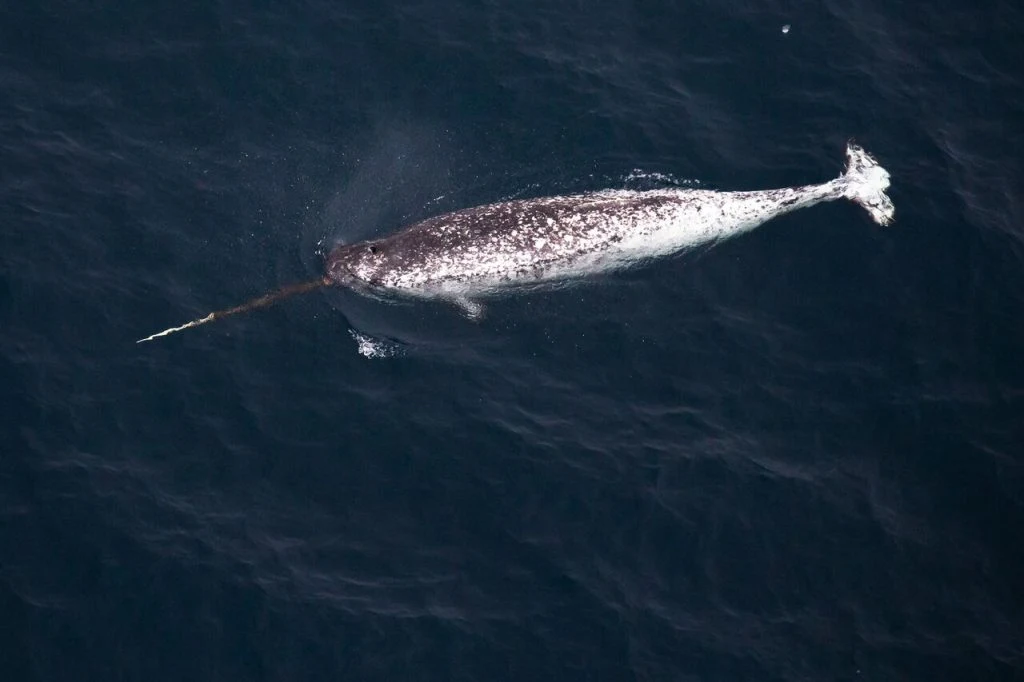
For years, scientists have wondered why the tusk grows straight while also twisting around itself.


The narwhal is one of the most unusual animals in the Arctic. Its long, twisted tusk can grow several metres and weigh up to 14 kilos. It looks almost like something from a fairy tale.
A Danish-led international research team may now have found the answer to the twisted tusk.
The twist
Henrik Birkedal, professor at Aarhus University, led a new study published in Nature. His team spent six years studying the structure of a narwhal tusk from Greenland.
Narwhal tusks are very different from the teeth of other mammals. Elephant and walrus tusks curve as they grow. The narwhal tusk points almost straight ahead.


The researchers first studied the tusk in two dimensions. They found that its collagen fibres were arranged in parallel lines, similar to a bundle of dried spaghetti, writes Videnskab. But this did not explain the twisting shape.
The team then used advanced 3D X-ray equipment to examine the tusk in much greater detail.
They discovered that the tusk contains two different layers of dental tissue. The molecules in the two layers form spiral patterns that run in opposite directions.
The researchers believe this unusual structure explains the tusk’s shape. The opposing spiral patterns may allow it to grow straight while also twisting around its own axis.
Why is the tusk so long?
Jonas Teilmann, a professor and whale researcher at Aarhus University who was not involved in the study, called the research impressive. He said narwhals are unique because they have such an unusual tooth.
The tusk is also surprisingly strong. It does not simply bend or break despite the powerful forces found in the Arctic seas.
Scientists still do not fully understand why narwhals evolved such a long tusk. Several theories have been suggested over the years.
Some researchers have proposed that it could help detect changes in the water. Others have suggested that males may use the tusk when competing with each other.
A 2025 study also linked the tusk to how narwhals hunt fish.
Another possibility is that a straight tusk makes it easier for narwhals to feed. Unlike elephants, they do not use their tusks to dig for food. They hunt fish and squid and suck their prey into their mouths.
The most popular theory is still that the tusk helps attract mates.
Whatever its original purpose, researchers say learning more about narwhals is important. Better knowledge could help protect the Arctic whales from hunting, ship noise and climate change.



