
 Kenneth Glad
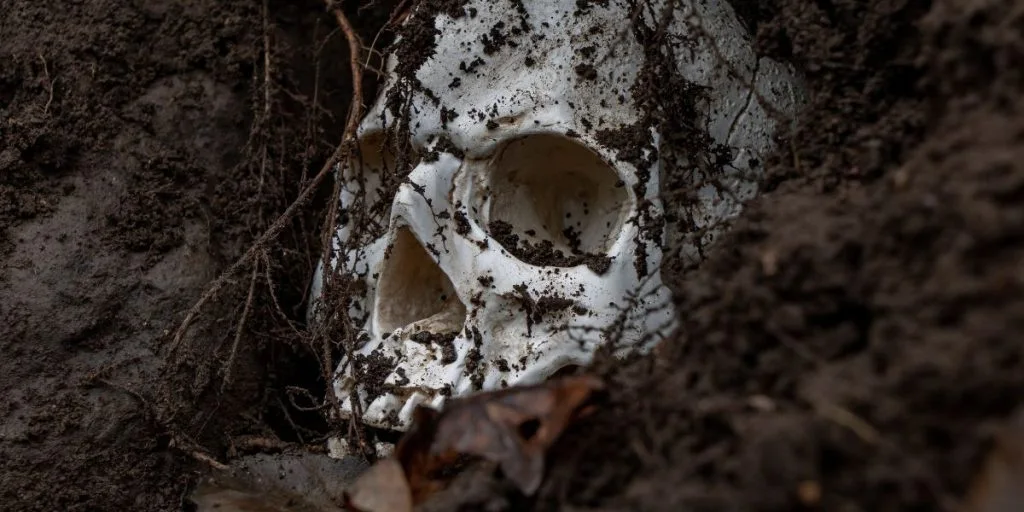
Burial can sometimes produce results that seem to contradict ordinary decomposition. Laboratory work is helping explain why one especially fragile organ occasionally remains after other soft tissue has vanished.


Human brain tissue usually deteriorates rapidly after death. Archaeological records, however, show that this outcome is not inevitable.
Researchers writing in Proceedings of the Royal Society B reviewed 4,405 preserved human brains dating across roughly 12,000 years. In 1,328 cases, the brain remained even though the rest of the body’s soft tissue had disappeared.
Some examples could be explained by freezing, drying or the chemistry of peat bogs. Others could not. Many of those unusual cases came from damp or waterlogged surroundings, suggesting that burial conditions deserved closer investigation.
Researchers recreated decomposition
A 2026 experiment reported in the Journal of Proteome Research, led by University of Oxford archaeologist and forensic anthropologist Alexandra Morton-Hayward, examined that possibility using 72 mouse carcasses. The researchers placed them in four burial environments combining wetter or drier conditions with greater or more restricted access to atmospheric oxygen, then examined the remains at intervals over six months.


The brains did not deteriorate in the same way in every setting. Where water was plentiful but fresh oxygen was harder to replace, a larger share of certain protein fragments remained detectable. Burial setups with easier atmospheric exchange suffered heavier molecular losses.
The experiment did not continuously measure oxygen immediately around each carcass, a limitation acknowledged by the researchers. The comparison therefore concerns differences in oxygen supply rather than perfectly oxygenated and oxygen-free environments.
Destruction can create stability
Morton-Hayward and her colleagues argue that limited oxygen changes the course of decomposition. Some chemical reactions may begin linking molecules together instead of continuing to break them apart, leaving portions of the brain more resistant to decay.
Not every protein fragment had the same prospects. The experiment indicates that survival depended partly on molecular makeup and location within proteins, rather than simply on the brain being preserved wholesale.
Earlier research on the approximately 2,600-year-old Heslington brain in England likewise showed that ancient nervous tissue can retain extensive protein material.
Such remains could eventually provide information unavailable from skeletons alone, including molecular evidence relevant to genetics, health, diet and disease.
Sources: Proceedings of the Royal Society B, Journal of Proteome Research,



