
 Kenneth Glad
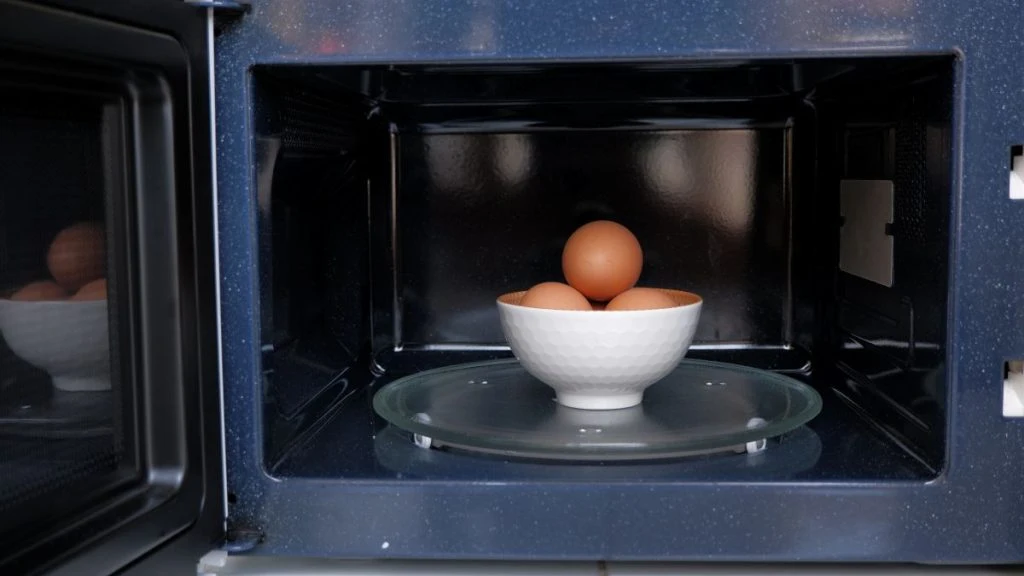
One microwave technique uses a brief cooking time instead of a frying pan. Official guidance shows why appliance power, texture and food safety can all affect the result.


A microwave can be used to prepare a fried-style egg with only a bowl, oil and a few minutes from preparation to serving.
Tom Ferris, co-founder of chicken-care company Roosty’s and described by the Daily Express as an egg expert, recommends coating a microwave-safe bowl or mug with about a tablespoon of olive oil, sunflower oil or butter before cracking in the egg.
His method involves piercing the yolk several times with a fork and loosely covering the container with a paper towel to limit splashes. Salt and pepper can be added before cooking.
According to the newspaper, Ferris suggests full power for about 45 seconds in stronger appliances and closer to one minute in others, followed by a short rest before serving.


That relatively broad timing range is important because microwave ovens do not all deliver the same amount of energy. A setting that works in one kitchen could cook the egg more aggressively in another, so appliance wattage becomes part of the method rather than an incidental detail.
Microwave power changes the result
USDA information helps explain why a single cooking time cannot suit every appliance. Microwave wattage can usually be found inside the door, on the rear serial plate, in the appliance manual or through the manufacturer’s information.
The USDA says eggs can become tough at high power and recommends using a lower setting. That directly conflicts with Ferris’s method, which, as mentioned, calls for the microwave to be used at full power.
Standing time also serves a practical purpose. USDA guidance explains that food can continue cooking after microwave heating ends, meaning the final texture is not necessarily fixed at the moment the appliance switches off. Uneven heating can also leave some areas hotter than others.
Anyone expecting the browned finish of a pan-fried egg should also adjust expectations. Microwaves do not normally produce the same crispness because the surrounding air remains much cooler than in conventional cooking.
Food-safety advice is more conservative about soft eggs. The FDA recommends cooking eggs until both the white and yolk are firm. For recipes intended to remain raw or undercooked, it advises using eggs treated to destroy Salmonella or pasteurized egg products.
FDA guidance calls for microwave-cooked eggs and egg-containing foods to reach 74 degrees Celsius, or 165 degrees Fahrenheit, throughout and remain covered for two minutes before serving.
Sources: Daily Express, USDA Food Safety and Inspection Service, U.S. Food and Drug Administration



