
 Kenneth Glad
Financial authorities are paying closer attention to cybersecurity, leverage and high asset valuations. New technology is adding another challenge to an already complex risk landscape.


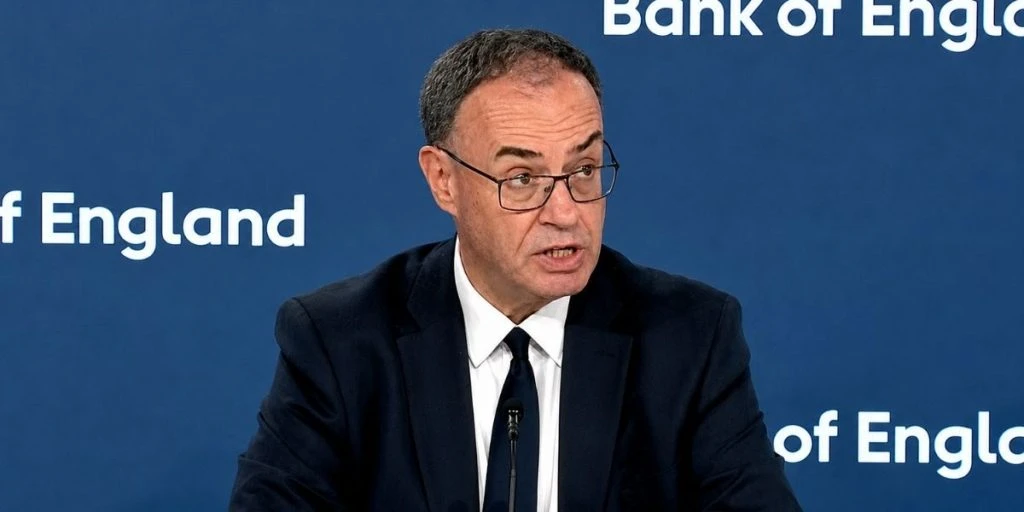
Andrew Bailey has warned G20 officials that frontier artificial intelligence, meaning the most capable cutting-edge AI models, could increase cyber threats facing the financial system.
In an August 28 letter published by the Financial Stability Board (FSB) on August 31, Bailey identified AI alongside sovereign debt pressures, private-credit risks, leverage and high asset valuations.
Bailey has been governor of the Bank of England since March 2020 and has chaired the FSB since July 2025.
Cyber threats come first
Bailey said the financial sector’s dependence on shared technology suppliers could allow a major disruption to affect several institutions at once and spread across national borders. That concentration means a problem at one widely used provider could quickly become a broader concern for banks, markets and regulators in multiple jurisdictions.


He wrote: “For the financial system, the most immediate concern is the potential impact of frontier AI on cyber risk. Frontier AI may have the ability materially to alter the speed, scale and economics of cyber risk, which could undermine market confidence system-wide, especially due to highly concentrated third-party service providers.”
The letter also says AI could strengthen cyber defenses by giving financial institutions new tools to identify and respond to threats. At the same time, more capable systems could increase the pace and complexity of attacks, forcing firms to improve both prevention and recovery.
Financial firms may need better recovery plans in case several institutions or shared suppliers are disrupted at the same time. Regulators are also focusing on how quickly essential systems and data can be restored after a major cyber incident.
Markets carry other risks
Bailey pointed separately to heavy sovereign debt issuance, shorter maturities and greater leverage among some market participants. Those pressures could become more difficult to manage if investor confidence weakens abruptly or several sources of financial stress emerge at the same time.
He also cited leveraged exchange-traded funds, hedge funds exposed to sovereign debt and high prices for risky assets. These areas could amplify market movements if investors are forced to reduce positions quickly during a period of volatility.
Cross-investment between AI companies and hyperscalers is another area of concern. Hyperscalers are large technology companies that provide much of the computing infrastructure used by AI developers, creating close financial links between different parts of the technology sector.
Bailey’s concern is that high valuations, leverage and concentrated investments could reinforce one another during a sharp market correction.
“I remain concerned therefore that a large shock or combination of shocks could concurrently trigger multiple vulnerabilities,” Bailey wrote.
Regulators face next steps
Bailey called for stronger international arrangements governing how advanced AI models are released and deployed, arguing that safeguards need to keep pace with the growing capabilities of frontier systems.
His warning places particular emphasis on coordination between countries. Because financial institutions and technology providers operate across borders, differences in national rules and preparedness could make it harder to contain disruption once a serious incident begins.
The FSB is also examining how financial institutions could use frontier AI for defensive purposes, including strengthening their ability to respond to cyber threats. At the same time, firms may need more robust recovery procedures for situations in which critical systems, data or shared technology providers are affected.
The focus is therefore not only on preventing attacks. Regulators are also looking at how quickly financial companies can restore essential operations after a major cyber incident and limit the risk of disruption spreading through the wider financial system.
Sources: Financial Stability Board



