
 Kenneth Glad
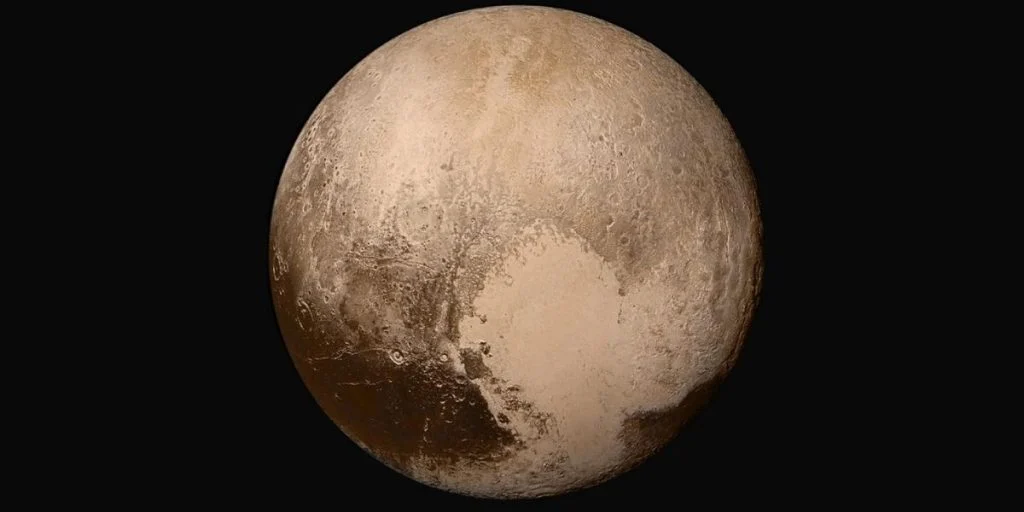
Scientists continue to disagree over how worlds in the solar system should be classified. The argument turns on whether physical characteristics or orbital behavior should carry greater weight.


Two decades after Pluto was reclassified as a dwarf planet, scientists remain divided over the definition that removed it from the solar system’s traditional list of planets.
The disagreement comes down to what scientists think should matter most when defining a planet. Some focus on an object’s physical features, while others place more weight on the orbit it follows and the space around it.
Philip Metzger, director of the Stephen W Hawking Centre for Microgravity Research and Education at the University of Central Florida, rejects the International Astronomical Union’s (IAU) definition. He told The Guardian: “The definition of a planet they created, you can’t use it at all.”
That disagreement became especially visible after NASA’s New Horizons spacecraft passed Pluto in 2015. Its observations revealed mountains, ice formations and signs of comparatively recent geological activity, strengthening arguments that Pluto resembles a complex planetary world despite its official classification.


Eris forced the issue
Questions about Pluto’s place in the solar system had been circulating before 2006, but the discovery of Eris made the problem much harder for astronomers to avoid. The distant object was similar enough to Pluto that scientists faced a basic choice: Either expand the number of recognized planets or draw a clearer boundary around the category.
Like Pluto, Eris lies in the Kuiper Belt beyond Neptune. Its discovery also came during a period when astronomers were identifying other sizeable objects in the same remote region. If Pluto remained a planet, there was a growing argument that Eris, and potentially several other bodies, might deserve the same label.
The IAU responded by adopting a formal definition in 2006. Under its criteria, a planet must orbit the Sun, have enough mass to take on an approximately round shape and dominate the area surrounding its orbit. Pluto met the first two conditions but failed the third.
That final requirement remains one of the most disputed parts of the decision. Critics say an object’s classification can therefore depend partly on where it travels rather than simply on what it is.
Laurel Kornfeld, a writer and amateur astronomer who supports restoring Pluto’s planetary status, told The Guardian: “One of the biggest flaws with the IAU definition is that you can have the same object in two different orbits.”
The moon problem
A broader geophysical definition of a planet would have consequences far beyond Pluto. If scientists classified worlds mainly by their shape, geology and internal complexity, some large moons could also meet the same basic criteria.
That possibility is one of the main objections raised by astronomer Mike Brown, whose team discovered Eris. Brown argues that removing orbital status from the definition would blur the long-standing distinction between planets and natural satellites, including Earth’s moon.
Planetary scientist Paul Byrne takes a different view. He argues that the categories do not necessarily have to be mutually exclusive, meaning an object could be considered both a moon and a planet depending on which characteristics are being described.
That is why the argument has proved so difficult to settle. The disagreement is really about where scientists draw the line between different kinds of worlds in the solar system, and which features matter most when they do.
Twenty years after the IAU vote, no alternative definition has won broad agreement. Pluto remains officially classified as a dwarf planet, while the scientific disagreement over what should count as a planet continues without any clear path toward another formal vote.
Sources: The Guardian



