
 Kenneth Glad

A wave of false posts appeared as public interest surged around a major national event. Some were convincing enough to be mistaken for genuine updates.
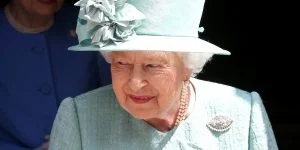
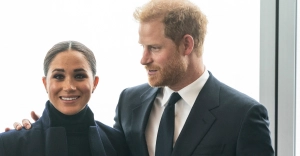
Advertising revenue may help explain why a group of Facebook pages published fabricated material about Norway’s royal family during the final days of King Harald’s life.
NRK looked at nine Facebook pages that had recently posted false claims and fake images involving the royal family. Some of the posts linked to external websites carrying advertisements.
Eskil Grendahl Sivertsen, a specialist at the Norwegian Defence Research Establishment, told the broadcaster that sensational content can generate substantial engagement and push users toward websites carrying advertisements.
He also said money may not be the only motive. Similar techniques can be used to create confusion, increase division or weaken confidence in established news organizations.


Administrators had links to Vietnam
Meta data reviewed by NRK showed that nearly all the Facebook pages had administrators located in Vietnam, among other places.
The evidence did not prove that every account belonged to one organization. However, the network found signs that several pages and websites could be connected.
Some accounts displayed Norwegian telephone numbers belonging to organizations with no connection to them. One belonged to a service within Oslo municipality, while another was associated with the Styrke trade union.
The broadcaster also examined websites promoted through the pages and found similarities in their infrastructure and operating patterns. It concluded that some could be part of the same wider operation.
Meta said that it was reviewing material brought to its attention and pointed to policies covering AI-generated content and coordinated misinformation.
Fake hospital images spread
NRK reported a sharp rise in false posts after the Royal Palace said on August 27 that King Harald’s condition had worsened.
Some images showed the king in a hospital bed. Others appeared to show members of the royal family in tears or sitting beside him.
Several posts combined fake images with real photographs, which made them harder to spot at first glance.
There were no genuine photographs from inside the king’s hospital room. Journalists were not allowed in, and the palace didn’t release any images from his stay.
Some Facebook users told NRK they had believed the pictures were genuine. Others called them out as fake in the comments.
Officials are watching closely
Vietnam has a well-documented click-farm industry. In 2023, British photographer Jack Latham spent a month photographing several such operations, where rows of phones and computers were used to generate activity on social media.
NRK said it had found no connection between those click farms and the Facebook pages in its own investigation.
Sivertsen told NRK that there is money in building, buying and selling social media accounts. A page with an established following can be valuable because it already has people ready to see and react to new posts.
The rumors were already causing concern before King Harald died. On August 27, while he was still being treated at Rikshospitalet, TV 2 Norway reported that false claims about his death were circulating despite official updates saying his condition remained very serious.
TV 2 royal expert Ole-Jorgen Schulsrud-Hansen criticized the speculation and urged people to wait for information from the Royal House. Commentator Kahni Ismail told viewers to rely on official updates and established news outlets rather than repeat unverified claims.
Security concerns are growing
PST, Norway’s security service, later told NRK that it was paying close attention to possible influence operations during the period of national mourning.
Atle Tangen, a section leader at PST dealing with threats from foreign states, said such activity had to be expected. He pointed to Russia and China as countries with extensive systems for producing and spreading influence material.
The false claims were not limited to Facebook. NRK found posts on X announcing King Harald’s death a day before he actually died, although the broadcaster said it found no evidence linking those accounts to the Vietnam-connected Facebook pages.
The misinformation continued after his death. One Facebook page later claimed that King Harald was due to undergo heart surgery, even though he had already died.
As Ismail put it in her warning on TV 2, the public’s concern for the king was real, but that was all the more reason not to let rumors take over.
Sources: NRK, TV 2 Norway



