
 Kenneth Glad
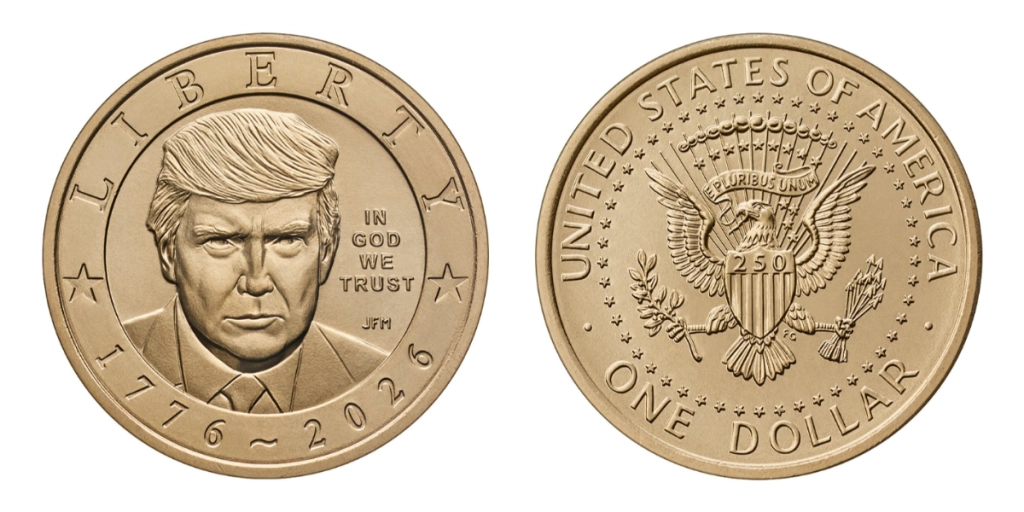
An anniversary coin entered the market with an unusual presidential design and a limited retail offering. Its release also highlights the federal process used to select special American coinage.

The United States Mint began selling rolls and bags of its 2026 Donald Trump $1 coin on September 2. Produced in Philadelphia, the issue belongs to the national program commemorating 250 years since American independence.
A roll containing 25 coins was priced at $61, while a bag of 100 cost $154.50. Product limits were set at 150,000 rolls and 50,000 bags, with no overall mintage ceiling. The Mint currently lists the offering as unavailable.
For the first 24 hours, orders for each product were limited to two per household. CNN reported that visitors encountered an estimated one hour wait on the Mint website shortly after sales opened.
July 4 coins differ
The Mint placed 250,000 specially marked coins among the rolls and bags offered to buyers. Those pieces were struck at the Philadelphia facility on July 4 and carry a privy mark identifying the date, distinguishing them from the standard versions released through the same program.


Despite its gold color, the coin contains no actual gold. It consists mainly of copper, combined with smaller amounts of zinc, manganese and nickel, giving it the familiar golden appearance used for modern US dollar coins.
Trump appears on the obverse of the coin. The Commission of Fine Arts reviewed several proposed alternatives in January and recommended an obverse showing his profile together with a reverse design based on the Great Seal of the United States.
Federal law governs portraits
Under 31 U.S.C. 5112, which sets the legal framework for special coins marking the United States’ 250th anniversary, designs for the 2026 program are selected by the Treasury secretary after consultation with the Commission of Fine Arts and review by the Citizens Coinage Advisory Committee.
The same law prohibits portraits of living people from appearing on the reverse of coins covered by the program, making the placement of Trump’s image on the obverse legally significant.
Trump is not the first sitting president portrayed on American coinage. A 1926 independence half dollar depicted George Washington alongside Calvin Coolidge, who was president at the time. Mint records identify that issue as the earliest US coin to show a president while he was still alive.
Sources: United States Mint, CNN



