
 Kenneth Glad
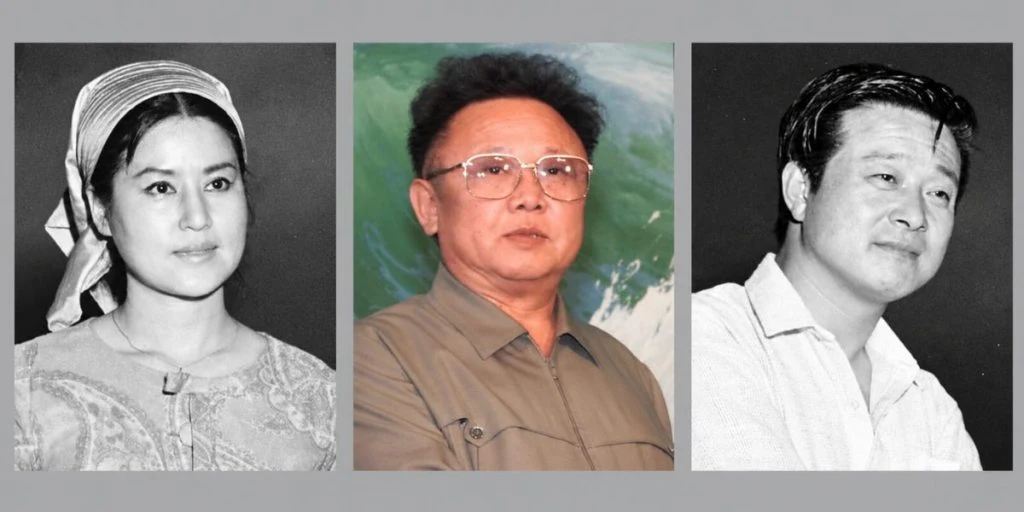
What happens when a closed system cannot produce the kind of creative talent its leader wants? One dictator responded by having filmmakers abducted from abroad.


In 1983, South Korean filmmakers Shin Sang-ok and Choi Eun-hee secretly recorded Kim Jong Il during private meetings in North Korea.
Neither had chosen to live there. Choi, one of South Korea’s leading actresses, had been abducted in Hong Kong in January 1978. Shin, a prominent director and producer as well as her former husband, disappeared later that year while trying to learn what had happened to her.
North Korea claimed the pair had arrived voluntarily. Their later cooperation with its film industry risked making that claim appear credible if they ever escaped.
Writer and film producer Paul Fischer examined the case in detail in his 2015 book A Kim Jong-Il Production, which reconstructs Shin and Choi’s years in North Korea. Fischer describes the secret recordings as part of the couple’s effort to preserve evidence of what had happened to them.


In one of the conversations Fischer reproduces, Kim complained that North Korean films kept repeating the same ideas and wasting resources. At one point, he said of the country’s filmmakers: “They don’t have any new ideas.”
By then, Kim had already spent years overseeing propaganda and film. He would not become North Korea’s supreme leader until after Kim Il Sung’s death in 1994, but his influence over the country’s cultural output had begun much earlier.
Foreign films gave Kim something to compare
Kim’s own viewing habits bore little resemblance to those of most North Koreans. He had a substantial private collection of foreign films, and in 2003, the Los Angeles Times reported on both his enthusiasm for cinema and his long involvement with propaganda.
The collection gave Kim access to films from Hollywood, Europe and other parts of Asia. Ordinary North Koreans faced tight restrictions on foreign media then as well as today. Unauthorized films and television programs have nevertheless circulated inside the country through smuggled DVDs, memory cards and other devices.
Fischer’s book suggests that Kim was well aware of the difference between the foreign productions he watched and the films coming out of North Korean studios. He complained about directors, scripts and production standards even though the state could provide considerable resources for filmmaking.
Shin Sang-ok and Choi Eun-hee were already major figures in South Korean cinema. Kim knew their work and saw in them the kind of filmmaking experience he wanted to bring into North Korea.
Choi was abducted in 1978. Shin disappeared later the same year while trying to find out what had happened to her. According to Fischer, Shin resisted his captors, attempted to escape and eventually spent years in prison and political reeducation.
The former couple did not see each other again until March 6, 1983. Kim presented Shin as a film adviser and encouraged the divorced pair to marry again, which they did.
Shin would eventually describe what Kim wanted from him in a 2003 interview with The Guardian: “The North Koreans asked me to improve their image by making good movies.”
Cooperation opened the door
After years in North Korea, Shin and Choi had little reason to believe another direct escape attempt would succeed. Fischer writes that they chose instead to win Kim’s confidence, hoping that good behavior and successful films would eventually give them a chance to travel abroad.
That meant playing along. They worked on the films Kim wanted, attended official functions and presented themselves publicly as willing participants in his cultural project.
Over time, the approach paid off. Their status improved and they began making trips abroad connected with filmmaking and international events. They were still closely watched, however. Fischer describes their passports being controlled and North Korean escorts accompanying them during foreign travel.
Those journeys nevertheless gave the couple something they had not had during their first years in captivity: Repeated access to places beyond North Korea’s borders.
By 1986, they were trusted enough to travel together to Western Europe. That would eventually give them the opportunity they had been waiting for.
Their movies pushed familiar boundaries
Once Shin began working again, Kim gave him access to the country’s studios, crews and actors.
Over the next few years, Shin made seven features in North Korea, experimenting with styles and subjects that were less rigid than much of the country’s established output.
One production included what The Guardian reported as North Korea’s first on-screen kiss.
Shin also directed Pulgasari, a large-scale monster film inspired by the Japanese giant-creature tradition. It’s the movie most closely associated with his years in the country.
The films were still made under government supervision, and Kim remained closely involved in what reached the screen. But Shin was being asked to make movies that audiences would actually want to watch, not simply repeat the formulas Kim had already complained about.
That gave him more room than most North Korean filmmakers enjoyed, even if the limits of that freedom were never in doubt.
Vienna provided the opportunity
Shin and left Pyongyang in January 1986 on a six-week working trip through Europe, still under North Korean supervision. Their official itinerary included the Berlin Film Festival and a stay in Vienna, where Shin was supposed to establish a European branch of Shin Film.
There was genuine film business along the way. Shin met representatives of the Hungarian film industry in Budapest about a planned production and spoke with an Austrian producer interested in the Vienna operation.
At the Berlin festival, he also held meetings aimed at finding Western distribution for Pulgasari. All the while, Shin and Choi were looking for a chance to get away from their escorts.
They reached Vienna on March 12 with three North Korean bodyguards. Among the meetings arranged there was a lunch with Akira Enoki, a Japanese journalist Shin had known before his abduction.
Shin and Choi persuaded their minders that having guards sitting beside them during the interview would undermine North Korea’s claim that they were living and working there willingly. The guards agreed to follow them separately and wait outside.
The night before the meeting, Shin secretly contacted a Japanese employee at the Intercontinental Hotel and passed him a message saying that he and Choi wanted to seek refuge at the United States embassy.
On March 13, the couple left the hotel to meet Enoki. Once inside the taxi, Shin told him that they had been kidnapped and wanted to escape. Their North Korean escorts soon set off after them, but Shin and Choi managed to reach the United States embassy.
They carried with them the recordings they had secretly made during their years around Kim. Those tapes could now support their account that their highly visible work for North Korea had followed their abduction and continued inability to leave the country..
Cinema reflected a wider system
The control surrounding North Korean filmmaking was part of a much broader effort to manage what people could see and know.
Both the Los Angeles Times and The Guardian described a country where state media shaped the public account of history, politics and the ruling family, while access to foreign information was heavily restricted.
The same concern with appearances became harder to maintain during the famine of the 1990s. The Guardian reported that North Korea accepted international food assistance but placed tight restrictions on foreign aid workers. Visitors were not free to travel where they wished, while North Koreans who escaped across the border into China talked about hunger and economic collapse on a scale outsiders had been prevented from seeing.
That contrast helps put Kim’s film project in context. He could sit in a private screening room watching foreign productions and then complain that North Korean films were falling behind. The filmmakers working for him did not have the same access to the outside world.
Shin and Choi did. They had spent their careers making films in South Korea before being taken north, and Kim wanted to make use of what they knew. He would rather kidnap competent people than open the world of cinema to North Korean filmmakers.
Sources: Los Angeles Times (2003); The Guardian (2003); Paul Fischer – A Kim Jong-Il Production (2015).



