
 Kathrine Frich
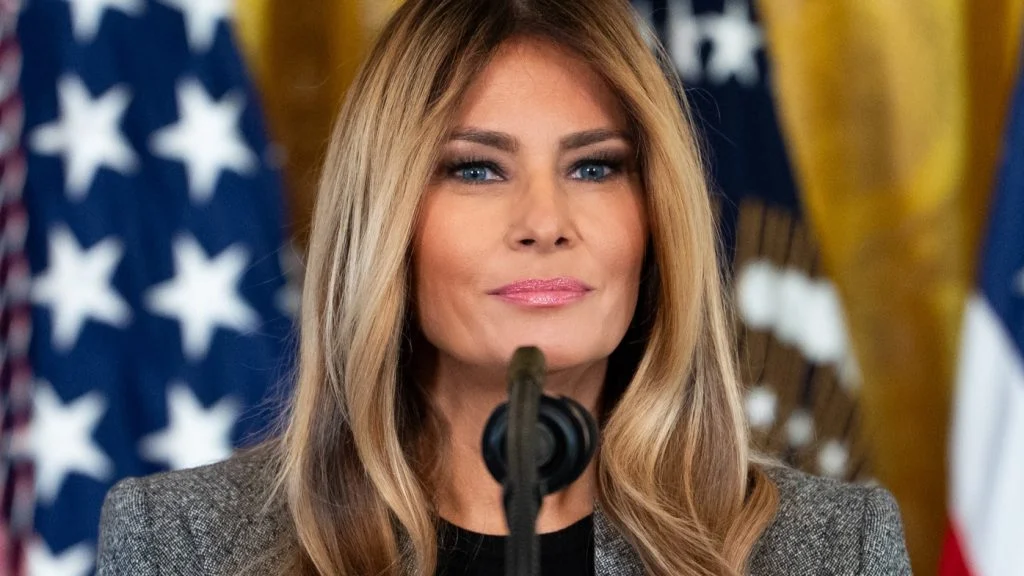
Rather than addressing the new helipad, she talked about smaller personal projects.


Historic buildings require a delicate touch to maintain their charm over the centuries.
When heavy machinery rolls onto the lawn, the public notices right away. Yet those managing the property often view the dust through a highly optimistic lens.
A glowing defense
President Donald Trump has radically transformed the executive mansion during his second term. Critics have loudly condemned the widespread construction across the grounds. But Melania Trump stepped forward on Wednesday to offer a glowing defense of the changing property.
While her husband attended a political convention in Dallas, the first lady took the stage in the Rose Garden. She delivered a keynote address at a White House Historical Association summit. According to The Daily Beast, her speech focused heavily on architectural heritage.


She framed the ongoing evolution of the property as a vital part of American history. She told the crowd that the building “stands as an architectural autobiography of America, embodying the enduring values of ambition, democracy, and civic life through its design, craftsmanship, and the objects within.”
Ignoring the backlash
Her lofty words arrived during a period of intense physical disruption. Workers recently leveled the entire East Wing to make room for a massive new ballroom. Crews also paved over parts of the historic Rose Garden to create a sprawling patio.
Other major changes include removing the iconic Jacqueline Kennedy Garden completely. Heavy machinery even tore up the South Lawn to install a brand new helipad.
The first lady completely ignored the public outrage surrounding these large-scale projects. Instead, she spoke broadly about the careful nature of presidential renovations. She argued that every physical change carries deep cultural meaning.
Small details matter
“Design is a meticulous process that involves a multitude of choices,” she explained to the audience. She added that “each line, texture, and play of natural light contributes to an overarching narrative.”
She insisted that minor choices carry heavy historical weight. “No detail is too small,” she noted. She stated that what seems insignificant today can influence how people connect with history.
“Within the walls of the White House, these experiences become essential to our national identity,” she concluded.
Rather than addressing the new helipad, she highlighted smaller personal projects. She proudly discussed uncovering hidden wallpaper in the Presidential Dining Room and restoring the Tennis Pavilion. Her presentation painted a picture of careful preservation, standing in stark contrast to the bulldozers outside.
Sources: The Daily Beast



