
 Jens Asbjørn Bøgen
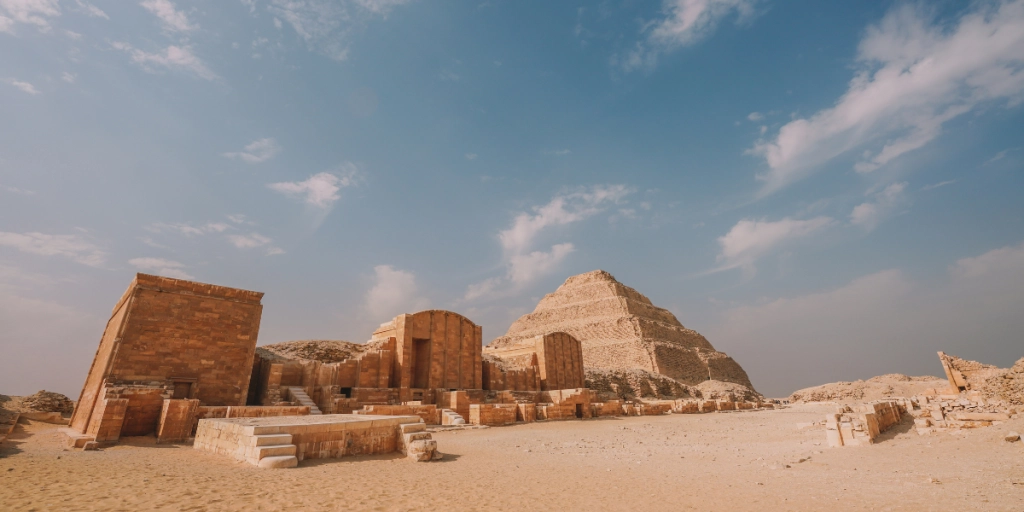
A stretch of desert north of Saqqara, first scratched in the 19th century, has surrendered another secret.


For more than 4000 years, the sand covered a mastaba whose painted walls survived almost untouched by time.
A joint Spanish-Egyptian mission returning to a corner of the necropolis explored by French archaeologist Auguste Mariette in the 1800s has now cleared the structure and found something quietly extraordinary inside.
The tomb belongs to a senior court official named Yunmen, who served during the late Fifth Dynasty under the reign of Pharaoh Djedkare Isesi, Egypt’s Ministry of Tourism and Antiquities announced at the start of September.
The mission, led by Josep Cervelló Autuori of the Autonomous University of Barcelona, has been working the site with Egypt’s Supreme Council of Antiquities.


Yunmen held the offices of judge, director of the court, and head of the scribes responsible for examining petitions and complaints, according to the inscriptions inside the tomb.
A father and son sharing a mastaba
The mastaba, a flat-roofed mudbrick and stone structure that was the standard elite tomb form of the Old Kingdom, contains two funerary chapels opening on its eastern wall. Yunmen’s chapel is on the northern side.
The southern chapel belonged to his father, Ity, a scribe who oversaw agricultural lands and offerings.
Yunmen’s chapel carries carved and painted reliefs of farmers at work, servants leading donkeys, and long processions of bearers bringing offerings toward the tomb. Many of the scenes still hold their original pigments, Heritage Daily reported, citing Secretary-General of the Supreme Council of Antiquities Hisham El-Leithy.
Ity’s chapel is more damaged. A false door, the symbolic threshold through which the dead were thought to receive offerings, still stands, and painted panels of offering scenes survive on the walls.
Why Saqqara keeps yielding finds
Saqqara, about 20 miles southwest of Cairo, served as the necropolis for the ancient capital Memphis for roughly 3,000 years. Even after nearly two centuries of excavation, only a fraction of the plateau has been systematically dug. The area where Yunmen’s tomb sits, known as the Mariette Cemetery, was mapped by Mariette but never fully cleared.
Amr Al-Tayeb, director of the Saqqara antiquities area, told AFP that Yunmen’s judicial role tied him to the ancient Egyptian concept of Maat, the principle of truth, justice, and social order that judges were expected to uphold, Arab News reported.
Conservators have started a restoration program on the painted surfaces before the site is prepared for further study of how the necropolis was laid out and used during Djedkare Isesi’s reign.



