
 Christine Drews Sieger

A proposed $24 billion sale of F-35 fighter jets to Saudi Arabia has sparked security fears in Washington over potential Chinese espionage.

Signed agreements promise billions in revenue, fresh strategic partnerships, and new political muscle for everyone at the table. Yet behind those closed doors, military secrets rarely stay between two partners for long.
Washington now faces a high-stakes security dilemma over a proposed weapons package.
At the center of the dispute is a $24 billion arms package that would deliver four dozen F-35 aircraft and backup propulsion units to the Saudi military.
Deepening bonds between Riyadh and Beijing have fueled anxiety in Washington that cutting-edge aviation secrets could ultimately spill over to Chinese defense forces.


The main anxiety focuses on the aircraft’s radar and intelligence gathering systems, raising questions about facility security in the kingdom.
Physical security at storage facilities represents only part of the threat, The New York Times reports.
Pentagon officials are especially uneasy about Saudi Arabia’s reliance on telecommunications hardware from giants like Huawei and ZTE, viewing that infrastructure as a potential pipeline for unauthorized surveillance.
Tech and tensions
The situation echoes a prior F-35 agreement with the UAE that froze after Abu Dhabi resisted demands to sever ties with Chinese tech firms.
Israel is also watching the situation carefully, as U.S. policy mandates protecting its regional military advantage as the sole local operator of F-35 jets.
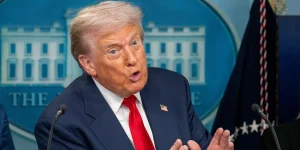
Former President Donald Trump previously backed the Saudi aircraft transfer.
Even so, Washington will need to build unbreakable safeguards before any stealth jets reach Saudi runways, The New York Times reports.
Tighter Security Demands
The security concerns could force Riyadh to accept unusually strict conditions before the aircraft can be deployed.
According to The New York Times, a Pentagon intelligence report says access to sites housing F-35 technology should be limited to Saudi and American military personnel and contractors.
It also questions whether Saudi Arabia would agree to restrict contact between Chinese military and intelligence personnel and remove Huawei and ZTE equipment from telecommunications networks, routers and defense installations.
For Washington, the issue is therefore not simply where the F-35s will be based, but whether the surrounding security infrastructure can be trusted to protect the aircraft’s most sensitive technology.



