
 Christine Drews Sieger
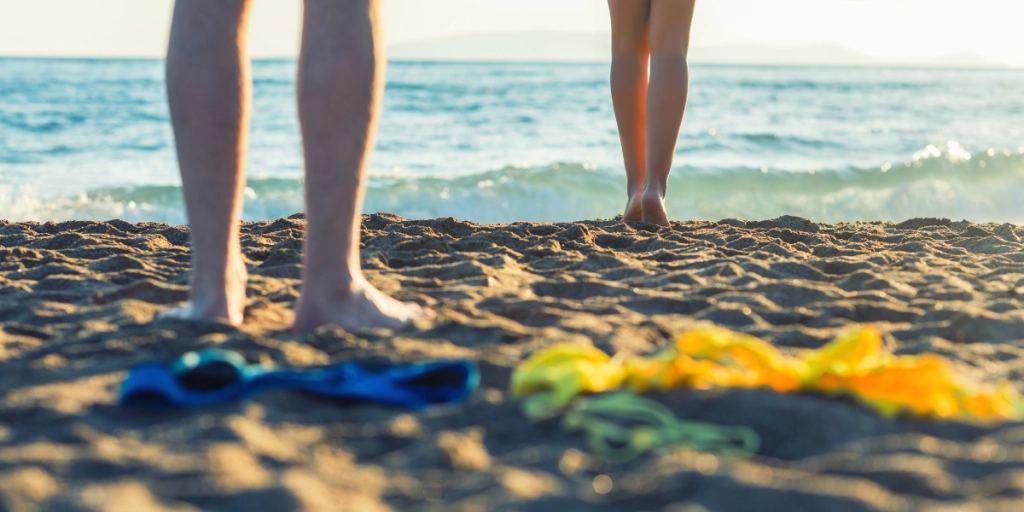
Naturism encourages non-sexual group nudity, helping individuals build healthier body confidence by removing societal pressures.


Endless digital feeds push impossible physical ideals, making daily self-acceptance a punishing chore.
But a quiet, growing social movement promises relief by inviting people to ditch their garments entirely.
According to the BBC, naturism promotes non-sexual group nudity in ordinary social settings.
Modern research shows that shedding clothing around others helps heal damaged self-worth.


By observing unfiltered human forms, participants quickly recalibrate their standards of normal beauty.
After two decades of avoiding bikinis due to severe body dysmorphia, Helen Berriman eventually embraced social nudity through her husband in 2021—a shift that fundamentally reshaped her self-perception.
According to psychology professor Kerem Soylemez of Regent’s University London, naturism fundamentally revolves around that, “naturism is engaging in social nudity with no expectation, no presence of sexual stimulation.”
Digital media constantly distorts human appearance through filters and editing. Counteracting that artificial perfection requires actual exposure to ordinary individuals.
Psychology researcher Marina Rachitskiy similarly highlights how encountering everyday, unedited bodies recalibrates our understanding of beauty and normality:
“Being exposed to average bodies makes you readjust your perspective about what is normal.”
Dropping public shame
Exposing the body in social environments significantly lowers physique anxiety.
Controlled clinical trials indicate that seeing unclothed peers boosts personal confidence and overall life satisfaction.
Now serving as a women’s officer for British Naturism, Berriman has learned to embrace her physical scars as meaningful evidence of a life fully lived.
Social nudity still faces persistent cultural stigma despite clear psychological benefits.
Outlets often demonize the lifestyle by linking group nudity to sexual deviance. Old moral traditions continue to fuel these public prejudices.
Even so, scientific studies record almost no negative outcomes for adult participants.
Organized naturist clubs enforce strict safety rules to protect their growing membership across Europe and North America.
Beyond personal confidence, participants celebrate the deep relief of discarding social expectations.
British Naturism committee member Terry Lane recalled feeling self-conscious about his weight before joining.
He told the BBC: “When you strip yourself bare it’s actually quite liberating.”
What the science says
The idea is supported by experimental research rather than personal testimony alone.
A randomized controlled study published in the Journal of Sex Research found that participants who took part in a communal naked activity reported greater appreciation of their bodies than those in a clothed control group.
The researchers found that the effect was linked to reduced anxiety about how participants believed their bodies were being judged by others.
The findings provide experimental evidence for one possible explanation behind the confidence boost reported by some naturists, although the study was relatively small and does not establish that social nudity will have the same effect for everyone.



