
 Kathrine Frich

Alexander Lukashenko publicly dismantled the idea of a huge new trade agreement.

Keeping farms running requires a constant flow of expensive supplies.
When politicians promise a sudden drop in those everyday costs, agricultural workers usually pay close attention.
But international trade announcements rarely survive contact with reality.
A major promise
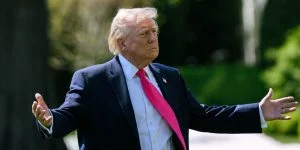
President Donald Trump recently went online to announce a bold new plan to secure agricultural materials. He shared his ambitious strategy on his Truth Social platform this Monday.


The American leader claimed his team is negotiating a major purchase of potash. To maintain their crop yields, farmers rely heavily on this crucial mineral fertilizer.
According to Trump, replacing Canadian imports with cheaper alternatives from Eastern Europe would bring immediate financial relief.
“The United States is working on a massive deal to purchase potash from Belarus,” Trump wrote. He noted that the prices would be lower than Canadian rates, calling it “very good news” for American farmers and cattle ranchers.
Empty warehouses
But the leadership in Minsk sees the situation entirely differently. Belarusian President Alexander Lukashenko publicly dismantled the idea of a huge new trade agreement on the very same day.
The dictator met with Vladimir Orlovsky, the chairman of the State Customs Committee. During their conversation, Lukashenko stated that “sharp economic attacks from the European Union and Western countries have not stopped”.
To survive those penalties, local producers have redirected their export flows toward eastern buyers. The Belarusian state news agency BelTA reported that Lukashenko pointed to recent talks with the Americans as proof of this successful shift.
With existing commitments firmly in place, local facilities have absolutely no spare product to send across the Atlantic. “Even if we wanted to deliver somewhere to other, Western markets, there are simply no such quantities,” Lukashenko stated. He clarified the reality, adding that “everything is already contracted.”
Shifting trade rules
Potash remains a massive economic driver for Belarus. The nation sits just behind Canada as the second largest global producer of these vital farming fertilizers, according to East News.
Trade relations between Washington and Minsk shifted significantly earlier this year. Back in the spring, the United States officially lifted sanctions on several major Belarusian fertilizer companies.
That specific economic relief was granted as part of a complex diplomatic deal. Washington eased the financial pressure to secure the release of political prisoners held by the regime.
Yet despite those softened restrictions, the massive new trade channels remain firmly closed. It appears the promised agricultural supplies will not be arriving on American farms anytime soon.
Sources: BelTA, Truth Social, East News



