
 Kenneth Glad
History is often written by the victors, but sometimes it is left behind by the creatures that simply needed a bathroom break. Digging into the distant past usually means looking for bones or ancient weapons. A very different type of clue recently surfaced in Scandinavia.


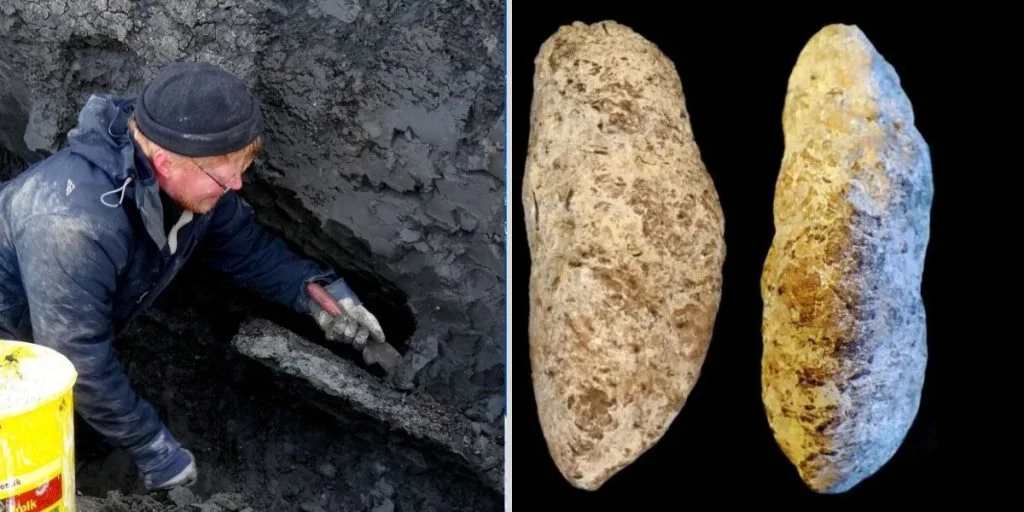
Paleontologists recently unearthed a massive treasure trove on the Danish island of Mors. They found more than 10,000 pieces of fossilized animal waste in the dirt. The 55 million-year-old deposit is now one of the world’s largest collections of prehistoric marine feces.
Jesper Milàn, a paleontologist at Museet KALK in the town of Faxe, explained the density of the find to Danish science site Videnskab;
“A thin, lens-shaped layer was found in the soil structure, about four centimeters thick, which is completely stuffed with shark teeth and petrified poop.”
These ancient droppings reveal a marine ecosystem in transition. The era unfolded roughly ten million years after the extinction of the dinosaurs.


Because the animals themselves are gone, researchers classify the waste as its own species. They identified three completely new types in the massive haul.
Two of these newly discovered categories are named after Mette Hofstedt and Henrik Madsen. These local fossil hunters originally located the soil layer.
“I was sent a large box and was at first overwhelmed by the enormous amount of material,” Milàn told Videnskab.
Changing ocean life
The fossils tell a clear story about who survived the global extinction event. Large marine reptiles vanished entirely. Bony fish and sharks rapidly took their place in the northern waters.
“We can see that some forms of petrified feces disappear, others remain, and entirely new ones arise,” Milàn said..
He pointed out that it simply takes different shapes of butts to make the different coprolites.
Finding perfectly preserved specimens in one location is highly unusual. Under normal conditions, scavengers on the ocean floor consume organic material before it hardens.
Laura Jane Cotton, a paleontologist at the Natural History Museum of Denmark, told Videnskab the site is exceptional:
“These fantastic fossils are rare to find in such large quantities on Mors, and they provide a new insight into the area’s prehistoric life.”
Scientists still do not know exactly why this specific location preserved the waste so well. Changes in ocean currents might hold the answer.
Source: Videnskab



