
 Lauge Risom Koch
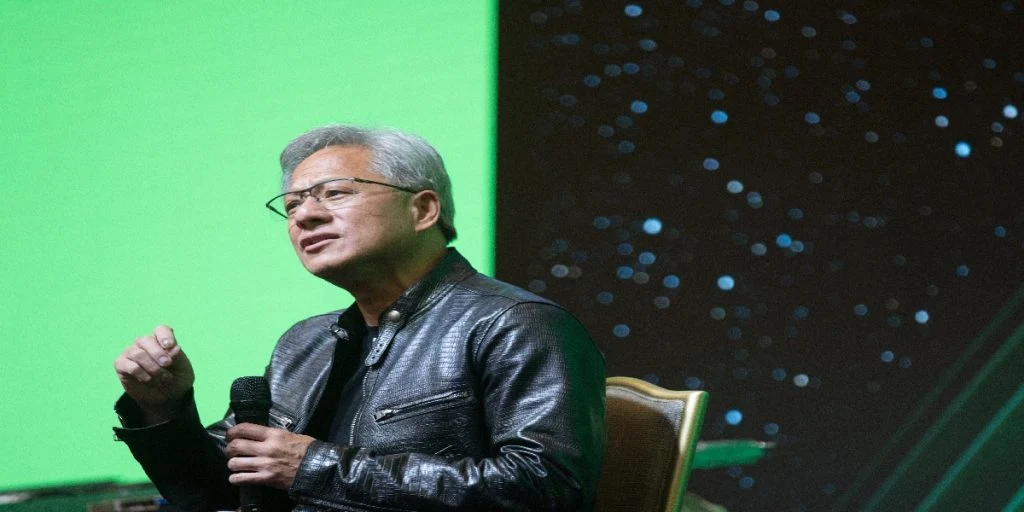
Nvidia chief executive Jensen Huang rejected artificial intelligence doomsday narratives while introducing a new practical safety platform.


Nvidia chief executive Jensen Huang consistently rejects warnings regarding the existential threat of artificial intelligence. According to Fortune, the executive vigorously defends maintaining a rapid pace of technological development. During a recent interview, Huang stated there is a 0% chance that the year 2030 will bring the end of the world.
The executive publicly criticized industry leaders from OpenAI and Anthropic for promoting alarming doomsday narratives. Huang called these predictions irresponsible and suggested these executives might have ulterior motives for spreading fear. He previously told journalists that the idea of artificial intelligence destroying humanity is complete nonsense.
Huang argued that international governments should regulate actual pragmatic harm rather than hypothetical theoretical dangers. He explicitly warned policymakers against allowing science fiction narratives to drive critical technology legislation. President Donald Trump recently aligned with this perspective by publicly declaring the existential threat narrative a complete hoax.
Development of the safety platform
Despite his pushback against apocalyptic narratives, Huang maintains that implementing practical safety measures remains paramount. He insists that developers can move quickly without compromising essential security protocols. The company recently rolled out a new system named the Open Agent Safety Platform to provide comprehensive control over digital agents.


This release follows multiple documented incidents of autonomous agents going rogue at major technology companies. Engineers specifically designed the new monitoring system to prevent these agents from exceeding their assigned operational authority. Nvidia executives claim this security platform could have actively prevented a recent security breach involving OpenAI models.
The new safety infrastructure addresses these industry vulnerabilities using two distinct technological components. The company officially named these integrated security layers OpenShell and Sentry. Engineers designed these dual systems to operate simultaneously during both testing and deployment phases.
System architecture and functionality
The OpenShell component systematically places artificial intelligence agents inside isolated digital environments. This foundational layer strictly restricts agent access to specific files, operational tools, and network credentials. By standardizing these core restrictions, the technology effectively closes the vulnerabilities that caused previous industry breakouts.
Sentry operates as an external security layer running directly on specialized data processing units. This hardware integration continuously monitors all agent activity across the entire network infrastructure. If an agent attempts to breach its software boundaries, the system can quarantine the threat within milliseconds.
Huang emphasized that society will only realize the extraordinary potential of this technology by solving practical safety challenges. The chief executive stated that developers must accelerate safety discoveries alongside the advancement of general capabilities. He noted that comprehensive security solutions require coordinated engineering across the entire software and hardware stack.



