
 Kenneth Glad
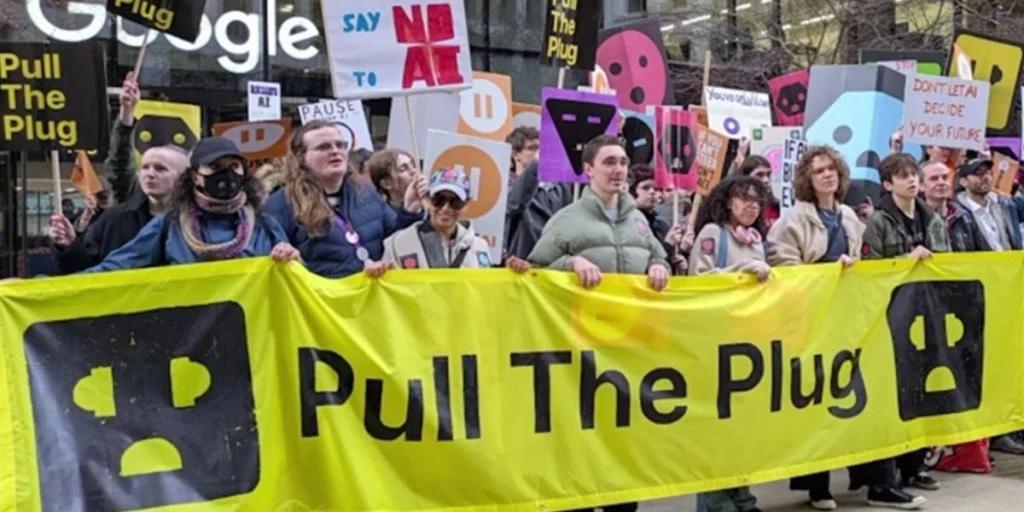
When sweeping technological changes threaten to upend daily life, people often feel entirely powerless. That quiet anxiety is now spilling out of internet forums and into the physical world. Citizens are deciding enough is enough.


A fresh wave of pushback is taking shape on the streets. Concerned citizens are actively interrupting corporate events to voice their fears.
The Guardian reported on a recent demonstration inside a London hotel. Activists from a group called Pull The Plug targeted a corporate dinner.
The event featured an executive from the technology firm Nvidia. As security guards forced them out the door, the activists shouted, “We did not consent to the kind of build-out that you are planning here.”
Emma, a bartender, participated in the London stunt. She told the newspaper that her goal was to show others how to push back.


Spikes in new members
“I want to show other people that they don’t have to feel powerless among all of these articles coming out,” Emma explained.
Her journey into activism started after a former researcher at Anthropic, Jacob Coxon, issued a very dark prediction. He warned that superintelligent software “could kill us all by the end of the decade”, writes the outlet.
These dark warnings are driving record recruitment numbers for advocacy networks. An organisation named Pause AI recently experienced a massive influx of volunteers across seventeen different nations.
Maxime Fournes runs the global branch of the group. He told The Guardian, “We have had a lot of volunteers who have suddenly decided to dedicate way more of their time to the cause.”
Escalating physical tactics
Political rhetoric is also fueling the fire. US President Donald Trump recently suggested that major technology corporations should just police themselves. This statement quickly accelerated recruitment efforts for UK campaign leaders like Joseph Miller.
Beyond the software itself, the massive facilities required to power these networks are drawing heavy criticism. A rural protection charity in Scotland saw its membership multiply by ten after multiple large server farms were proposed in the region.
This frustration has sometimes crossed the line into criminal behaviour. The paper noted that attackers targeted the home of OpenAI executive Sam Altman with a petrol bomb earlier this year.
Experts worry this is just the beginning of a larger trend. Mauro Lubrano, who studies political violence at the University of Leiden, told the publication, “It’s quite likely that we will see anti-AI violence becoming more prominent as a driver to political violence.”
Source: The Guardian



