
 Kenneth Glad
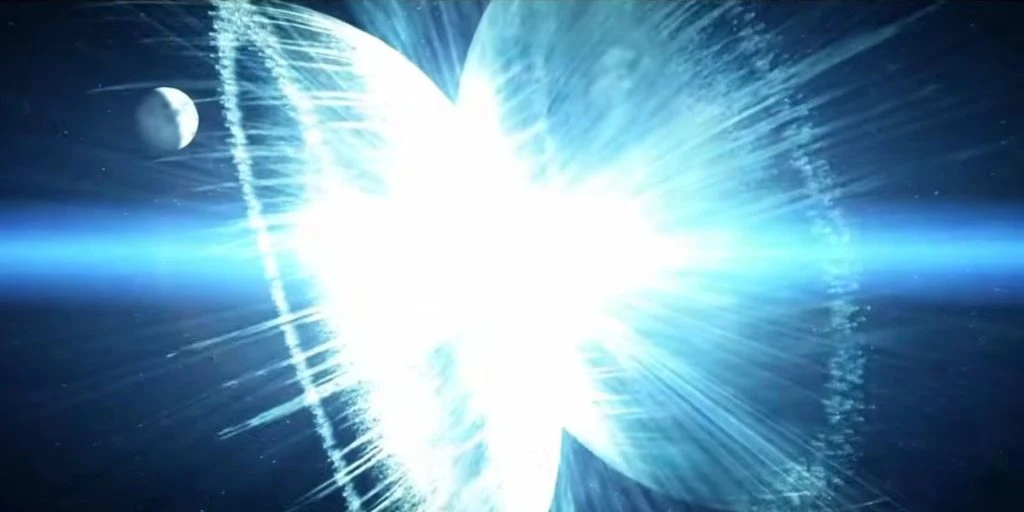
People love a good doomsday movie. We have all seen the blockbuster scenes where humanity teams up to blow a threatening space rock into tiny pieces. Now, it seems those Hollywood writers might have been onto something real.


A massive object from space could easily flatten a huge metropolitan area if it strikes Earth. Astronomers constantly scan the skies to spot these dark and stealthy threats long before they ever get too close to our planet.
Researchers at the Lawrence Livermore National Laboratory recently explored our ultimate defense option. They ran complex computer models to see if a 1-megaton nuclear weapon could stop a 160-meter space rock, writes ScienceAlert.
You might assume the weapon has to crash directly into the target. The latest data proves that strategy is completely unnecessary.
Energy in the void
Explosions behave differently when there is no air. Without an atmosphere to push around, a standard concussive blast simply fails to form.


According to ScienceAlert, the detonation can actually happen several meters away from the target. Instead of a physical hit, the device unleashes an intense burst of X-rays to do the work.
The researchers stated, “These X-rays deposit energy in a thin surface layer of the asteroid, driving vaporization and ablation,” when outlining the process in The Planetary Science Journal.
This extreme heat instantly boils the outer crust into gas. As that vapor rockets away, it shoves the remaining rock in a new direction.
Ripping it apart
That intense radiation burst then triggers a crucial secondary effect. A powerful force travels right through the core of the object, and this ultimately tears the physical structure apart.
In the longest digital test, detonating the bomb 10 meters away severely damaged the object. But pulling the weapon back to 25 meters caused a surprising outcome. The wider distance allowed the radiation to wash over more of the rock, which created even more widespread destruction.
These digital tests demand massive computing power. Simulating just a fraction of a second took 59 days on 1,680 processors. While scientists still need to figure out if the broken pieces might clump back together, the data shows that a nuclear strike remains a serious planetary defense option.
Sources: ScienceAlert, The Planetary Science Journal



