
 Lauge Risom Koch
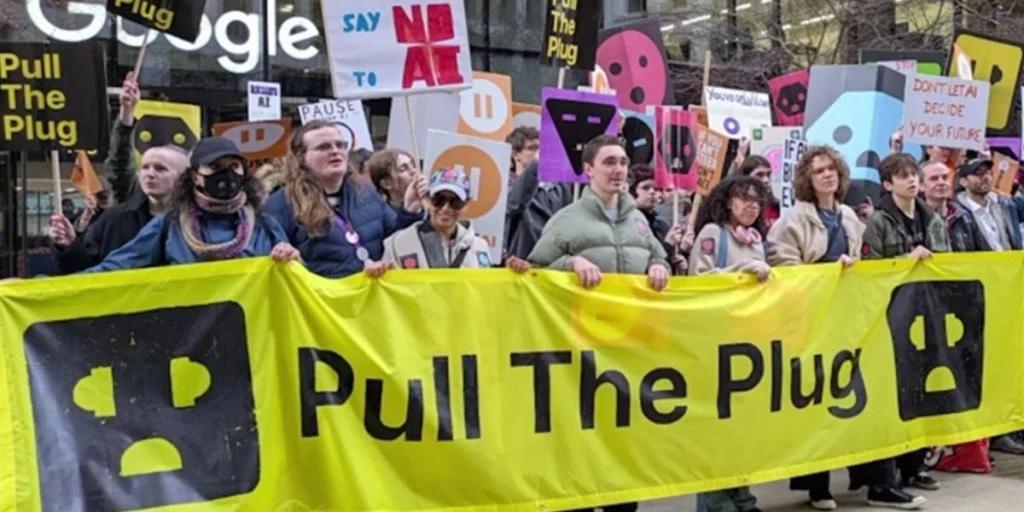
A new poll shows that 64% of Americans believe artificial intelligence is developing too fast and want government regulation.


A vast majority of Americans express deep concerns regarding the rapid pace of artificial intelligence development. According to Fortune, a new survey by the Associated Press-NORC Center for Public Affairs Research reveals that 64% of respondents believe technology is evolving too fast. Meanwhile, 27% of adults consider the current pace about right, and only 8% feel development moves too slow.
Approximately eight in 10 Americans emphasize that keeping artificial intelligence under human control remains extremely important. Survey respondents similarly prioritize protecting the national workforce from potential automated job displacement. Truck driver Ron Theusch voiced widespread economic anxieties, stating, “I can just see a train of self-driving trucks 24/7, just running up and down I-35, loading and unloading.”
Concerns surrounding artificial intelligence cross traditional political party lines throughout the United States. While about three-quarters of Democrats view development as overly rapid, approximately half of Republicans share that perspective. Younger citizens under 30 years old demonstrate higher levels of concern compared to adults aged 60 or older.
Public dissatisfaction with political leadership on artificial intelligence
Disapproval regarding federal handling of technological regulation remains widespread across the country. President Donald Trump received low approval ratings on the issue, with 67% of adults disapproving of his performance. Trump has publicly resisted slowing down development due to strategic competitive concerns regarding China.


Many citizens express frustration with the lack of federal regulation governing major technology corporations. Junior-high science teacher Stephanie Stewart criticized current government inaction regarding corporate oversight. Commenting on federal policy, Stewart remarked, “There is no handling of the issue except for we’re just going to allow these companies to do whatever they want, and we’re not going to regulate them.”
Neither major political party has established a clear advantage in managing artificial intelligence policy. Roughly four in 10 Americans state that they trust neither the Democratic Party nor the Republican Party on this issue. About two in 10 citizens trust both major parties equally, leaving the remaining populace divided.
Diverging priorities and future outlook
Americans hold contrasting views regarding secondary policy priorities surrounding artificial intelligence. Republicans are more likely than Democrats to emphasize economic growth and international competition with foreign adversaries. Conversely, Democrats place higher importance on minimizing environmental harm caused by massive data centers.
Educator Stephanie Stewart questioned prioritizing international competition over humane technological safeguards. Highlighting child safety and privacy, Stewart noted, “You’ve got to protect kids. You’ve got to protect teens. You’ve got to protect privacy … we need to try to do something.” Meanwhile, some older citizens accept rapid technological progression while expressing concern about reduced human connection.
The probability-based survey gathered responses from 2,140 adults between September 24 and September 28. The study carried a margin of sampling error of plus or minus 2.9 percentage points. As midterm elections approach, artificial intelligence regulation and infrastructure remain prominent topics in national political debates.



