
 Kenneth Glad
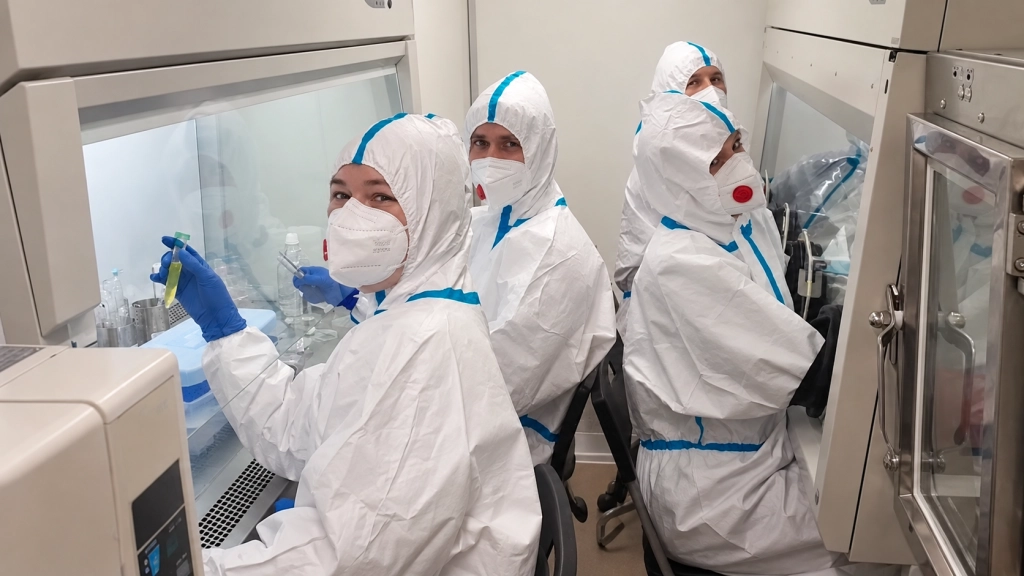
When a crisis hits a quiet community, facts are usually the first casualty. Ordinary people must separate truth from wild gossip. A recent medical mystery shows what happens when official answers fall short.


The sudden death of a Siberian laboratory worker has triggered global alarms. Darya Shipilova was 28 years old. She passed away recently following a brief, severe illness. Behind the scenes, she worked directly at the Irkutsk Anti-Plague Research Institute, a facility dedicated entirely to studying the plague.
Local authorities reacted immediately. They quickly locked down her closest contacts. Despite this rapid response, officials insisted her fatal illness had nothing to do with her hazardous job.
According to CNN, the Russian national health agency claimed the young woman died from an unidentified type of pneumonia. The state desperately tried to minimize any connection between her tragic death and her daily laboratory work.
This official explanation did little to calm the public. In fact, many residents in the nearby town of Shelekhov simply reject the government story. The complete lack of transparency has even drawn formal demands for answers from both the World Health Organization and the United States.


One local person told CNN they now rely mostly on internet rumors to understand the crisis.
Stocking up fast
Public reactions across the region have swung between calm acceptance and quiet panic. When the terrifying news first broke, a pharmacist working in the area noticed a massive surge in frightened buyers. Fear spread rapidly through the streets.
Panicked customers suddenly cleared the pharmacy shelves in a matter of hours. They eagerly bought up basic antiseptics and hoarded antibiotics as a desperate protective measure. Families wanted to build their own medical stockpiles just in case a larger outbreak occurred.
Yet, other locals completely trust the state narrative. The government insists the sickness is contained, and some residents find great comfort in those official statements. A young woman expressed deep relief that potential carriers were already locked down by health authorities.
Pointing to medical history, she easily brushed off the idea of a widespread disaster. “It’s the 21st century now, and there is treatment for plague. This is not like coronavirus, which was something unknown to people,” she told CNN.
Hazmat suits arrive
Medical experts remain deeply suspicious of the speedy official conclusions. The government closed the case incredibly fast, which goes against standard medical protocols. An unnamed doctor spoke to the independent outlet Lyudi Baikala to highlight these glaring inconsistencies, noting that genuine laboratory confirmation takes up to ten days.
“Finally, it is impossible to establish the pathogen in one day after the autopsy,” the clinician emphasized.
The doctor believes the government’s claim that no outbreak occurred is highly questionable: “A young employee of the anti-plague institute suddenly falls ill with a severe infection, dies quickly, after which the hospital is closed, and the institute’s employees and relatives are isolated.”
While acknowledging this extreme reaction “does not prove the plague,” the unnamed person stated it certainly points to “some potentially significant epidemiological event.” The doctor suggested authorities either found a dangerous infection and “decided not to talk about it publicly,” or they are still investigating the death while fearing “panic and responsibility.”
Physical evidence on the ground also directly contradicted the calm public announcements. Witnesses reported seeing emergency crews swarm the deceased researcher’s apartment building. Workers arrived late at night wearing heavy gas masks and bright orange protective gear.
They carried specialized containers and immediately began scrubbing the residential complex. One neighbor described the chemical fumes as unbearable, noting the harsh smell lingered heavily in the stairwells. She told Lyudi Baikala the cleaning crew admitted they were dealing with a deadly virus, though the workers claimed they were simply following blind orders.
Waiting in isolation
The tragedy has trapped the victim’s family in a deeply painful waiting game. Svetlana Shipilova is currently confined against her will to a hospital quarantine ward in Irkutsk. Medical staff test her daily for any signs of infection. She still lacks official paperwork explaining exactly how her daughter died.
The grieving mother defended her child from vicious local rumors, according to Meduza. “After all, who would bury her when we’re sitting here in detention? She was such a hard worker. A pure, such a pure soul,” she said.
Svetlana insists the young woman was a highly trained professional who would never accidentally break a dangerous test tube. The funeral remains delayed indefinitely while the entire family sits in forced isolation.
Outside the hospital walls, most citizens accept this extreme lack of transparency as a normal fact of daily life. People joke online to cope with the heavy silence. Social media users actively mock the official government language, noting that a suspected fatal plague is now simply called an unknown pneumonia. They joke that anyone catching the disease should quietly crawl to the cemetery.
Ordinary residents know they must handle the crisis entirely by themselves. Survival in this region means keeping your head down. Complaining only creates dangerous problems with the local authorities.
Sources: CNN, Lyudi Baikala, Meduza



