
 Kenneth Glad
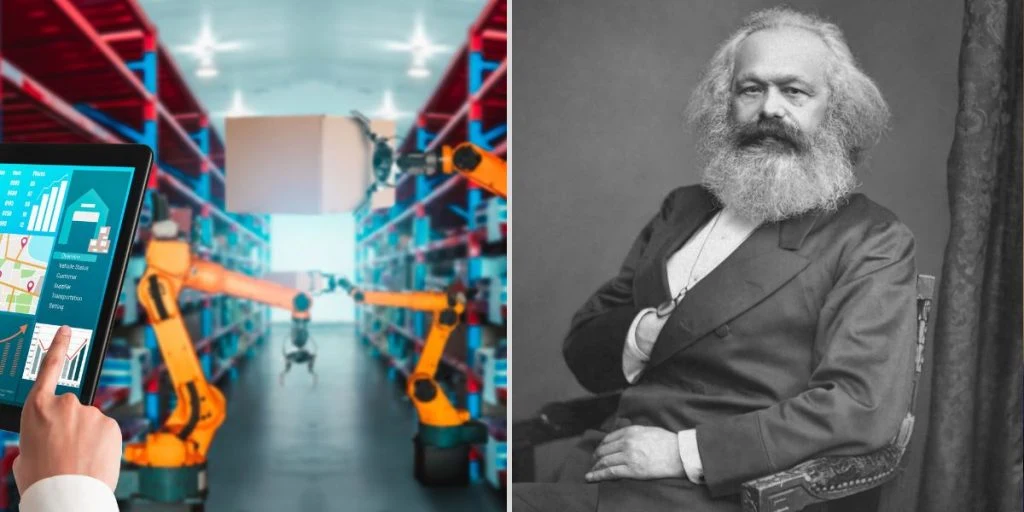
When monthly bills arrive, the final numbers often stretch beyond what a normal paycheck can cover. Millions feel this constant financial squeeze. They usually blame modern politics or a broken economy, but the real explanation might be much older, hiding in a 19th-century prediction.


Historian Robert Lynch argues in a YouTube video that Karl Marx anticipated some of the economic pressures shaping modern capitalism. Rather than focusing solely on political revolution, Marx examined how wealth and economic power could become concentrated among a shrinking elite.
Marx predicted that capitalist expansion would gradually erode traditional middle classes, leaving society increasingly divided between wealthy owners and wage-dependent workers.
The World Inequality Report 2026 offers a striking modern comparison: the richest 0.001% of the world’s population own three times as much wealth as the poorest half combined.
The squeezed middle
During the 19th century, industrial machinery transformed traditional trades, while expanding factories challenged independent workshops. In The Communist Manifesto, Karl Marx and Friedrich Engels argued that mechanization stripped workers of their independence, reducing them to what they called an “appendage of the machine.”


Similar pressures are evident today. Rising housing costs are making middle-class lifestyles increasingly difficult to maintain, while automation threatens traditional career paths.
In 2019, the OECD found that one in six middle-income workers held jobs at high risk of automation. A separate 2024 OECD report estimated that occupations facing the highest automation risks accounted for 27% of employment across OECD countries. Although the figures are not directly comparable, the newer assessment highlights how AI is expanding automation risks beyond traditional industrial work.
Marx and Engels believed that capitalist expansion would gradually erode the traditional middle classes, pushing many into the industrial working class. Today’s gig economy and shifting employment patterns raise questions about whether technological change could produce similar economic pressures.
Eroding the defenses
Critics of Marx’s predictions point to the rise of welfare states, labor protections, and democratic reforms that helped improve living standards across much of the industrialized world.
Lynch argues, however, that these protections may be less secure than they once appeared. In his interpretation, the reforms that softened capitalism’s harsher consequences did not eliminate the economic forces Marx described.
That leaves an uncomfortable question: As wealth becomes increasingly concentrated and technology reshapes employment, could some of Marx’s warnings prove more relevant than previously assumed?
Sources: Lynch the Historian / YouTube, World Inequality Report, OECD, Karl Marx and Frederick Engels: The Communist Manifesto



