
 Asger Risom

With the price gap between used electric and gas cars shrinking to a record low in 2026, a wave of off-lease vehicles like the Tesla Model 3 and Hyundai Ioniq 5 are offering flagship EV technology for under $30,000.

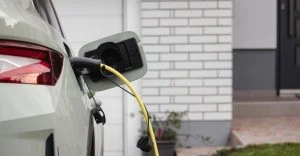
If you want to transition to an electric vehicle without paying an early-adopter tax, skip the dealership showroom and head straight for the used lot.
While automakers fight a brutal price war to make new EVs affordable, the secondary market is currently undergoing a structural reset. A massive wave of three-year-old, off-lease vehicles is flooding the market, driving prices down and creating the most favorable buyer’s market in the history of electric cars.
According to recent market tracking by Recurrent, more than half of all used EVs listed in late 2026 are priced well under $30,000. Furthermore, data from Cox Automotive reveals that the historical price gap between a used EV and a comparable gas-powered car has collapsed to a record low of roughly $1,300. In Europe, the trend is identical; Autotrader data notes that an influx of off-lease supply has brought the average price of a three-to-five-year-old EV down to just over £20,000.
For the pragmatic buyer, the extreme depreciation curve of an EV is no longer a warning sign—it is an outright financial subsidy. Here is where the smart money is going.


The undisputed king of the used market: Tesla Model 3
If you have a budget between $20,000 and $30,000, the 2017-2023 Tesla Model 3 remains the most compelling used vehicle on the road.
When the Model 3 first launched, it revolutionized the segment with its long range and proprietary Supercharger network. Today, those early models have depreciated by up to 50 percent, yet they remain technologically superior to many brand-new competitors. A comprehensive 2026 buyer’s guide by Wheelstreet highlights that a used Long Range Model 3 can routinely be found for under $30,000.
Crucially, the data proves that Tesla’s battery management systems are exceptionally resilient. Wheelstreet’s degradation analysis shows that a Model 3 retains roughly 93 to 95 percent of its original battery health even after 100,000 kilometers (approx. 62,000 miles), making a high-mileage used Tesla a remarkably safe long-term investment.
The road-trip champion: Hyundai Ioniq 5
If the harsh ride and austere interior of a used Tesla aren’t appealing, the 2022-2024 Hyundai Ioniq 5 is the consensus alternative.
Widely regarded as one of the best electric SUVs ever built, early Ioniq 5 models are now entering the used market en masse as their initial leases expire. You can now reliably find a big-battery, all-wheel-drive Ioniq 5 for right around the $30,000 mark.
What makes the used Ioniq 5 such a steal is its 800-volt architecture. It can charge from 10 to 80 percent in under 20 minutes on a 350 kW fast charger—a premium specification that many brand-new 2026 EVs from other manufacturers still cannot match. It delivers modern flagship charging speeds at a secondhand price.
The budget brawlers: Chevy Bolt and Nissan Leaf
For buyers operating strictly under $20,000, the market offers highly functional—if slightly compromised—daily drivers.
The first-generation Chevrolet Bolt (2017-2023) is a masterclass in cheap, reliable urban transportation. While its notoriously slow DC fast-charging speeds make it a terrible vehicle for cross-country road trips, it routinely delivers over 240 miles of range. For a driver who can charge at home and simply needs a commuter car, a used Bolt priced between $13,000 and $18,000 is practically unbeatable.
The Nissan Leaf is another hyper-budget option, but buyers must proceed with caution. As Wheelstreet notes, the older Leaf utilizes a passive air-cooling system for its battery, which leads to much faster degradation than the active liquid-cooling systems used by Tesla or Hyundai. Furthermore, older Leafs use the CHAdeMO charging standard, which is actively being phased out of public charging stations across Europe and the US.
The battery anxiety myth is dead
The primary reason buyers historically avoided used EVs was the fear of a catastrophic, out-of-warranty battery failure. The 2026 data shows that fear is largely unfounded.
Because modern EVs (excluding the early Leaf) utilize advanced active thermal management to heat and cool their battery packs, catastrophic degradation is incredibly rare. The powertrains are proving to be exceptionally robust, lacking the complex timing belts, transmissions, and exhaust systems that typically fail on high-mileage gas cars.
In 2026, buying a used EV isn’t a gamble on failing technology. It is simply letting the original owner absorb the financial hit while you drive away with the underlying hardware.



