
 Asger Risom
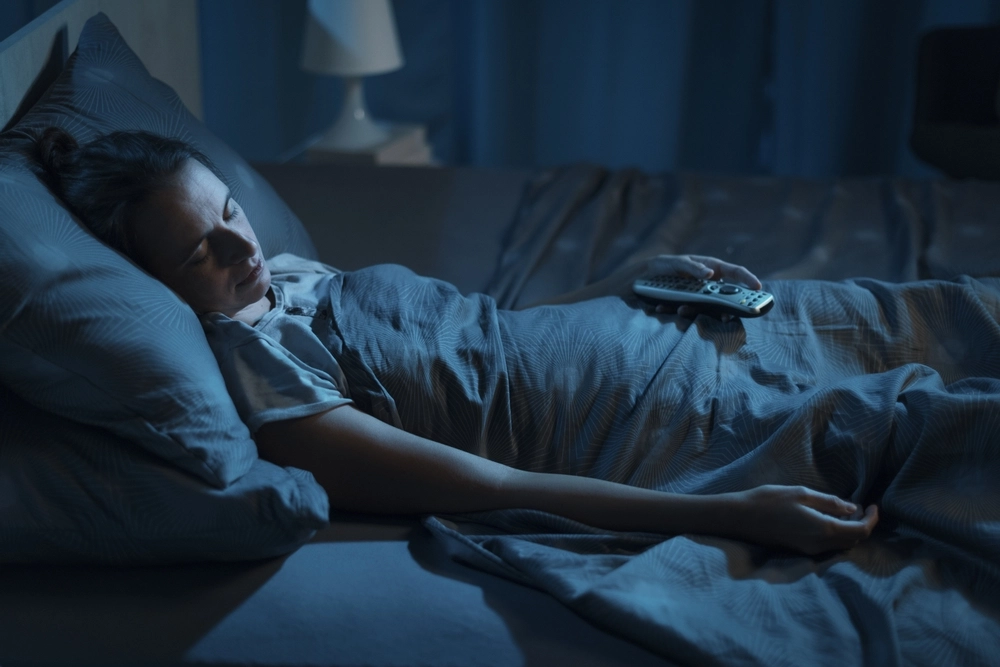
By using an AI model to analyze the bedside audio of thousands of smartphone users, researchers discovered that nighttime coughing spikes alongside PM2.5 air pollution—even when the air quality is well below the WHO’s official safety limits.


You go to bed on time, yet wake up exhausted. For many city dwellers, the culprit isn’t a lack of sleep, but the invisible particulate matter settling into their lungs overnight.
A massive new study highlighted by Welltica has established a direct, measurable link between urban air pollution and nocturnal coughing. Crucially, the research proves that respiratory distress occurs even when local air quality is officially classified as completely safe.
The mass surveillance of a cough
The research, published in Communications Health on September 15, 2026, bypassed traditional laboratory settings and instead leveraged a massive, real-world dataset: the bedside microphones of tens of thousands of global smartphone users.
Researchers from the University of Cambridge and Tsinghua University partnered with the developers behind the popular Sleep Cycle app. The team analyzed audio recordings from users across 32 cities in 12 different countries over the course of roughly 500 nights. Using an artificial intelligence model trained to isolate and count individual coughs, the researchers mapped the audio data against daily local air pollution metrics, intentionally filtering out variables like weather patterns and seasonal flu activity.


The myth of the safety threshold
The resulting data exposes a fundamental flaw in how global institutions regulate air quality.
The AI analysis revealed a strict mathematical correlation: for every 10-microgram increase in fine particulate matter (PM2.5) per cubic meter of air, nighttime coughing increased by 2.4 percent. During extreme environmental events, the numbers skyrocketed. When wildfires blanketed Los Angeles in smoke in January 2025, the bedside microphones recorded massive, localized spikes in coughing.
But the most alarming takeaway is what happens on a standard Tuesday. The correlation between PM2.5 levels and respiratory distress held strong even when pollution was well below the World Health Organization’s recommended daily safety limits. Lead researcher Professor Cecilia Mascolo from Cambridge noted that while the study is observational, the data strongly suggests that a genuinely “safe” threshold for air pollution exposure simply does not exist.
A biomechanical warning sign
A cough is not a disease in itself; it is a mechanical eviction notice. It is the body’s forced reflex to expel foreign irritants from the airway.
Because PM2.5 particles are microscopic—a fraction of the width of a human hair—they easily bypass the body’s mucosal filtration systems in the nose and throat. They penetrate deep into the pulmonary tissue, where they embed themselves and irritate the lungs. Co-author Tong Xia from Tsinghua University points out that a minor, persistent nighttime cough is often the very first physiological signal of this localized cellular inflammation.
While individuals cannot clean city air on their own, the physical mechanics of the threat dictate the solution: block the particles before they reach the bed. Health experts advise keeping bedroom windows closed during peak commuter traffic hours and utilizing HEPA-certified air purifiers to mechanically scrub the microscopic debris from the air while you sleep.



