
 Asger Risom
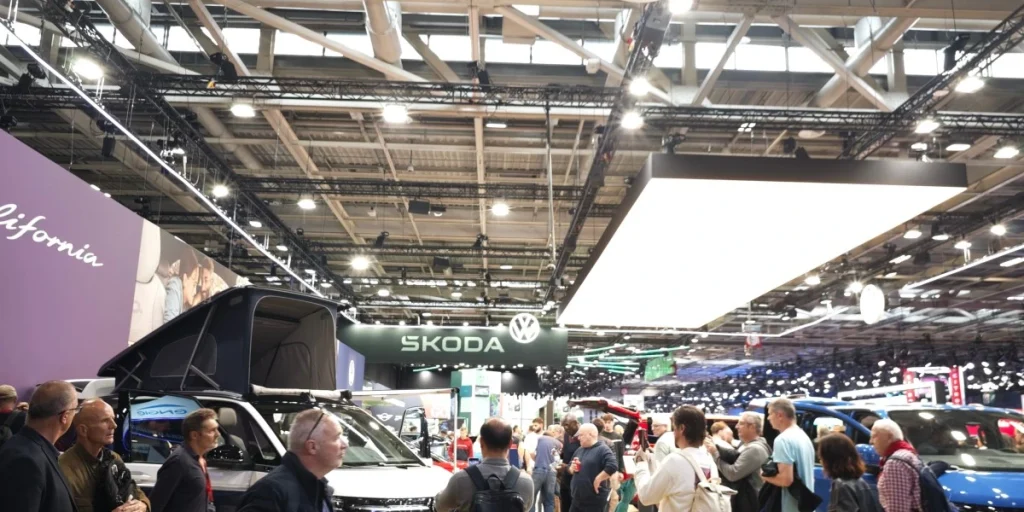
Automakers at the 2026 Paris Motor Show were aggressively mining their heritage catalogs, reviving icons like the Citroen 2CV and Peugeot’s 80s rally legends to sell modern EVs. But underneath the retro charm, a brutal tech war is brewing against new ultra-fast charging architectures.


Automakers have finally figured out a crucial psychological trick: selling us the electric future is vastly easier if it looks exactly like the past.
If you look at the reveals coming out of the 2026 Paris Motor Show this week, you won’t see a sprawling lineup of sterile, wind-tunnel-optimized spaceships. Instead, European car brands are aggressively mining their heritage catalogs, weaponizing nostalgia to capture buyers in an increasingly cutthroat EV market.
The French heritage offensive
The home turf brands in Paris are leaning into their backlogs harder than anyone else. Citroën has officially resurrected the 2CV—arguably the ultimate French utilitarian icon—reborn for the modern era as an electric vehicle.
But Peugeot is taking a much more aggressive route. Instead of a quirky city commuter, they debuted the E-T16 Concept. It is an 816-horsepower, tri-motor, all-electric “hyper-hatch” designed as a direct homage to the legendary Peugeot 205 T16 that dominated the World Rally Championship back in the 1980s. Not to be outdone, Renault revived the 8 Gordini nameplate, slapping it onto a jaw-dropping rear-wheel-drive electric coupe.


The strategy is clear: if the underlying battery skateboard chassis is inherently soulless, you have to inject personality entirely through the sheet metal.
Volkswagen kills the blob
Perhaps the most telling shift in industry philosophy comes from Volkswagen. For the last few years, VW has pushed its “ID” lineup—a series of EVs characterized by highly aerodynamic, melted-jellybean silhouettes.
It seems they are finally admitting defeat on that front. At Paris, VW revealed the ID. Tiguan. The automaker specifically binned its previous blobby design language to give buyers a sharper, more traditional SUV shape attached to a nameplate they already know and trust.
The nine-minute charging threat
While the European legacy brands are busy playing the nostalgia card, Chinese automakers are showing up with raw, terrifying spec sheets.
BYD used the Paris show to debut the Atto 8, a flagship seven-seater SUV. But the actual industry-shaking news is the vehicle’s “Flash Charging” architecture. BYD claims the new system can juice a massive 115kW battery from 10 percent all the way to 97 percent in just nine minutes.
That is the stark reality of the current automotive landscape. The legacy brands are leaning heavily on charming 1980s rally designs to get you into the showroom, but they are competing against foreign battery hardware that can practically recharge while you wait for a cup of coffee.



