Asger Risom

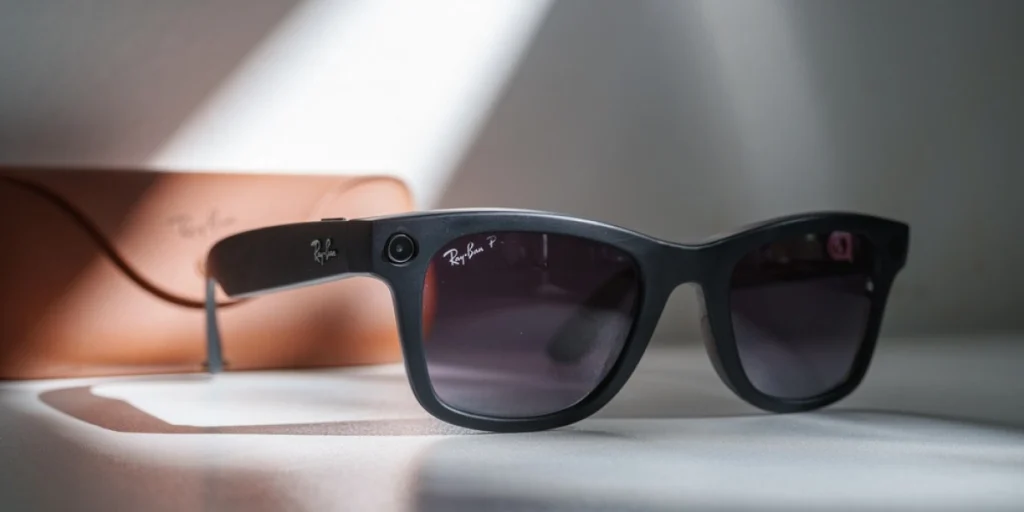
Meta is releasing a camera-free version of its Ray-Ban smart glasses to combat their growing reputation as invasive “pervert glasses.” While the new audio-only frames offer a privacy-friendly way to listen to music and get directions, tech giants still view wearable cameras as essential for gathering real-time AI data. By mixing camera-free options into the market, Meta is hoping to lower public backlash while waiting for society to eventually accept ambient surveillance.


When you point a smartphone at someone, the social cue is incredibly obvious. You have to physically hold a piece of glass up and aim a lens directly at their face. Smart glasses completely erase that vital layer of social friction, allowing people to record conversations while maintaining perfect eye contact.
Because of this invisible surveillance, the original camera-equipped Ray-Ban Meta glasses quickly earned the brutal moniker of “pervert glasses” online. There have been widespread reports of the devices being used to harass women by filming them without consent. As detailed by the BBC, this public backlash led to outright bans in UK pubs, theaters, and schools.
To fix this massive image problem, Meta is now releasing a version that physically cannot watch you. The new Ray-Ban Meta Audio completely removes the camera in favor of open-ear speakers and a lighter frame. It is an interesting hardware pivot that asks if consumers actually want a camera on their face in the first place.
The invisible camera problem
The core issue with wearable cameras is that bystanders have no reliable way to opt out. Meta included a blinking white LED on the original frames that activates whenever the camera is recording. However, a cottage industry immediately sprang up to build workarounds, including physical tape and teardown guides to disable the light.


This creates an environment where nobody knows who is actively recording the coffee shop or the subway train. A Polish developer even released a Bluetooth-scanning app called ZuckOff just to help people identify nearby smart glasses. People are understandably nervous about interacting with anyone wearing thick-framed sunglasses indoors.
By removing the camera entirely, Meta is trying to salvage the non-creepy features of the hardware. The audio-only version still connects to your phone via Bluetooth to funnel music and maps directly into your ear. You get the convenience of listening to a podcast without stuffing earbuds into your skull or holding a phone in traffic.
A strategic hardware pivot
Meta insists that this camera-free model has been in development for two years and is not a rushed apology for the privacy backlash. Having an audio-only option gives them a cheaper, lighter entry point for consumers who just want smart headphones. It also creates a highly convenient smokescreen for the company’s broader hardware ambitions.
Tech analysts point out that mixing camera-free glasses into the market actually protects the people wearing the camera-equipped versions. If bystanders cannot easily tell which model you are wearing, they might hesitate to automatically get angry. It introduces just enough doubt to lower the temperature of public confrontations.
Despite this audio-only release, the tech giant is absolutely not giving up on wearable cameras. Mark Zuckerberg has publicly predicted that smart glasses will eventually replace our mobile phones entirely. To make that happen, the artificial intelligence powering these devices needs to see the world exactly as you do.
The hunger for visual data
The ultimate goal of smart glasses is not just to take photos, but to feed real-time environmental data into an AI platform. An artificial intelligence cannot give you contextual information about a restaurant menu or a landmark if it is blind. Having a constant, first-person visual data stream is the only way to build a truly proactive digital assistant.
This is why competitors are still rushing to put lenses on our faces while experimenting with alternative privacy guardrails. For example, HTC recently launched the Vive Eagle, which uses microphones to automatically deactivate the camera if a bystander yells at it to stop filming. Other companies are betting that the public will eventually just get used to ambient surveillance.
We are currently in a messy transition period that looks exactly like the early days of camera phones. Twenty years ago, people panicked about privacy and demanded that mobile phones be built without lenses. Eventually, we established new societal norms, and the tech industry is gambling that the exact same thing will happen with smart glasses.