Christine Drews Sieger

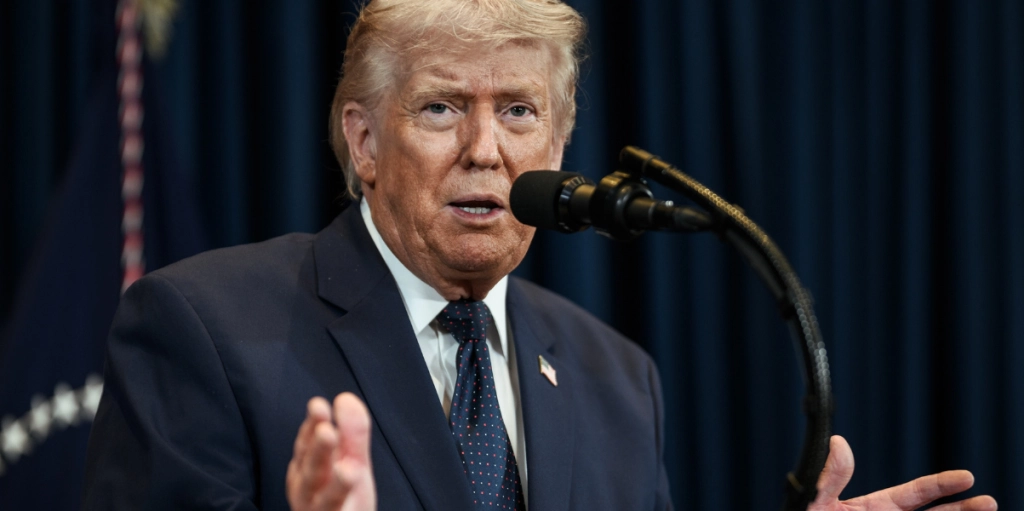
Audi’s chief executive faced fierce backlash in Germany after announcing a $4bn US factory alongside Donald Trump during a campaign rally.


Gernot Döllner announced a $4bn factory expansion in Georgia alongside Donald Trump just days before the US midterms, prompting fierce condemnation from German labor leaders.
When Audi chief executive Gernot Döllner walked onto the stage at an election rally in Perry, Georgia, on Saturday, he brought a blockbuster pledge with him: $4bn for the carmaker’s first dedicated US manufacturing plant.
Standing alongside Donald Trump, Döllner promised 4,500 jobs to build large SUVs in Macon starting in the next decade.
The reception at home, however, was immediate and blistering, according to The Guardian.


With Audi’s parent company, Volkswagen Group, locked in fraught negotiations to eliminate up to 100,000 domestic roles and close domestic factories, labor leaders viewed Döllner’s high-profile appearance as both a strategic and political provocation.
“Turned into a puppet”
The backlash began from within Volkswagen’s own governing bodies.
Trump opened the Macon event with an address that Daniela Cavallo, chair of VW’s central works council, characterized as saturated with “racism, sexism, transphobia [and] contempt for democracy.”
In an internal communication distributed across the workforce, Cavallo stated that anyone who watched Döllner participate after hearing those remarks must “sink into the ground with shame.”
She accused group management of allowing itself to be “turned into a puppet in the propaganda show of a highly dubious political figure.”
Christiane Benner, head of the industrial union IG Metall, joined the criticism, branding the rally appearance “extremely embarrassing, politically unacceptable and unworthy of the company, but above all of Audi’s employees.”
Benner also argued that Döllner acted in “flagrant breach” of internal corporate rules “which expressly requires political neutrality in the run-up to elections,” according to The Guardian.
The criticism quickly entered the political arena. Isabel Cademartori, transport spokesperson for Germany’s governing Social Democrats, described Döllner’s actions as a “disgrace,” pointing directly to the sensitivity surrounding “the history of the Volkswagen Group.”
Berlin chose to keep its distance. A federal government spokesperson declined to criticize the appearance, defining it strictly as “a business decision regarding where the company invests and, in this case, where the company’s chief executive appears.”
Navigating Tariffs vs. Protecting Domestic Sites
Beneath the political firestorm lies an escalating financial dilemma for Audi.
As the only major German luxury brand without an assembly footprint inside the United States, the carmaker has borne the full weight of 15% import tariffs, which cost the company roughly €1.2bn over the past year.
Döllner framed the planned 200,000-vehicle-per-year site in Georgia as an unavoidable commercial necessity, telling the Perry audience that the venture represents “a long-term investment because we believe in the American market.”
Yet the timing could hardly be more delicate. Volkswagen’s broader European operations face severe margin pressures driven by rising transition costs and aggressive competition from Chinese electric-vehicle manufacturers.
Among the German sites threatened with potential closure is Audi’s own Neckarsulm facility, where 15,000 employees are currently based, The Guardian reports.
Addressing those pressures, an Audi spokesperson maintained that “each site must do its part in terms of competitiveness and the long-term strength of Audi.”
Döllner’s overseas project still faces a formal domestic test. Benner, serving as deputy chair of Volkswagen’s supervisory board, warned that any capital deployment on the scale of the Georgia plant must first receive formal authorization from the board—where labor representatives hold significant statutory power.