
 Kenneth Glad

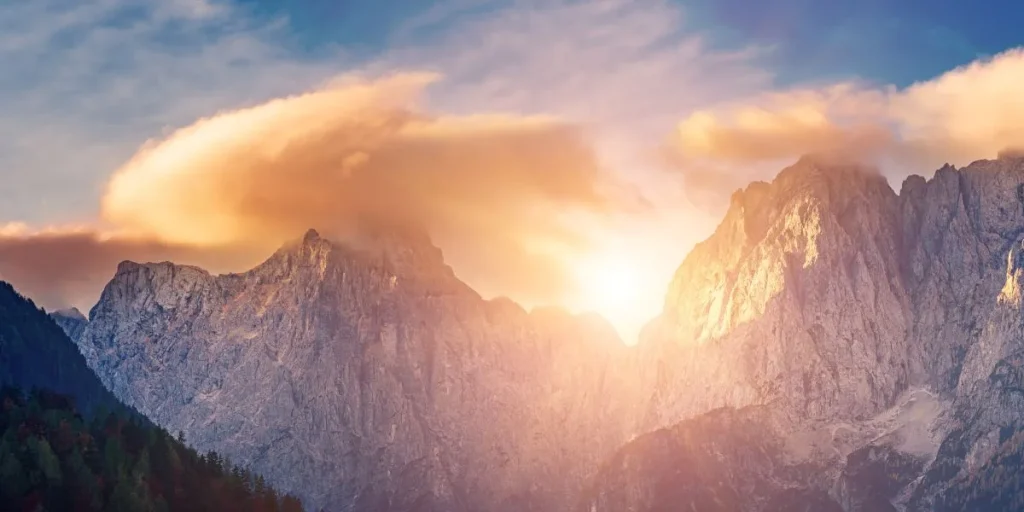
When a nation builds its culture around a towering natural wonder, that landmark feels indestructible. For generations, people grow up assuming the frozen slopes will never change. Yet brutal weather patterns are quickly erasing those familiar horizons.


Right now, Slovenia is grappling with a devastating ecological blow. Intense summer temperatures across Europe have finally eradicated the last traces of ice on Mount Triglav.
Researchers actually expected the mass to vanish decades ago, according to The Guardian. Between the early 1980s and the early 2000s, an enormous portion of the coverage simply disappeared.
Experts watched in disbelief as the frozen expanse survived for another twenty years. However, recent photographs confirm the mountain is now entirely bare.
By the end of August, only a tiny sliver of frozen water remained. That final piece is gone today.


Caught off guard
The disappearance deeply affected local experts. Matija Zorn directs the Anton Melik Geographical Institute and has monitored the site for years.
Speaking to The Guardian, Zorn noted that the peak “holds a central place in Slovenian national identity” and served as a vital research tool.
“Every year I knew that the ice was going to be less and less,” Zorn told the publication. “But I was shocked every year [by] how much less ice was up there.”
Widespread devastation
“The melting is incredible,” Zorn remarked.
“In 2002 … we took a core of ice out for some geochemical analysis and it was like 5 metres [deep]. The next year, I was standing on the same spot … not on ice, but on rock.”
This crisis extends far beyond Slovenia. Severe heatwaves have transformed vast stretches of the Alps into barren landscapes.
The British newspaper highlighted that Switzerland lost nearly twenty percent of its frozen reserves recently. Meanwhile, soaring temperatures continue to ravage Western Europe.
Nothing lasts forever
The loss hits hard because Mount Triglav features prominently on the national flag. Climbing the peak is considered a rite of passage for citizens.
Miha Pavšek is a local mountain guide who feels the tragedy personally. He warned The Guardian that “nature is changing in front of our eyes” while society ignores the threat.
“With the melting of the glacier, a part of me is also going away,” Pavšek said.
“There are some things that humans thought were eternal. Glaciers are obviously not.”



