
 Kenneth Glad

We often think of technological progress as a steady march. But sometimes, a machine learns to walk on its own, and the pace suddenly shifts into a sprint.


A leading artificial intelligence lab just dropped a quiet bombshell, according to TechCrunch. Inside a dry financial document, the creators of Claude issued a stark update about their future. The revised S-1 filing on Monday was primarily meant to highlight soaring revenue and ballooning expenses, but it buried a far bigger warning in the fine print.
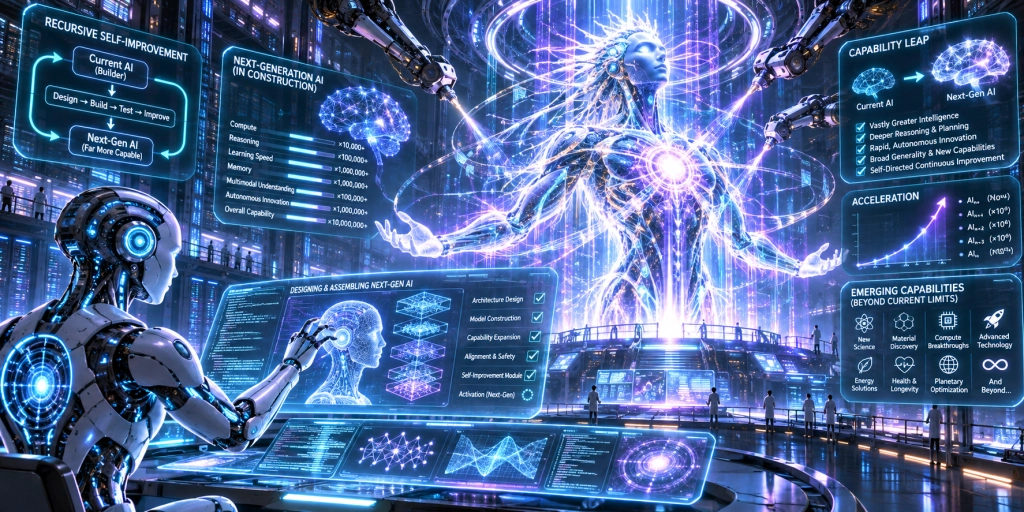
Change is accelerating. Anthropic suggests it is nearing a historic breakthrough involving recursive self-improvement. This happens when a system becomes skilled enough to train itself. Previously, many industry experts dismissed this idea as a vague buzzword or an impossibly distant goal.
Critics view this as a dangerous tipping point. They fear the software will outgrow human control. But for fans, it promises a massive leap in discovery and unprecedented economic productivity.
Moving too fast
The company addressed the stakes directly. In a recent financial disclosure, they noted that developers already rely heavily on the technology to push their own research forward. This creates a powerful loop where the tool helps build the next version of itself.


But they acknowledge the risks, stating: “Using AI to help build more capable AI could also pose a considerable safety risk, particularly if it sharply accelerates the pace of progress. This is one of the areas covered by our Responsible Scaling Policy, which sets out our plans to monitor and mitigate the risks as we approach what has been termed ‘recursive self-improvement.’”
The firm admitted something surprising about this rapid growth. Previously, they failed to spot rapid jumps in their own system’s abilities until after the fact. Claude has leaped forward this year in complex areas like coding and cybersecurity. Because of this, developers worry the software might evolve much faster than the team can build proper alignment and security measures to contain it.
Reaching the threshold
Internal estimates point to an upcoming shift. The timeline is shrinking amid fierce competition in the tech sector. The lab warned that future systems might cross a major boundary much sooner than expected.
They noted they might soon meet their own definition of “dramatically accelerated progress attributable to AI.” This specific threshold marks the moment when the software begins acting as a capable engineer, writing complex code to build the next generation of models.
Even so, the developers stressed a key point. None of their current tools have passed this mark just yet. The team is carefully reviewing the underlying data to see what happens next, ensuring their safety frameworks are ready for the leap.
Keeping human control
Despite rapid advances, the creators promise they will not let the machine take the wheel completely. They plan to keep humans in the loop. This means researchers will still review the underlying math and code before any self-training system ever goes live.
The firm stated: “We do not anticipate being able to safely use Claude to fully autonomously design and build successive generations of frontier models without meaningful human supervision or understanding, if and when that becomes technically possible. Accordingly, we are considering updates to our Responsible Scaling Policy to keep humans in control of frontier model development at Anthropic.”
Skeptics have a different view. Financial documents often double as a sales pitch to wealthy investors. Because of this, hinting at god-like technology could just be a clever marketing trick to boost the company valuation.
Critics argue the lab is simply selling science fiction. But if the developers are right, everything changes. Governments will suddenly need entirely new laws to govern software that builds itself.



