
 Christine Drews Sieger

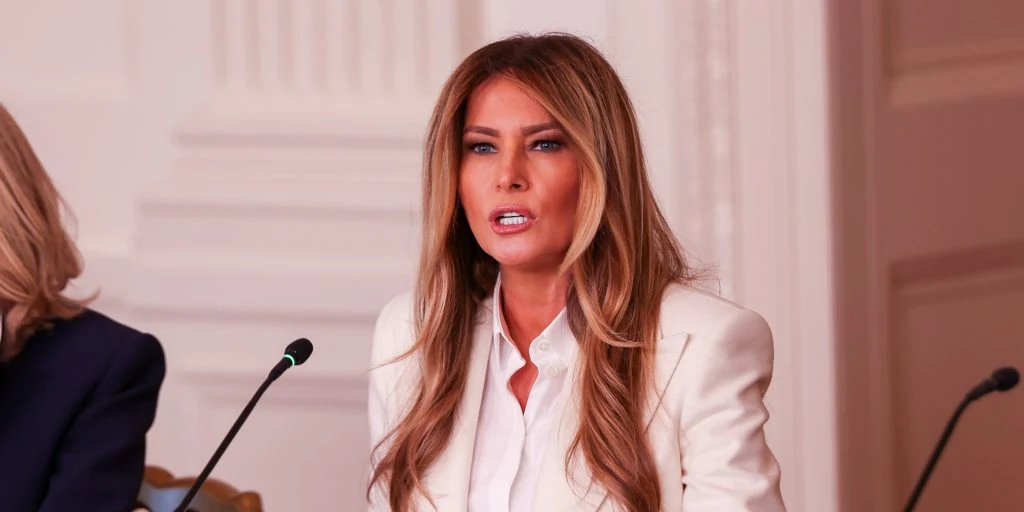
Melania Trump hosted Russian and Ukrainian officials at the White House to mark a six-day humanitarian ceasefire in Oleshky.

In an unexpected diplomatic initiative, First Lady Melania Trump hosted delegations from both Russia and Ukraine in the White House’s Cross Hall on Thursday.
The gathering marked a localized six-day humanitarian ceasefire in the frontline city of Oleshky—unfolding just 48 hours after midterm election results dealt a heavy political blow to her husband.
The temporary truce allowed nearly 800 civilians to leave the occupied city before Moscow rejected an extension. Addressing the diplomats, the First Lady pressed for sustained momentum:
“Together we can create something more enduring than a temporary ceasefire,” she said, calling Oleshky “a spark in a world of darkness.”


Ukraine’s chief negotiator, David Arakhamia, awarded her the Order of Princess Olga on behalf of President Volodymyr Zelensky, noting that 95 percent of observers had doubted the effort would succeed.
Russian envoy Kirill Dmitriev praised the initiative and presented a drawing inscribed “I love Melania” from an evacuated child, according to the Daily Mail.
In response, Melania Trump handed sealed letters to both envoys, urging their respective presidents toward a comprehensive settlement.
Humanitarian Relief Amid Frontline Reality
The First Lady’s intervention followed briefings on Oleshky at the UN General Assembly in September.
Captured in February 2022, the city saw its utilities collapse and 90 percent of its area flooded after the Kakhovka Dam explosion in 2023.
The breakthrough builds on her earlier quiet diplomacy, which has reunited 34 displaced children with their families, the Daily Mail reports.
Yet the diplomatic ceremony in Washington stood in sharp contrast to the situation on the ground.
Despite the successful evacuation, the pause did not ease the broader military confrontation.
According to The Guardian, Ukrainian officials accused Russian forces of exploiting the suspension of fighting to fortify their positions around Oleshky.
The Kremlin countered that adjusting troop movements during a lull is standard military practice.
The Limits of Local Ceasefires
The friction underscores the inherent fragility of localized humanitarian deals, The Guardian reports.
While such pauses provide critical windows for relief and civilian evacuations, they rarely signal a mutual readiness to wind down the war.
For the White House, the Oleshky accord stands as a notable humanitarian success driven by an unconventional diplomatic figure.
Whether it can serve as a genuine template for a wider peace settlement, however, remains deeply uncertain as frontline combat resumes.



