
 Kenneth Glad

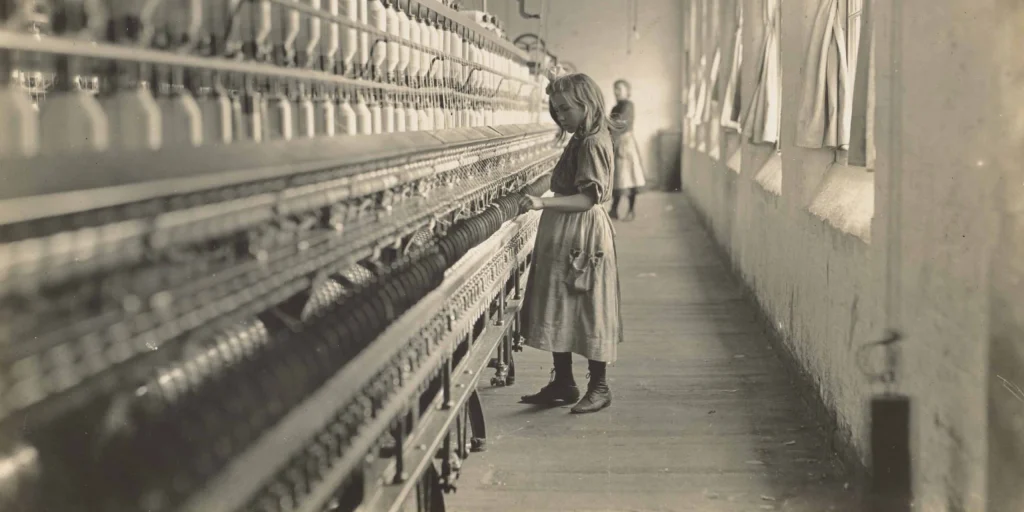
Before modern laws protected workers, factories relied on a quiet and invisible workforce. The massive machines of early industry needed more than just coal and water to keep running. They ran on the unpaid labour of orphans.
A seven-year-old boy named Robert Blincoe left London’s St. Pancras workhouse in 1799. He and dozens of other orphans were bound for Lowdham Mill near Nottingham. They travelled for three exhausting days in horse-drawn carts without a single stop.
The contract committed him to 14 years of unpaid work. The factory owner called it an apprenticeship, but the children received only basic food and a shared bed in a crowded dormitory. They were woken at five in the morning every day.
HistorieNet reports that Robert and his peers worked brutal hours cleaning moving, water-powered machinery. The air was thick with cotton dust. Accidents were incredibly common.
Blood on the floor
Supervisors beat the children regularly to keep production numbers high. Their bonuses depended on hitting monthly quotas, so delays cost them money.


During his first weeks on the floor, a foreman named Mr. Smith covered Robert in bruises. Smith preferred throwing punches over standard whipping.
Tragedy struck when a ten-year-old girl named Mary Richards caught her finger in a machine. She had known Robert in London. HistorieNet notes that the equipment dragged her in completely, killing her right in front of the other children. Robert screamed for help, but he was too late.
Robert also suffered severe physical trauma at the factory. A heavy machine sliced off the top of his index finger. His bosses simply called him clumsy.
He had to run to a nearby village to find a doctor, who sewed the wound without any pain relief. The physician withheld opium because Robert had to resume work immediately.
Running for help
The young boy decided he had to act. He naively believed the orphanage directors would help if they knew the truth, so he sneaked out. He tried to walk all the way back to London to report the terrible conditions.
He made it nearly five kilometres before a local tailor spotted the fleeing child. The man dragged him back to the factory. Robert begged his captor to ask for mercy, but his brave escape attempt earned him another severe beating.
Lowdham Mill went bankrupt in 1802. The children were moved to a second facility in Derbyshire. Food was so scarce there that starving orphans survived on leaves and pig feed.
By 1812, Robert managed to escape again and reported the abuse to a local magistrate.
Changing the law
The magistrate gave Robert a letter for the new factory owner reminding him to obey the law. It resulted in another vicious beating with a cane, but Robert finally realised that speaking up mattered. He viewed the document as a magical talisman.
He finally left the factory system at age 21. He saved his wages as a spinner to open his own cotton mill. HistorieNet explains that he wanted to prove a business could treat people well and still profit, making a strict point of hiring disabled workers.
Robert published a book about his childhood experiences in 1822. His vivid account shocked the British public and sparked widespread outrage.
This backlash forced the government to investigate child labour, and his story helped pave the way for the Factory Act of 1833.



