
 Kenneth Glad

A specific stretch of deep water in Scotland holds more volume than all lakes in England and Wales combined. For almost a century, people have flocked to its rocky shores hoping to glimpse something impossible. And the obsession shows no signs of slowing down.


The Loch Ness monster myth stretches back hundreds of years. Even before written records, local Picts carved images of strange aquatic beasts with flippers into Highland stones.
According to Britannica, an ancient biography claims that a monk named St Columba encountered a water beast in 565 AD. He supposedly told the animal to “go back”, and it obeyed.
The modern craze really took off in 1933. A newly finished road opened right next to the Scottish lake, and drivers finally had a clear view of the dark water. Soon after, Aldie Mackay, a manager at the Drumnadrochit hotel, reported seeing a “whale-like creature”, writes HistoryHit.
A local newspaper called the Inverness Courier covered her story, and its editor reportedly suggested calling the beast a monster. Months later, a man named George Spicer and his wife claimed they saw a “dragon or prehistoric monster” cross their car’s path and vanish into the water. The legend of Nessie was officially born.


Hoaxes and toy submarines
Fascination with the beast quickly led to fake evidence. In 1933, the Daily Mail hired big-game hunter Marmaduke Wetherell to track down the creature. He soon found large footprints on the shore.
He claimed they belonged to a “very powerful soft-footed animal”. Zoologists at the Natural History Museum later realized the truth. Someone had stamped the tracks using an umbrella stand shaped like a hippopotamus leg, Britannica says.
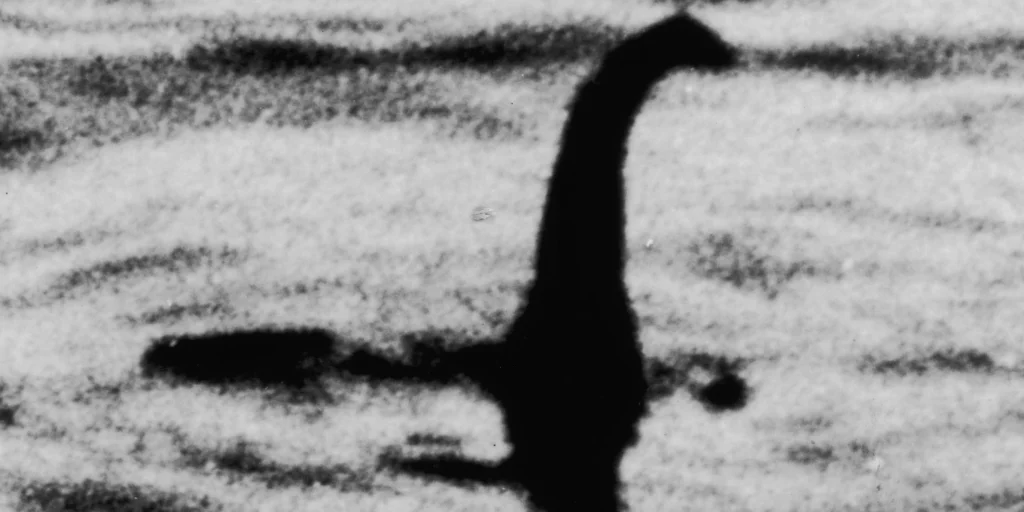
The most famous piece of proof arrived one year later. An English physician named Robert Kenneth Wilson snapped a picture of a slender neck rising from the waves. The newspaper printed the image, and the ‘Surgeon’s Photograph’ immediately became a global sensation.
Decades passed before the truth finally emerged. In 1994, investigators discovered that the iconic image was actually an elaborate revenge hoax plotted by Wetherell. A deathbed confession revealed the monster was just a plastic head glued to a toy submarine, sinking the popular myth.
Scanning the dark water
Despite known fakes, the search has never really stopped. During Operation Deepscan in 1987, researchers equipped two dozen boats with echo-sounding sonar to sweep the entire lake.
They found unexplained contacts on three occasions. While one expert thought the readings pointed to a new species, critics argued the machines had simply pinged logs or large debris.
Science has tried to solve the mystery in other ways. A detailed environmental DNA survey in 2018 checked water samples for genetic material. Researchers found absolutely no trace of giant reptiles, though they uncovered a massive amount of eel DNA. That sparked a new theory suggesting the beast might actually be unusually large eels.
In 2023, the Loch Ness Centre helped launch the biggest hunt for the legendary monster in half a century. More than a hundred volunteers searched the shores, while hundreds more monitored live video streams.
The team used infrared drones and underwater microphones to search for signs of the mysterious creature. They even heard four unexplained noises during equipment testing, although the sounds were never recorded.
Organizers admitted that the findings needed further investigation, leaving them without any concrete proof of the monster’s existence.
Big tourist business
The lack of physical evidence hardly matters today. Science insists the lake lacks the food supply to support a giant apex predator, and experts often blame strange wave patterns for tricking the eye.
Yet Nessie remains a cultural powerhouse that inspires countless books, television shows, and films. Because the famous legend brings nearly $80 million into the Scottish economy every year, according to Britannica, local businesses have a massive financial reason to keep the myth alive.
This booming tourism industry makes it difficult to separate genuine investigations from commercial gain, as HistoryHit points out. Still, people really want to believe.
Some dedicate their entire lives to the mystery, like Steve Feltham, who holds the Guinness record for a continuous 32-year monster-hunting vigil. As long as the murky water stays quiet, hopeful tourists will keep watching the surface.



