
 Christine Drews Sieger

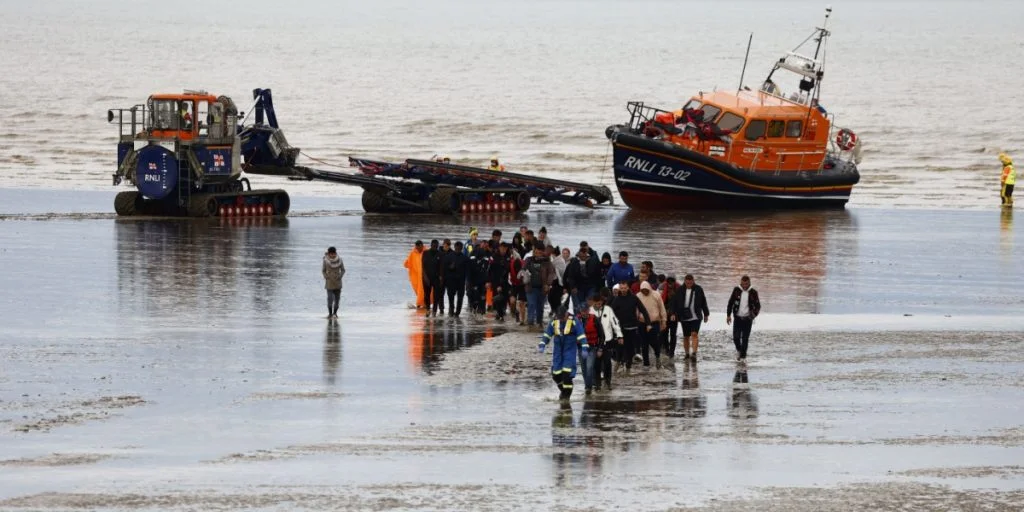
The Spanish coastguard rescued 1,488 migrants arriving in 14 boats on the Canary Islands in a single day, breaking a six-year record.


Emergency crews faced an intense Saturday off Spain’s Canary Islands as 14 boats carrying 1,488 migrants reached the archipelago.
According to the Spanish news agency EFE, citing maritime rescue services, the influx marks the highest single-day total in six years.
The previous daily record was set on November 7, 2020, when the coastguard rescued 1,461 people in the surrounding waters.
Of Saturday’s arrivals, a single vessel carried 240 people, including 36 children and 12 women, authorities confirmed to Reuters.


The vast majority of those on board had departed from West African nations, primarily Senegal, Gambia, and Guinea Conakry.
Rescue teams transported almost all of the passengers directly to El Hierro, which received 12 of the 14 boats, while Gran Canaria and Tenerife recorded one arrival each.
Tiny island under pressure
As one of the smallest and least densely populated islands in the Spanish territory, El Hierro faces immediate logistical strain whenever multiple boats land simultaneously.
The sudden surge since October has placed heavy demands on local reception facilities and emergency personnel.
To address the mounting pressure, Spain’s Territorial Policy Minister Angel Victor Torres is scheduled to visit El Hierro on Sunday to meet with local officials, Reuters reported.
Interestingly, this recent autumn wave contrasts with the broader annual trend.
Official government data shows that overall migrant arrivals to the Canary Islands between January and October 31 actually dropped by 5.5% compared to the same timeframe last year.
Calm seas, dangerous crossing
The spike in crossings coincides with seasonal weather shifts.
During the autumn months, winds along the West African coast typically subside, creating calmer sea conditions that lead to an increase in attempted voyages toward European territory.
Despite the smoother waters, Reuters notes that the Atlantic corridor from West Africa remains one of the deadliest migration routes in the world.
Strong ocean currents, vast distances, and overcrowded boats continue to make the passage extremely hazardous for the thousands who attempt it each year.



