
 Kenneth Glad

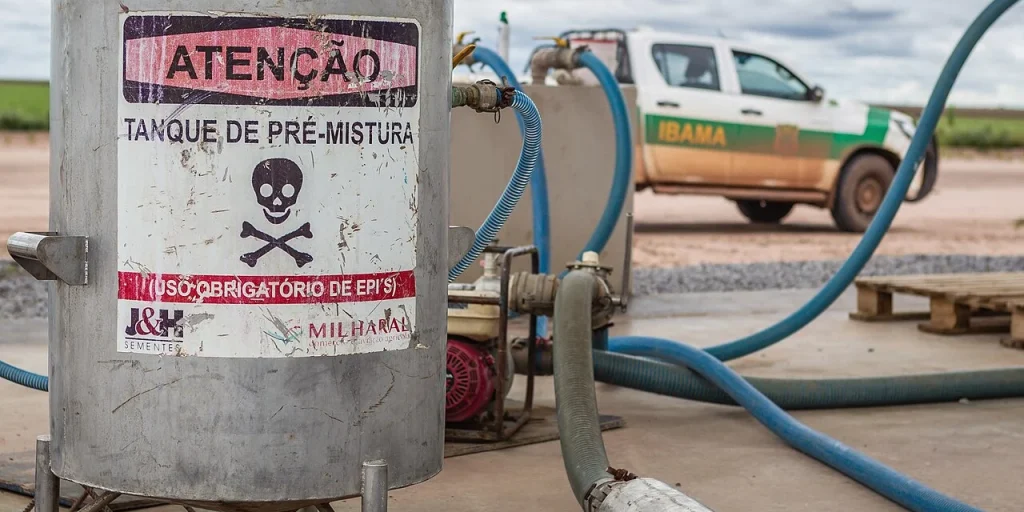
Strict rules decide what goes onto European farm fields. Yet factories on the continent still produce chemicals deemed too risky for local soil. Thousands of miles away, rural workers are dealing with the fallout.


The numbers tell a grim story. According to The Guardian, brands sold by European chemical firms appeared in 1,605 Brazilian poisoning reports last year, including 32 deaths.
Researchers at Unearthed and Public Eye dug into Brazilian health ministry records to uncover the scale of the problem. They checked over 6,700 medical reports. Nearly half named a specific product.
Roughly a third of the European-linked cases involved substances banned on European Union farms due to health or environmental dangers. Companies cannot sell them to local growers, yet overseas exports remain completely legal.
Greenpeace UK campaigner Nina Schrank slammed the trade. Speaking to The Guardian, she called it a “deadly double standard” and declared, “If a pesticide is too dangerous to use in Britain, it should be too dangerous to export.”


One fatal mistake
Behind those statistics are rural families shattered by routine farm chores. In southern Brazil’s Rio Grande do Sul state, farmer Nelson Castoldi died after accidentally drinking Reglone, a weedkiller made in Huddersfield, England, by Swiss firm Syngenta.
Regulators banned Reglone’s active ingredient, diquat, in the EU in 2019 and Britain in 2020 over risks to residents and wildlife. Yet UK exports continue. According to The Guardian, Brazilian records tied Reglone to 44 reports and four deaths last year.
To avoid carrying a 20-litre drum, Castoldi’s family poured one litre into an empty cola bottle. Under a blistering sun, he mistook the dark poison for soda, took a sip, and died two days later.
His son, Ivan Castoldi, said his heartbroken mother died of a stroke four months later. “We fell apart,” he told investigators, adding, “That poison, Reglone, should be banned in Brazil.”
Burns and banned sprays
Other workers survived brutal injuries that left lasting scars. Farm worker Sidnei Souza de Oliveira, 49, was filling a sprayer when the handle broke on a jug of Dormex, soaking his leg in the German-made chemical.
Thin employer-supplied trousers let the liquid soak through. Afraid of losing his job, he kept working for four days. “After 15 days, my leg was black. Chunks of flesh were falling off,” Oliveira told reporters, according to The Guardian.
Dormex contains cyanamide, a chemical withdrawn in Europe in 2008 because farm operators faced unsafe exposure levels. Health ministry files logged 17 confirmed poisonings linked to Dormex last year, alongside 12 deaths tied to Bayer’s weedkiller Roundup.
Hidden clinic cases
Other banned substances surfaced in the files too, including BASF’s spray Finale. Finale contains glufosinate, which the EU outlawed in 2018 because it can harm fertility or unborn babies.
Even these figures likely miss many rural victims. Public health biologist Vanda Garibotti told The Guardian that lab tests are rare, warning that “The insufficient training of healthcare professionals to recognise and manage these cases is a major limiting factor.”
Because rural clinics face high staff turnover and scarce testing tools, doctors often record cases as simple exposures rather than confirmed poisonings. Meanwhile, a 2020 study noted by the British newspaper found that banning hazardous pesticides can sharply cut suicide rates.
Chemical giants push back
Major manufacturers strongly dispute how the data is being read. Syngenta, whose products were cited 425 times, pointed out that nearly half of its listed cases were logged as unconfirmed exposures rather than proven poisonings.
A Syngenta spokesperson told The Guardian that researchers ignored final classifications, accusing them of selectively reading data “to support a predetermined conclusion”. Still, the firm noted it trained 95,000 people in Brazil last year.
BASF, cited 179 times, noted to the paper that some incidents involved intentional ingestion, which it called “deliberate misuse”. Meanwhile, Bayer noted 26 of the 32 deaths were suicides and argued “Roundup” is often used generically for rival sprays.
All three companies insisted their products are safe when used properly. For campaigners and grieving relatives, though, those assurances offer little comfort while banned European toxins keep landing on foreign fields.



