
 Kenneth Glad

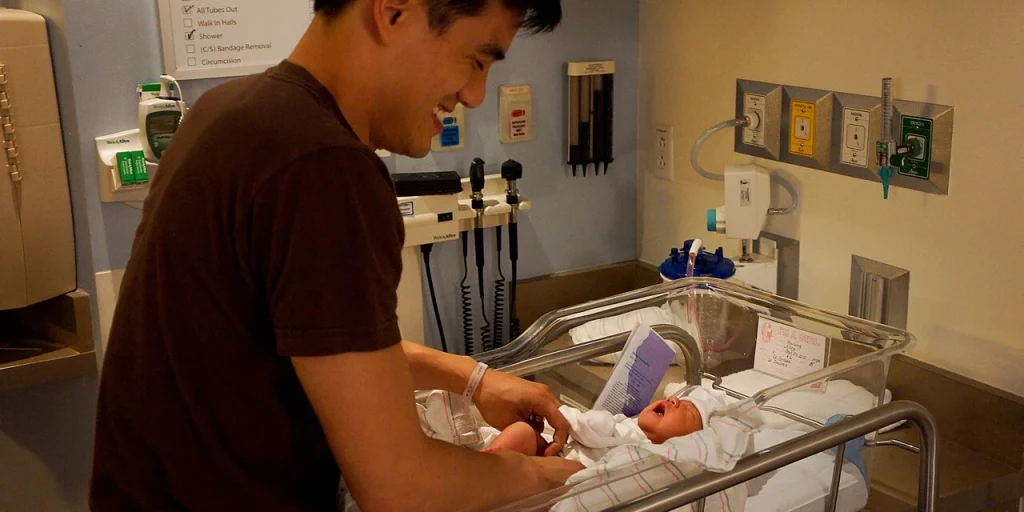
Walk through any neighborhood park on a weekend morning, and you will see a quiet shift in modern family life. Men are strapping on baby carriers, changing diapers, and soothing fussy newborns with practiced ease. For generations, scientists assumed that deep caregiving instincts belonged only to mothers, yet new research tells a surprising story.


Evolutionary biologist Sarah Blaffer Hrdy tested this biology inside her own family, The Guardian reported. Back in 2014, she traveled to New York for the birth of her first grandchild and spent hours cuddling the newborn. A saliva test soon showed a 63% surge in oxytocin, the body’s bonding hormone.
Wanting to check her husband next, she handed Dan a sample tube as soon as he arrived. “Spit here, dear,” she told him. A day later, his hormone levels jumped too, showing for the first time that grandfathers get a chemical boost from holding babies.
Hrdy later documented that milestone in her book about men and babies. For years, some of her colleagues had laughed off the nurturing man as an “imaginary creature,” she told the newspaper. Yet across many developed countries, she has been astounded to watch men care for infants with a tenderness usually linked to mothers.
That shift runs deep. Just like male birds and other mammals that raise their young, hands-on fathers experience falling testosterone alongside rising oxytocin, according to The Guardian.


Ancient caring instincts
Brain scans of fathers who act as primary caregivers reveal an even bigger surprise. Instead of relying on the neocortex, the brain’s newer thinking center, these men fire up older regions like the hypothalamus and amygdala.
To Hrdy, those dads tap into ancient genetic roots shared with fish and frogs that guard their young. That idea cost her sleep. Writing the book triggered migraines because she feared men would dislike hearing about their “inner fish” or “inner frog,” she told The Guardian.
Random House passed on an early chapter overnight for having “too many amphibians,” before Princeton published it to high praise.
Today, the 80-year-old scientist hopes hands-on fatherhood will slowly create a calmer world. Still, Trump administration policies leave her alarmed about the future her three children will inherit.
Challenging old ideas
In her interview with The Guardian, Hrdy blasted leaders who glorify aggression: “This is the country where 40% of us elected a man who brags about never changing a diaper, and we’ve got Pete Hegseth [the secretary of defence], who says we need men with higher testosterone.”
Taking extra testosterone when hormone levels are already normal only makes sperm counts plummet, she joked to the newspaper.
Challenging male bias has defined her career since the 1970s. During her Harvard fieldwork on langur monkeys in India, senior colleagues walked out when she argued that females actively protect their young rather than acting as passive mates. Critics called her crazy, yet scientists later confirmed the pattern in over 50 primate species.
Now living on a northern California walnut farm where she and Dan planted 70,000 trees, Hrdy says curiosity, a trait shared with her mother and grandmother, still drives her. Watching her five grandchildren grow up, she believes awakening ancient caregiving instincts matters more than ever.



