
 Christine Drews Sieger

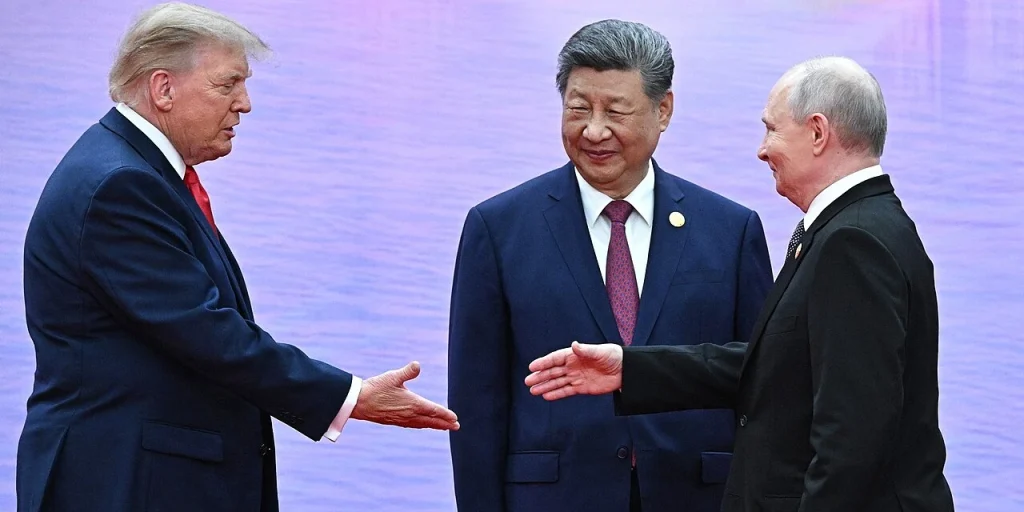
Trump, Xi, and Putin held rare talks in China, leaving major conflicts unresolved.

Face-to-face meetings between rival superpowers are rare—especially while active conflicts test global stability.
Yet in southern China this week, three of the world’s most powerful leaders sat down at the same table.
In Shenzhen on Thursday, US President Donald Trump, Chinese President Xi Jinping, and Russian President Vladimir Putin talked for over an hour.
According to The Guardian, the three heads of state held a rare three-way meeting during the Asia-Pacific Economic Cooperation (Apec) summit, spending the session discussing international security—though they walked away with no binding agreements.


“We are really making history,” Trump told his peers as the talks began.
Once reporters exited, a “free discussion began” and “mutual understanding took place,” Putin later told Russian state agency RIA Novosti.
Nuclear talks and court criticism
Nuclear limits topped the agenda after the New Start pact between Washington and Moscow expired in February.
During the meeting, Xi pushed for a total ban and elimination of nuclear arsenals, stating they should “be completely prohibited and thoroughly destroyed,” The Guardian reported.
Meanwhile, a joint statement warned that “a nuclear war cannot be won and must not be fought.”
Still, no concrete plan to shrink stockpiles emerged from the room. State outlets in Beijing and Moscow published a four-point peace declaration urging United Nations reform and higher fuel supplies, yet the text notably omitted any mention of the ongoing wars in Ukraine and Iran.
At the same time, the leaders took aim at the International Criminal Court. Trump criticized the institution as “out of control,” and the declaration insisted that such bodies “must not abuse their jurisdiction.”
That wording directly challenges the legal standing of the court’s 2023 arrest warrant against Putin, who is wanted on charges of illegally relocating children from Ukraine.
Tensions resurface outside the room
Brookings Institution expert Patricia Kim told The Guardian that the real test lies in whether the three powers actually follow through on reducing nuclear risks.
Outside the meeting room, however, tensions over active conflicts quickly resurfaced.
Later on Thursday, Putin told Reuters he might attend December’s G20 summit in Miami depending on “the situation in Russia.”
Shortly after, reporters pressed him about recent Ukrainian attacks on the Kerch bridge, the sole direct link between Russia and the annexed Crimean peninsula.
“We will respond to these strikes,” Putin warned in remarks cited by The Guardian, promising a far more painful retaliation against Kyiv.



