
 Asger Risom

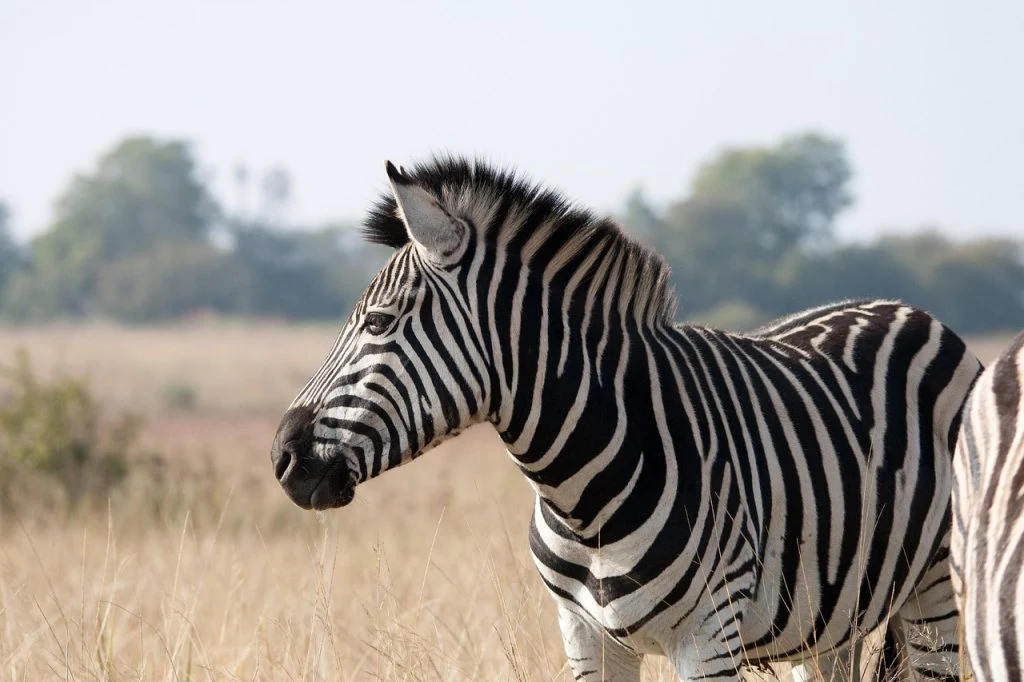
Zebra stripes don’t fool hungry lions at all—they evolved to scramble the vision of disease-carrying horseflies before the bugs can land.


For more than a century, nature documentaries and textbooks claimed zebras wear bold black-and-white stripes to blend into tall grass or confuse charging lions. There was just one awkward problem with that theory: lions actually catch zebras all the time, and bold monochrome stripes stand out like a neon sign on an open savanna. When biologists finally put striped coats on domestic horses and filmed what happened next, they discovered those stripes aren’t meant to fool big cats at all—they are built to scramble the eyesight of blood-sucking flies.
Why classic camouflage theories fell apart
Charles Darwin and Alfred Russel Wallace famously argued over zebra stripes back in the 1870s, setting off a debate that lasted well over a hundred years. Generations of biologists floated clever explanations, from hiding in flickering bush shadows to creating a dizzying “motion dazzle” effect when a herd runs together. Some researchers even suggested the alternating black and white bands created tiny cooling air currents over the animal’s skin on scorching African afternoons.
One by one, however, field observations poked holes in every predator-based hypothesis. Lions hunt primarily at night or in dim twilight using smell and hearing, and when they do stalk zebras by day, they pick individuals out of a herd without much trouble. Meanwhile, experiments using thermal barrels wrapped in zebra pelts showed that stripes do almost nothing to lower a zebra’s body temperature compared to solid-colored coats.
The biggest clue actually came from looking at a map of where zebras live and where biting insects thrive. Across Africa and Asia, wild horse species with the boldest, tightest striping patterns live in the exact regions plagued year-round by disease-carrying horseflies and tsetse flies. Unlike thick-skinned rhinos or shaggy wild horses, zebras have remarkably short, thin coats that offer almost zero physical barrier against a fly’s slicing mouthparts.


Dressing horses in zebra pajamas to test the fly theory
To see how biting insects react to stripes in the real world, evolutionary biologists Tim Caro and Martin How decided to run an experiment at a horse farm in Britain. They dressed regular domestic horses in three different outfits: a solid black coat, a solid white coat, and a black-and-white zebra-striped coat. Then they set up video cameras and counted how often horseflies circled, landed, and bit each animal.
At first glance, the footage looked surprising because horseflies buzzed around the striped horses just as often as they hovered near the solid black and white ones. From several yards away, the flies clearly knew a large, warm meal was standing in the pasture. The difference only showed up during the final split second before touchdown.
While flies slowed down smoothly and landed comfortably on the solid-colored coats, insects approaching the zebra pattern failed to brake in time. Some slammed awkwardly into the striped fabric and bounced right off, while others veered sharply away at the last instant. Even on the exact same horse, flies happily landed on its exposed, solid-colored head while refusing to touch its striped torso.
How stripes scramble a horsefly’s visual radar
Scientists initially wondered whether stripes created an optical illusion—similar to the spinning barber-pole effect—that tricked a fly’s brain into misjudging its landing speed. To pin down the exact visual mechanism, researchers at the University of Bristol ran another round of horse-coat trials using custom patterns, including gray coats, checkerboard squares, and stripes of varying widths. Tracking thousands of fly approaches revealed that the trick wasn’t an optical motion illusion after all.
Instead, the stripes exploit a basic quirk in how biting flies spot food from the air. Horseflies have relatively low-resolution compound eyes, so they hunt by looking for large, uninterrupted dark silhouettes against a bright sky or grassy background. A solid dark horse looks like a giant, unmistakable target, whereas narrow, high-contrast stripes shatter that solid outline into thin fragments a fly barely registers as an animal.
When researchers tested wide stripes or blurry gray coats, the flies had no trouble recognizing the horse and landing for a meal. Only crisp, narrow stripes—matching the real proportions found on wild zebras—reliably broke up the animal’s visual silhouette and kept the insects away. That also explains why zebras are striped all the way down to their skinny ankles and faces, leaving no large monochrome patch for a fly to lock onto.
Why escaping horseflies is a matter of life and death
Dodging a few itchy bug bites might sound like a minor perk compared to outrunning a hungry lion, yet in sub-Saharan Africa, biting flies are far deadlier over time. Horseflies and tsetse flies carry lethal blood parasites and viruses, including equine infectious anemia and African horse sickness, that can wipe out entire herds. A zebra plagued by constant bites also loses blood and wastes precious grazing energy twitching, stomping, and swishing its tail all day.
Because zebras evolved alongside those aggressive parasites without growing thick winter fur, natural selection favored any coat pattern that kept flies off their skin. Over thousands of generations, animals with sharper, narrower stripes suffered fewer infections and raised more foals than their plainer ancestors. What looks to human eyes like a dramatic fashion statement is really a full-body suit of visual bug spray.
Farmers and ranchers have already started borrowing the zebra’s evolutionary trick for their own livestock. In trials where researchers painted faint white stripes onto black cows, biting fly landings dropped by roughly half, reducing stress and tail-swishing without a drop of chemical pesticide. Sometimes the best way to outsmart a pest isn’t building a better swatter—it’s ruining the target’s eyesight.



