
 Daniel Wolfram


After the Supreme Court ruled that Trump could not declare an economic emergency to bypass Congress and impose tariffs, the White House is now proposing a new round of tariffs.

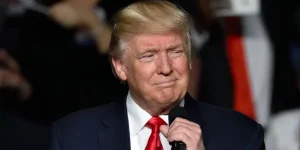
President Donald Trump wants to raise import taxes on goods from more than a dozen economies, according to the Associated Press (AP).
The proposal hits China with an extra 20% charge, pushing total duties on some Chinese items to 45%. Vietnam faces a 20% rate, while the European Union, Japan, South Korea, Taiwan, and others could see hikes of 10% to 18%.
The White House says these nations flood markets with cheap, subsidized goods. That undercuts US factories and fuels a $1 trillion trade deficit.
The taxes also aim to replace revenue lost after the Supreme Court ruled in February that Trump could not use emergency powers to bypass Congress. Instead, officials are leaning on Section 301 of the Trade Act of 1974. That law lets Washington punish unfair trade practices.


The Trump administration wants steeper taxes on Brazilian sugar and a 10% duty on aircraft, a direct blow to jet maker Embraer.
China reacts
China pushed back against new US tariffs. “A tariff war or a trade war serves no party’s interests,” Chinese Foreign Ministry spokesperson Guo Jiakun said.
“The so-called overcapacity is a false narrative, and China opposes using it as a pretext for political manipulation.”
Even so, a US official said the move should not derail a trade truce expiring January 10. Trump met Chinese leader Xi Jinping in Shenzhen last week and will host him at the G20 summit in Florida next month.
A new tariff push
The rollout comes at a tense moment for Republicans.
Voters handed the House and Senate to Democrats earlier this month, with about two-thirds saying Trump’s policies hurt the economy, according to the AP Voter Poll.
For now, these levies will not stack on top of existing taxes on cars, steel, aluminum, or forced-labor goods. Still, Mexico and Norway remain under investigation, so more targets could follow.



