
 Jens Asbjørn Bøgen

For the first time since the beginning of the war in Ukraine, the traditional parade will not include heacy machinery.

Big national holidays usually mean crowded streets, loud music, and a chance to show off.
But sometimes, a grand celebration shrinks so much that it becomes hard to recognize.
We all remember how the COVID-19 pandemic scaled back a number of festive celebrations, but fortunately, those times are behind us.
But in Russia, the upcoming May 9 Victory Day celebrations are facing severe cutbacks similar to the restrictions we all experienced during the pandemic. This time, however, the reason is not a virus spreading across the globe.


It’s the Kremlin’s fear of Ukrainian attacks.
No military hardware in Moscow
Several news outlets, including The Kyiv Post, The Guardian, and The Washington Post, report that for the first time in nearly twenty years, the traditional display of heavy machinery on Red Square has been cancelled.
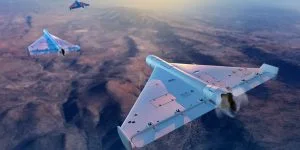
The Russian Ministry of Defense announced that the equipment column was pulled due to a “terrorist threat” — a term used by the Kremlin to describe Ukrainian drone strikes on Russian territory.
According to the Foreign Intelligence Service of Ukraine, the atmosphere surrounding the upcoming parade is effectively a “military lockdown.”
Silent streets
Similar scale-downs are happening in cities like Krasnodar and Tomsk.
Meanwhile, organizers in St. Petersburg are swapping out traditional World War II veterans for participants from the current conflict in Ukraine.
Security forces are also planning massive communication blackouts to control the crowds.
Intelligence reports suggest authorities will cut off internet access, mobile signals, and even pre-approved “white list” text messaging services inside Moscow.
Missing guests
The blackout tactics are also slated for Volgograd, while spectator stands are being drastically reduced across the board.
International attendance has plummeted compared to the 27 heads of state who visited last year.
Only four foreign leaders have confirmed they will attend, including the presidents of Belarus, Kazakhstan, and Kyrgyzstan, alongside the prime minister of Slovakia.
The Slovak leader’s journey is already complicated, as Latvia and Lithuania have reportedly blocked his flight path.
Putin wants a ceasefire
The traditional Russian holiday has been a staple of the Russian calendar for decades, as it became a non-labor day in 1965, twenty years after the Soviet Union declared victory over Nazi Germany.
Last week, Vladimir Putin proposed a truce on May 9. It is unclear if the proposed truce would cover other dates as well.
Ukrainian President Volodymyr Zelenskyy responded to the proposal by writing on X that Ukraine proposes a long-term ceasefire and that Kyiv will seek to clarify whether the proposal is something more than “a few hours of security for a parade in Moscow.”
Sources: The Kyiv Post, BBC, Russia’s Ministry of Defence, The Guardian, The Washington Post, statement on X by Volodymyr Zelenskyy



