
 Kenneth Glad
Different justice systems make sharply different assumptions about punishment and rehabilitation. Those choices can influence safety, employment and reoffending long beyond custody.


In Norway, imprisonment starts from a deliberately narrow definition of punishment. A person serving a sentence loses freedom, while rights not removed by the court are supposed to remain.
Daily conditions should resemble ordinary society as closely as security and available resources permit, and health care, education and other services are brought into prisons from the same public systems used outside.
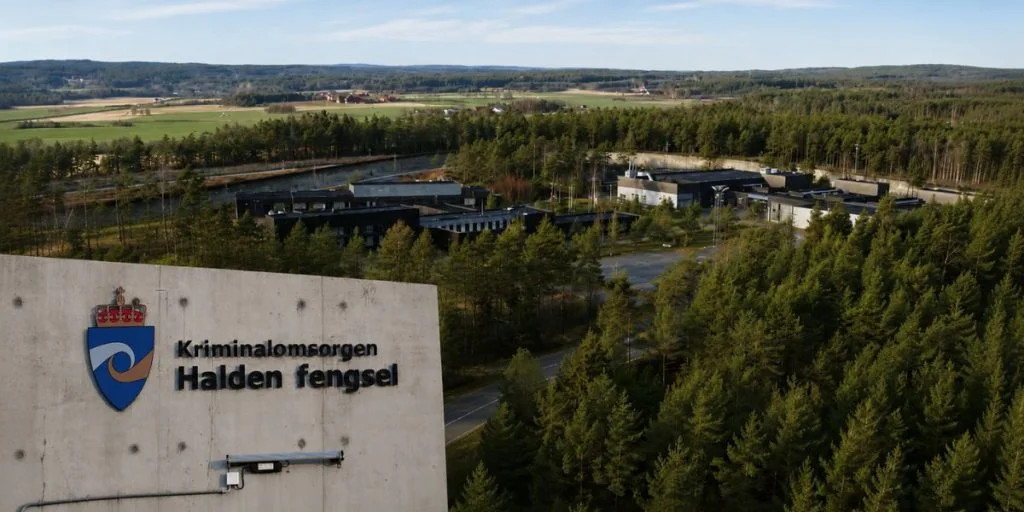
Halden Prison shows how that philosophy can shape an institution. The high-security prison has 227 places for men and holds both people awaiting trial and those serving different categories of sentence.
Dutch historian and author Rutger Bregman examines the prison in Humankind: A Hopeful History, his book about cooperation, trust and human behavior. He describes private rooms, communal kitchens, a library and music facilities. Bregman also turns to the lower-security Bastøy prison, where residents farm, cook, chop wood and do carpentry, while some travel to jobs on the mainland.


Normality shapes daily security
The Norwegian Correctional Service summarizes its principle of normality in a simple sentence: “The punishment is the restriction of liberty.” It also says progression through a sentence should normally move toward reintegration, from higher-security prisons to lower-security facilities, halfway houses and, where appropriate, serving part of the sentence outside prison.
Correctional officers are trained in what Norway calls dynamic security, which places weight on communication, relationships and familiarity with the people being supervised. The idea is practical: Regular contact gives officers more opportunity to recognize changes in behavior and emerging tension.
Training reflects those expectations. KRUS, the University College of Norwegian Correctional Service, is responsible for Norway’s prison-officer education. The final cohort under the paid two-year full-time program has just begun training, starting earlier this month.
That route will be replaced by a three-year bachelor’s degree beginning in autumn 2027. KRUS also offers a paid, decentralized three-year part-time program, with its next intake beginning in January 2027.
Norway also incarcerates relatively few people by international standards. World Prison Brief recorded 3,019 prisoners on July 31, 2026, equivalent to 54 prisoners per 100,000 people. Finland and Denmark stood at 58 and 70 per 100,000, respectively, based on January 2025 data. England and Wales had 86,267 prisoners on July 27, 2026, equivalent to about 136 per 100,000 people. By comparison, the latest figure for the United States was 542 prisoners per 100,000 people in 2023.
The numbers tell different stories
Comparing recidivism across countries is tricky. Some authorities count arrests, others convictions or returns to prison, and the follow-up period can range from a few years to much longer.
A major Norwegian study examined what happened when criminal cases were randomly assigned to judges with different tendencies to impose prison sentences. Researchers Manudeep Bhuller, Gordon Dahl, Katrine Løken and Magne Mogstad found that imprisonment reduced the likelihood of reoffending within five years by 29 percentage points and led to 11 fewer criminal charges over the same period.
The employment findings were more uneven. Prison appeared to help people who had been out of work before sentencing: They were more likely to take part in employment programs and were more likely to be working later. For defendants who already had jobs, however, incarceration damaged their long-term employment prospects.
The scale of reoffending looks very different in U.S. data. The Bureau of Justice Statistics tracked people released from state prisons in 34 states in 2012 and found that 62 percent were arrested again within three years. After five years, that figure had risen to 71 percent. In the states where return-to-prison data were available, 46 percent were back behind bars within five years, either for a new sentence or for violating probation or parole.
The United States considered another path
American corrections did not always seem destined to develop in such a different direction.
President Lyndon Johnson created the President’s Commission on Law Enforcement and Administration of Justice in 1965. Its 1967 report, The Challenge of Crime in a Free Society, contained around 200 recommendations and proposed broad changes across policing, courts and corrections.
Its correctional proposals included more residential surroundings, smaller communal areas, education and recreation, and opportunities for selected prisoners to work or study in surrounding communities.
It also called for prisoners to be prepared gradually for release. Bregman points to the commission in Humankind as an example of how different the American prison system might have become.
The United States ultimately built a much larger system of incarceration. World Prison Brief’s historical series rises from 328,020 people in 1970 to 2,307,504 in 2008.
Norwegian practices reach the United States
Some Norwegian-inspired practices have since been tried inside American prisons on a much smaller scale.
At Oregon State Penitentiary, the Oregon Resource Team was developed as a pilot for people with serious mental illness and histories that could include trauma, self-harm and violence. Staff emphasized greater human contact, meaningful activity, de-escalation and time outside cells.
A case study published in PLOS ONE found that average quarterly use-of-force incidents in the prison’s Behavioral Health Unit fell from 5.6 to 0.8 after the program was introduced, an 85.7 percent reduction. Among participants who had at least three interactions with the team, the mean rate of assault-related disciplinary incidents fell by 73.9 percent.
Because it was a case study rather than a controlled experiment, the researchers could not say for certain that the program caused the decline.
Norway still falls short
Norway’s best-known prisons can give outsiders an incomplete picture.
The Council of Europe’s Committee for the Prevention of Torture visited Norway from May 21 to 31, 2024. It described prison staff as well trained and motivated and found material conditions in the prisons it visited mostly excellent. But it also reported that prisoners excluded from association with others or placed under court-ordered isolation could spend up to 22 hours a day alone. Staffing difficulties disrupted activities, while limited mental-health care and self-harm remained concerns.
Norway’s Parliamentary Ombud later examined ten prisons and found many people confined alone for between 19 and 22 hours a day without a formal isolation decision. The investigations linked those conditions to shortages of staff, meaningful activities and suitable communal space.
A separate Ombud report published in June 2026 examined health care across 15 prisons. It found repeated problems including treatment delays and interruptions, inadequate access, difficulty communicating confidentially with health services and weaknesses in suicide-risk assessment.
The real test comes after release
Prisons can be evaluated by what happens inside them: Violence, self-harm, isolation and use of force. Their effects continue once people leave.
Norway places substantial emphasis on that transition through education, employment programs, ordinary public services and gradual movement toward less restrictive conditions. Research suggests incarceration within that system can reduce reoffending for some groups, while the same evidence shows that prison can damage the employment prospects of people who were already working.
Norway therefore offers neither a perfect model nor a simple success story. Its internationally admired facilities exist alongside prisons where watchdogs still document prolonged isolation and inadequate health care.
Most people sent to prison will eventually return to society. The condition in which they return is one of the outcomes any correctional system should be judged by.
Sources:
Rutger Bregman: Humankind: A Hopeful History
Norwegian Correctional Service
The Challenge of Crime in a Free Society (1967)
Manudeep Bhuller, Gordon Dahl, Katrine Løken and Magne Mogstad, Incarceration, Recidivism, and Employment, Journal of Political Economy
Bureau of Justice Statistics
World Prison Brief
PLOS ONE, The Resource Team: A Case Study of a Solitary Confinement Reform in Oregon
Council of Europe, Committee for the Prevention of Torture, report on its May 2024 visit to Norway
Norwegian Parliamentary Ombud



