
 Kenneth Glad
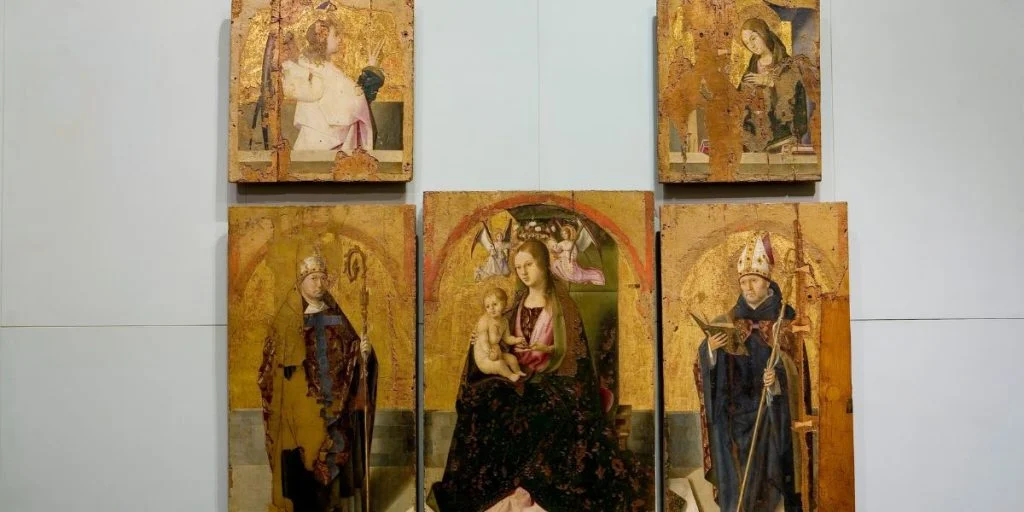
Authorities are tracing how four Renaissance paintings were removed despite working alarms and surveillance. Investigators are reviewing staff movements, forensic material and footage from surrounding streets.


Four works by Renaissance painter Antonello da Messina were stolen from the Museo Regionale Accascina in Messina on August 15. Three were surviving sections of the Saint Gregory Polyptych, while the fourth was a smaller double-sided devotional panel. Art expert Alberto Fiz valued the stolen works at between 70 million and 80 million euros, according to the Associated Press.
The thieves removed all five surviving panels from the polyptych, abandoning two outside the museum as they fled. According to ANSA, Italy’s national news agency, investigators believe at least four people were involved in the operation. Two are thought to have entered the museum while others waited outside, with the theft inside taking roughly two minutes.
The timing gave the group an unusual opportunity. The theft happened during Ferragosto, Italy’s major August 15 public holiday, when thousands of residents were attending Messina’s Vara procession and local security resources were heavily occupied by the event.
Surveillance later confirmed that the four custodians assigned to the building were inside while the theft occurred. The alarm also activated normally, but one employee switched it off because it was believed to be a false alert.


Security procedures face closer examination
Much of the inquiry now concerns how quickly the perpetrators moved through a protected building. Investigators have been examining footage from cameras around the museum and nearby roads, as well as recordings from earlier days for indications that members of the group had visited the area beforehand.
Investigators are also examining mobile-phone data from the area around the museum. According to ANSA, they are checking whether any devices connected to nearby cell towers during the theft that had not been detected there in the days beforehand. The aim is to identify anyone who may have helped plan or coordinate the break-in.
Scientific police recovered several traces believed to have been left by the perpetrators. Prosecutors are pursuing multiple explanations for the crime, including assistance from within and organized-crime involvement, although neither has been established.
One custodian has faced particular scrutiny because investigators reportedly found inconsistencies in his account, especially over the timing of events. Later ANSA reporting said formal confirmation of his registration as a suspect was lacking.
An administrative inspection ordered by the Sicilian regional authorities found that the alarm equipment had functioned correctly but identified problems in how staff applied required security procedures. As of August 25, officials were awaiting additional material from the museum director before deciding whether to formally begin disciplinary proceedings against the four custodians. They had meanwhile been placed on leave and transferred pending administrative decisions.
The 1473 work survived centuries
The Saint Gregory Polyptych has been connected to Messina for more than five centuries. The Museo Regionale Accascina records the work as signed and dated 1473 and says it was commissioned by Fabria Cirino, abbess of the monastery of Santa Maria extra moenia. It originally consisted of six wooden panels.
Its composition placed the Virgin and Child at the center, with Saints Gregory and Benedict and scenes of the Annunciation arranged across the other sections. The upper central panel, probably depicting the dead Christ supported by angels, had already disappeared historically. The elaborate original frame has also been lost.
Messina’s artistic heritage has endured repeated destruction. The catastrophic earthquake of 1908 devastated much of the city and left numerous religious, civic and private buildings in ruins. The museum’s collections were subsequently enriched with artworks recovered from the wreckage, preserving objects that could no longer remain in their original locations.
Official Sicilian cultural records have described the polyptych as Antonello’s only work to have remained in his native city. That uninterrupted association makes the theft more than a loss measured by its estimated market value. The surviving panels form part of the cultural record of a city that has repeatedly had to recover and preserve fragments of its past.
Sources: Associated Press, ANSA, Museo Regionale Accascina,



