
 Kenneth Glad
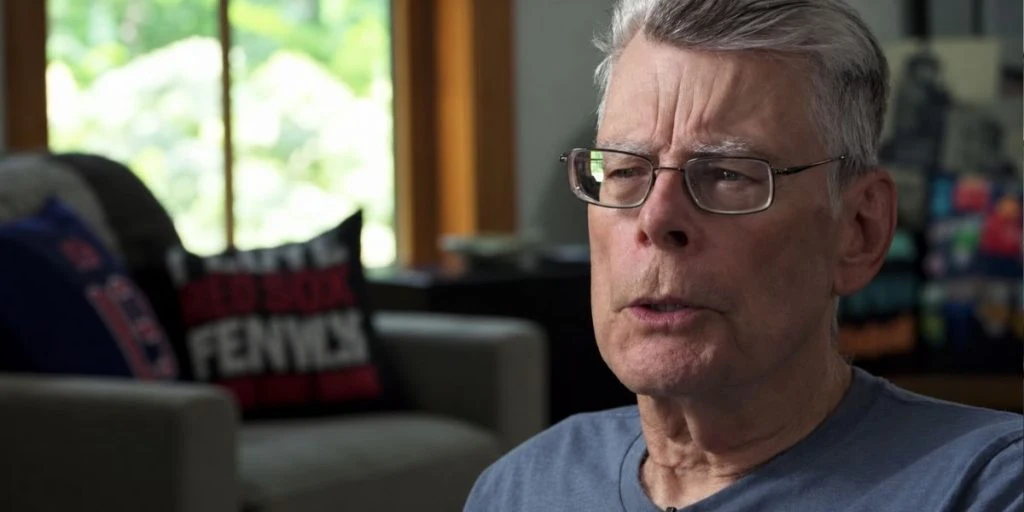
The renowned writer of dark fiction contemplates how his published stories transform when filmmakers bring them to cinema screens. His decades of experience offer clear insights into how entertainment deals operate.


Stephen King turned 79 on Monday, adding another milestone to a career that has produced one of the deepest reservoirs of source material in modern cinema. The American novelist was born in Portland, Maine, in 1947 and has spent more than half a century watching his stories pass from bookshelves to screens.
That history has given King an unusual perspective on what happens after an author hands a story to filmmakers. His opinions have never been as simple as demanding complete loyalty to the page, and the films released since 2016 have made that increasingly clear.
His old rules favored flexibility
In a 2016 interview with Deadline, King described an approach built around low barriers for filmmakers and a willingness to let them make creative decisions. Rather than treating every alteration as an attack on the original work, he said he wanted to be involved constructively when involvement was necessary.
His deals could also reflect that philosophy financially. The author discussed making some rights available cheaply at the beginning while seeking participation if a project became successful, allowing filmmakers to get started without an enormous initial price.


Creative control was more complicated. Although King valued input on important decisions, he also acknowledged that talented directors need room to make a film rather than simply reproduce a novel in another format.
That distinction was important when discussing director Stanley Kubrick and The Shining. King remains critical of the 1980 film because he believed Jack Torrance lost the tragic progression that defined the character in his novel, yet he still recognized Kubrick as an exceptional filmmaker.
The story deserved serious treatment, but the writer did not automatically deserve control over every decision. What the writer did deserve, King argued, was proper financial accounting if the finished production succeeded.
Later films clarified what he wanted
A year after the Deadline interview was published, the release of It provided a useful example of how King judged a new interpretation of familiar material. In a 2017 Associated Press interview published by CityNews, he explained that strict faithfulness was not his primary requirement.
King said he generally preferred productions that remained close to the underlying story, but he also welcomed alterations that improved the material. His ideal response to a filmmaker’s invention was essentially, “I wish I’d thought of that.”
That leaves considerably more freedom than a demand for literal accuracy. It, directed by Andy Muschietti, worked for King not simply because recognizable events survived the journey to the screen, but because its emotional center remained intact.
For him, the young characters mattered more than the mechanics of the monster pursuing them. The horror became effective because audiences cared what happened to the children, illustrating the kind of fidelity King appears to value most: Preserving the reason a story works rather than protecting every individual scene.
Doctor Sleep bridged an old divide
Mike Flanagan faced an especially difficult assignment with Doctor Sleep in 2019. The filmmaker had to adapt King’s sequel to The Shining while also acknowledging Kubrick’s film.
King nevertheless responded positively. Speaking with Time, he praised the way Flanagan connected his novel with Kubrick’s cinematic version and said the director had “warmed it up,” addressing one of his central complaints about the earlier film.
The response showed how far King’s position could stretch when a filmmaker understood the underlying material. Doctor Sleep could accept the visual history established by a movie King famously disliked while still satisfying him as a continuation of his own story.
In the same interview, King suggested that shorter fiction often reaches the screen more successfully because filmmakers have less material to compress. He also reiterated his belief that staying reasonably close to the original narrative tends to help.
That did not mean refusing invention. Flanagan’s solution required major reconciliation between two versions of the same fictional world, yet King embraced the result.
Recent releases brought fresh enthusiasm
By 2025, King’s relationship with screen versions of his work had become even more relaxed in public. While discussing Mike Flanagan’s The Life of Chuck, he told the Associated Press, published by Bangor News Daily, that his general rule had become, “If you can’t say something nice, keep your mouth shut.”
His enthusiasm for that film was difficult to hide. King attended its world premiere in Toronto, which he had not done for one of his own screen adaptations in 26 years. The film, based on a novella from his 2020 collection If It Bleeds, emphasized joy, mortality and the value contained within an ordinary life rather than conventional horror.
Another 2025 release demonstrated the same openness from a different direction. Edgar Wright, the British director behind a new version of The Running Man, returned to material that had previously been transformed very loosely into a 1987 Arnold Schwarzenegger film.
In a conversation published by Sight and Sound, King said the new attempt had worked out extremely well and described Wright as his “angel” on the project. The response fit a pattern visible across decades: King can accept substantial cinematic interpretation when he believes the person making it understands what attracted readers to the story in the first place.
The author does not demand obedience
At 79, King occupies a rare position. Few living writers have had enough productions made from their fiction to compare radically different approaches across several generations of directors, studios and audiences.
His comments over the years suggest that he has little interest in treating novels as untouchable instruction manuals. He has praised faithful films, welcomed intelligent departures and objected when he felt that a screen version discarded something fundamental.
The dividing line appears to be purpose rather than precision. Changes can work when they preserve character, emotion or the central force of a story. Copying individual details matters less if the resulting film misses what made the book compelling.
That helps explain why King’s famous disagreements with Hollywood coexist with such enthusiasm for filmmakers such as Flanagan and Wright. The writer who once watched Kubrick transform The Shining has not responded by demanding absolute control over everything that followed.
Instead, decades of experience have produced a more flexible formula: Give the story a fair opportunity, give capable filmmakers room to make a film, and make sure the author is treated fairly when the result becomes a success.
Sources: Deadline, CityNews, Time, Bangor Daily News, Sight and Sound



