
 Kenneth Glad
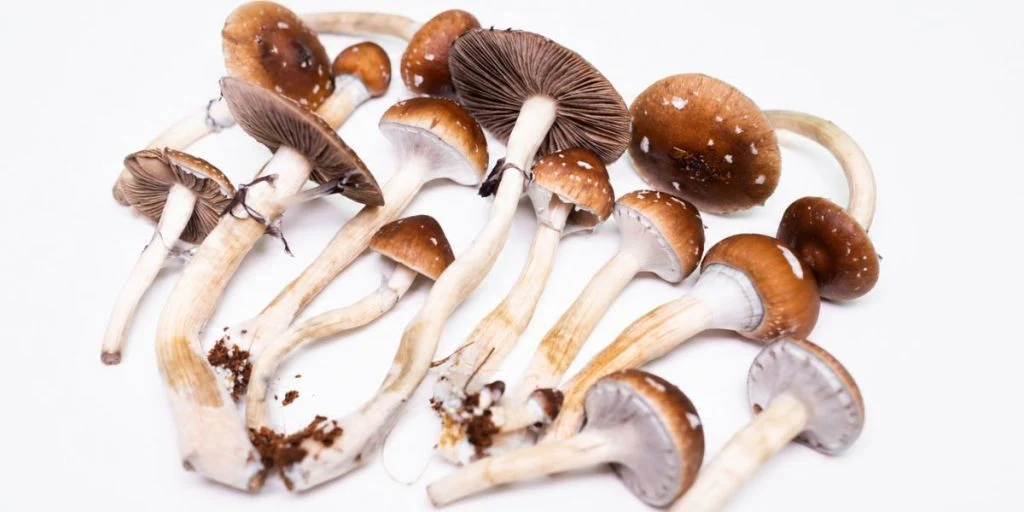
Laboratory and clinical teams are examining whether biological changes that outlast the psychedelic state can support lasting therapeutic benefits. Early findings span psychiatry and aging biology, while major questions about safety, dosing and mechanism remain unresolved.

For much of the late twentieth century, scientific work on psychedelic compounds slowed as legal restrictions tightened and the substances became associated with recreational use. Their return to laboratories has brought a different set of questions.
Scientists are now studying what remains after the altered state fades: Changes in stress responses, compulsive behavior, communication between brain regions and the brain’s capacity to reorganize itself.
Mikael Palner, an associate professor at the University of Southern Denmark, studies conditions including anxiety, obsessive-compulsive disorder and post-traumatic stress disorder, alongside the pharmacology of potential treatments. His work with psilocybin ranges from repeated low doses in rats to experiments investigating which biological mechanisms matter most.
Clinical researchers such as Dea Siggaard Stenbæk, an associate professor of psychology at the University of Copenhagen, are meanwhile studying psilocybin in controlled human settings. Her research focuses particularly on the serotonin 2A receptor and how factors such as music and therapeutic setting shape the psychedelic experience.


Small doses changed stress responses in rats
A 2023 study in Molecular Psychiatry gave rats repeated low doses of psilocybin over several weeks. The clearest differences appeared in how the animals responded to stress and in their behavior.
Rats given psilocybin coped better with the stress of repeated injections and spent less time grooming themselves, a behavior researchers use as a measure of compulsive activity. The treatment did not appear to increase anxiety or disrupt normal movement.
Changes also appeared in the brain. The treated rats had greater synaptic density and higher levels of 5-HT7 receptors in part of the thalamus associated with stress regulation.
None of this shows that microdosing works as a psychiatric treatment in humans. But it gave Palner’s team something more concrete than the anecdotal claims that have surrounded the practice for years.
Palner said on the Biotopia podcast that microdosing caught his attention while he was working at Stanford University, where people were experimenting with small amounts of psychedelics in the hope of improving creativity, focus and well-being. His interest was in finding out what, if anything, could be reproduced in the laboratory.
Plasticity could create a brief opening
Speaking on the podcast, Palner described a broader idea behind the current interest: Psychedelics may temporarily make the brain more plastic.
Neuroplasticity is the ability of neural systems to change their connections and patterns. Some psychiatric problems involve responses that have become unusually persistent, including fear and compulsive behavior.
Psilocybin may make such patterns easier to modify, potentially creating conditions in which therapy or learning can help establish a different response.
Palner also described preliminary, unpublished rat observations suggesting that biological changes are especially pronounced during the first few days after treatment and move back toward baseline over roughly a week. He stressed that the findings had not yet been published and should not be treated as an established therapeutic timetable.
If a comparable period is eventually demonstrated in people, its timing could influence how psychotherapy or rehabilitation is scheduled after treatment.
Clinical care depends heavily on context
Human psychedelic research looks very different from unsupervised psilocybin use.
In an interview with DR, Stenbæk describes studies in which participants have preparatory conversations before receiving the drug. During administration, they remain with trained professionals for several hours, with psychological follow-up afterward.
Psilocybin is converted in the body to psilocin, which activates several serotonin receptors. The 5-HT2A serotonin receptor plays a central role in the characteristic psychedelic effects.
In the interview, Stenbæk says how brain networks that normally operate more independently can begin communicating more broadly during the psychedelic state, potentially allowing thoughts, memories and emotions to be approached from unfamiliar perspectives.
Palner draws a firm line between clinical treatment and unsupervised use.
“Everything points to using psilocybin in psychiatry, including at doses above microdosing, but it has to happen under the right conditions,” he told the broadcaster.
Modern protocols also reflect lessons from unethical psychedelic experiments in the 1960s, when some patients received powerful drugs without adequate information or preparation. Current studies use screening, informed consent and professional supervision.
Some researchers want to remove the trip
A psychedelic experience can require hours of supervision and may be intimidating for patients already struggling with anxiety or intrusive thoughts. Researchers are therefore testing whether some therapeutic effects can be separated from the acute experience.
On Biotopia, Palner described experiments involving lower doses and compounds intended to engage similar biological systems while producing weaker psychological effects.
Reducing the psychedelic state could make treatment easier to administer and more acceptable to people who would otherwise reject it.
But the subjective experience may matter for some effects. Emotional experiences during treatment could contribute to behavioral change, while other benefits may arise mainly from receptor activity and subsequent neural plasticity. Comparing doses and related compounds offers a way to test how much each component contributes.
The aging experiment began with old mice
A different line of research pushed psilocybin into an unexpected field in 2025: the biology of aging.
A study published in npj Aging used 19-month-old female mice. The psilocybin group received 5 milligrams per kilogram during the first month, followed by 15 milligrams per kilogram once a month.
Ten months later, 24 of 30 psilocybin-treated mice remained alive, or 80 percent. In the vehicle-treated control group, 14 of 28 survived, or 50 percent.
The study also reported apparent differences in fur quality, hair growth and graying among treated animals, but these observations were qualitative rather than quantitatively measured.
A separate experiment exposed human fetal lung fibroblasts to psilocin and measured their replicative lifespan, meaning how long the cells continued dividing before reaching cellular senescence.
At 10 micromolar, psilocin extended replicative lifespan by approximately 29 percent compared with vehicle-treated cells. At 100 micromolar, the increase reached about 57 percent.
The cell experiment provides a separate line of evidence, but neither it nor the mouse study demonstrates an anti-aging effect in humans.
Longevity claims remain a large leap
Writing for Danish science site videnskab.dk, Palner argues that several problems need more attention before the mouse experiment is discussed as an anti-aging breakthrough.
Appetite is one possible complication. Psilocybin can affect the 5-HT2C receptor, which plays a role in food intake and metabolism. That matters because eating less can itself extend lifespan in laboratory animals.
The mice in the study lost some weight, although there was no significant difference between the treated and control groups.
Palner also points to the dose. By the later stages of the experiment, the mice were receiving 15 milligrams of psilocybin per kilogram of body weight each month. That cannot simply be scaled up to a human dose. Mice and people process drugs differently.
So the experiment leaves an intriguing result in old mice, not evidence that psilocybin can make people live longer.
Sources: npj Aging, Molecular Psychiatry, videnskab.dk, DR, Danmarks Frie Forskningsfond, Biotopia podcast episode 15



