
 Kenneth Glad
Technological shifts are once again shaking up the global job market, echoing the massive disruptions of past eras. Today, white-collar professionals and creative artists worry about artificial intelligence automating their daily work. Yet, history demonstrates that entire workforce sectors have repeatedly dissolved as machinery grew smarter and network engineering advanced.


The Industrial Revolution fundamentally altered human labor, shifting millions of workers away from traditional outdoor routines and into unfamiliar industrial roles. By the late eighteenth century, farming employed roughly nine in ten European workers, but rapid agricultural mechanisation suddenly rendered entire generations of field hands redundant.
Much like modern office workers facing the sudden rise of artificial intelligence, these families were forced to adapt quickly, packing up their lives and moving to crowded cities to seek factory work.
Urban streets transformed just as rapidly under the weight of new inventions. Over three hundred thousand horses worked across London by 1900, creating an endless need for street sweepers to clear tonnes of daily manure, writes HistorieNet. Within twelve short years, motorcars dominated the roads, and the sweepers vanished almost overnight.
Gas lighting met a similar fate when technology leaped forward. Thousands of workers once patrolled city streets with long torches to light gas lamps every evening. Electric bulbs swept through European urban centres starting in the 1880s, rendering the profession obsolete and proving that technological disruption has always rewritten the job market.


Changing home life
Indoor chores underwent their own massive, quiet revolution right inside the domestic sphere. Early vacuum cleaners, first introduced in 1901, were far too giant and heavy to ever fit through a normal front door. Instead, specialized cleaning companies parked huge horse-drawn machines directly on the street, running long, flexible hoses up through open living room windows until smaller, portable electric models hit the market and replaced them for good.
Early morning routines also relied heavily on human help rather than automated devices to stay on track. Before cheap mechanical alarm clocks became widely available, factory workers routinely paid a professional knocker upper to tap on their bedroom windows using long bamboo poles or pea-shooters at dawn. That unique trade survived across British industrial towns well into the mid-twentieth century, keeping strict factory schedules intact for thousands of early risers.
Daily doorstep deliveries slowly dissolved as household technology advanced. Local milkmen were once vital because early families lacked effective home refrigeration, meaning fresh dairy spoiled rapidly without swift delivery. Eventually, affordable home fridges transformed domestic food storage and made daily doorstep drop-offs entirely unnecessary.
Technological shifts
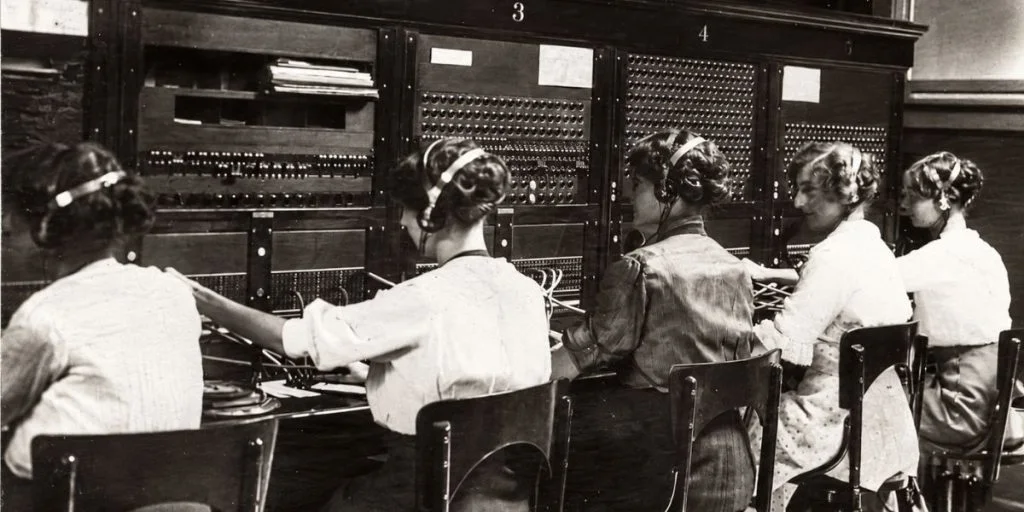
Early telephone systems relied entirely on human precision, with manual operators plugging physical cords into complex switchboards to route every single call. According to HistorieNet, the United States employed 235,000 female switchboard operators by 1930, creating a massive workforce dedicated to keeping people connected. However, as mechanical and electronic automated exchanges rolled out, the demand for human operators plummeted until the job vanished almost completely.
Printing experienced a parallel collapse when computers transformed publishing. For centuries, skilled typesetters meticulously arranged individual lead letters by hand to compose pages for newspapers, magazines, and books. It was a respected, highly technical craft that long guaranteed steady, middle-class employment.
Yet, the rapid arrival of desktop publishing software late in the twentieth century rendered metal type obsolete, erasing the traditional trade in a matter of years. Today, generative AI tools threaten to disrupt copywriters, coders, and graphic artists in much the same way.
Progress undeniably brings immense benefits, lower costs, and greater speed to society as a whole. Still, every major wave of technological innovation creates a quiet human toll, abandoning dedicated workers who suddenly find themselves caught on the wrong side of history.
Sources: HistorieNet



