
 Kenneth Glad
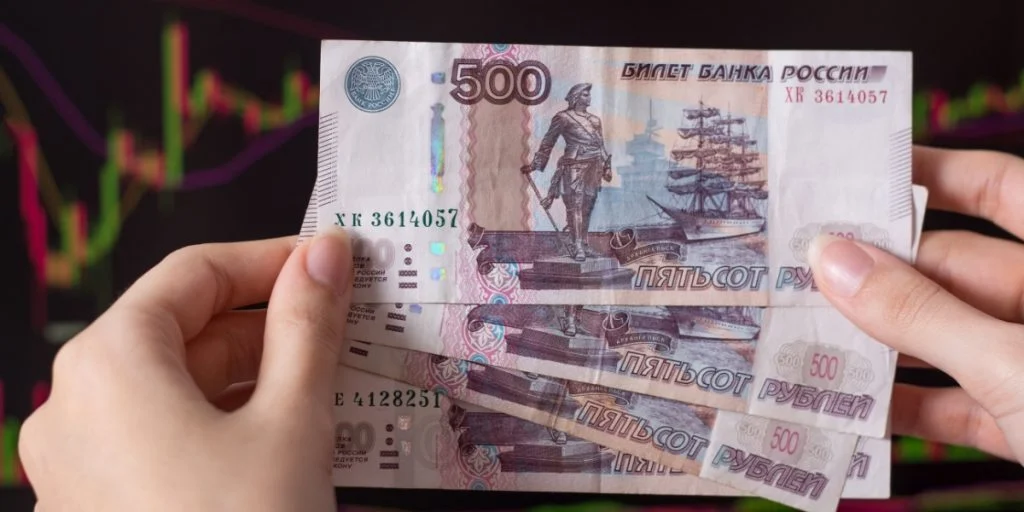
The country’s pivot toward the yuan is beginning to show cracks. What was meant to replace Western currencies in trade is now in short supply, and the consequences are spilling beyond currency markets into the broader economy, including the country’s tech sector. Recent developments suggest the pressure may be building rather than easing.


Access to yuan liquidity has become increasingly difficult for Russian banks. This week, reports The Moscow Times, overnight borrowing rates briefly surged as high as 44% on the Moscow Exchange — an extraordinary level for what had been a cheap and stable funding source just months ago.
The underlying issue is not a sudden spike in demand, but a thinning pipeline of supply.
Tight Supply, Rising Costs
Export revenues, particularly from energy, weakened toward the end of last year, limiting the amount of foreign currency entering the system.
At the same time, authorities pulled back from selling yuan reserves, effectively removing a steady stream of liquidity that markets had come to rely on.


Instead of a single trigger, analysts describe a layering effect: Fewer inflows, fewer interventions, and limited access to external financing.
“Russian companies mainly obtain yuan through trade flows, as Chinese banks are largely unwilling to lend directly to Russian firms,” said Mikhail Vasilyev, chief analyst at Sovcombank.
That constraint matters. Unlike the dollar or euro in the past, yuan access depends heavily on real trade activity. When exports dip, so does liquidity — and there are few substitutes.
Currency Moves Reflect Deeper Friction
The imbalance is now visible in exchange rates. The yuan has strengthened to around 12.6 rubles, while the dollar and euro have also pushed higher in recent trading.
The moves are notable given that global oil prices remain relatively strong, which would typically support Russia’s currency.
Some economists argue the market is reacting not to current prices, but to delayed cash flows.
“In effect, the market has been functioning for about a month as if oil were priced at around $45 per barrel,” economist Yegor Susin said.
The gap between headline export prices and actual liquidity inside the country leaves policymakers in a difficult position. Expanding central bank swap lines could ease short-term stress, but it does little to address the structural reliance on a currency controlled outside Russia.
Corporate Strain Comes Into View
Those constraints are beginning to show up in corporate results. VK, Russia’s largest social network operator, reported another annual loss — about 24.9 billion rubles (roughly $290 million) in 2025 — even as revenue climbed to nearly 160 billion rubles (around $1.8–1.9 billion).
On paper, the company is growing. In practice, momentum is slowing. Advertising — its core business — is barely expanding, and borrowing costs remain high enough to offset much of its operating profit.
Interest expenses are now roughly on par with earnings before financing, a sign of how tight financial conditions have become.
VK has cut spending and reduced debt, but its path forward remains uncertain. Much of its strategy depends on newer projects, including a state-backed messaging platform, that have yet to prove commercially viable.
The link between these trends is not direct, but it is hard to ignore. A tighter financial environment — shaped by currency constraints, higher funding costs and limited external access — appears to be narrowing the room for both banks and companies to operate. Whether that pressure intensifies may depend less on domestic policy and more on how much hard currency continues to flow in.
Sources: The Moscow Times



