
 Christine Drews Sieger

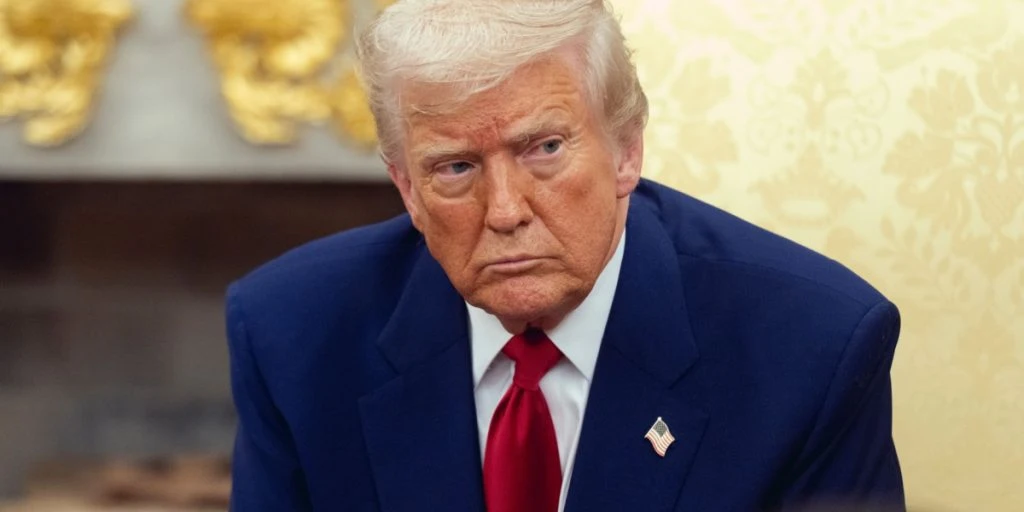
Donald Trump and Emmanuel Macron have clashed over violent demonstrations in France, exposing deep ideological divides over immigration and economic unrest.

The violent demonstrations that have gripped French cities over recent weeks have once again triggered sharp rhetorical exchanges between Donald Trump and French President Emmanuel Macron.
Speaking to Fox News following a campaign event in Texas, Trump dismissed local explanations for the civil unrest, linking the disturbances directly to European border and migration policies.
“It’s not a school problem. It’s an immigration problem,” Trump said, asserting that he has repeatedly shared this assessment with his French counterpart.
“I’ve been saying that to President Macron for a long time, who I like a lot, by the way. But I said, ‘You’re going to end up losing your country if you don’t do something.’


A decade of warnings
Trump stated that the issue had also surfaced during recent discussions with Charles Kushner, the U.S. ambassador to France, Fox News reports.
Characterizing the demonstrators as fundamentally hostile to the state, Trump called for decisive action from Paris:
“You have people that hate France. They hate the buildings, hate the art, they hate the people. And they’re in there, and you have to get them out.”
He noted that the current European situation is “very sad,” adding that his warnings about migration trends date back roughly ten years to his 2016 presidential campaign.
Paris pushes back: Rejects foreign interference
Officials in Paris offered a starkly different account of the crisis. While French Interior Minister Laurent Nuñez confirmed that authorities arrested nearly 1,000 individuals following recent weekend clashes, the Élysée Palace firmly rejected external commentary.
Macron characterized remarks from foreign politicians as opportunistic and detached from reality, calling outside critiques “unacceptable and even stupid.”
Without directly naming Trump, the French president placed the blame squarely on domestic political extremists, identifying them as “ultra-left groups whose aim is to bring down the Republic.”
French authorities remain on high security alert, deploying thousands of officers to deter further looting and property destruction, Fox News reports.
Meanwhile, the friction illustrates how domestic street protests in Europe quickly become a battleground for wider international ideological debates, with parallel demonstrations also testing authorities in capitals such as Rome and Tirana.
Grievances rooted in economic strain
Critics on the French political left offer an entirely different diagnosis of the turmoil.
Representatives from student unions and left-wing figures, including Jean-Luc Mélenchon of La France Insoumise, argue that framing the unrest strictly as an immigration or security crisis deliberately ignores why demonstrators first took to the streets.
According to student organizers and labor groups, the initial rallies were sparked by sharp increases in the cost of living, rising fuel prices, and chronic underfunding in public education, PBS News reports.
Opposition voices have also sharply criticized the state’s heavy police response, accusing both Macron and overseas commentators of branding legitimate social discontent as criminal violence to deflect from domestic austerity.
Meanwhile, the friction illustrates how domestic street protests quickly become a battleground for wider international ideological debates.
With parallel demonstrations and property damage also testing authorities in capitals such as Rome and Tirana, European leaders face growing public discontent that shows few signs of abating.



