
 Kenneth Glad
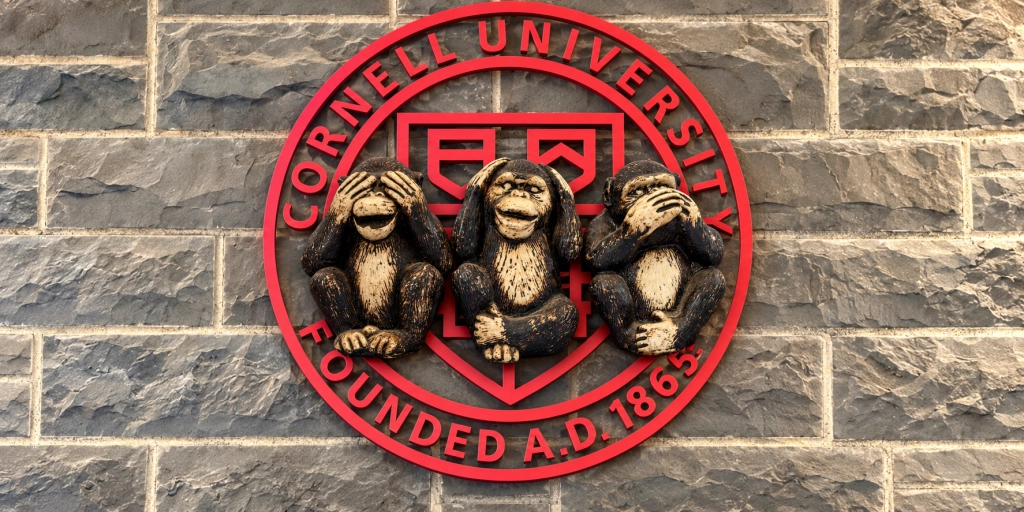
When individuals gather, unseen behavioral rules often override personal moral compasses. Recognizing these powerful mechanisms helps explain widespread passivity during critical human events.


The notorious Cornell University fraternity incident sparked massive outrage after a female student was allegedly assaulted by seven young men. While the primary perpetrators face severe scrutiny, a deeper systemic issue lies hidden within the broader campus social circle.
A digital messaging thread containing fifty-seven participants received highly disturbing updates, yet fifty bystanders remained completely silent. According to an in-depth analysis by Zetland, this widespread failure to intervene presents a fascinating psychological puzzle.
We must ask why dozens of young men saw crude messages about a vulnerable peer and chose absolute silence over decisive action. It is easy to label them as inherently evil, but human behavioral science offers a much more complex explanation.
Evolutionary survival drives our modern conformity
Our brains are ancient biological machines wired primarily for group cohesion and physical survival on the perilous open savanna. Henrik Høgh-Olesen, a professor of social and personality psychology at Aarhus University, explains that humans are fundamentally pack animals.


“Herd mentality is when you park your own morals and slipstream into what others do,” the professor notes. “A gazelle that stops to ponder why the surrounding herd is suddenly running will likely become a predator’s prey.”
This ingrained survival instinct keeps us safe from physical dangers, but it routinely causes catastrophic moral failures in modern social environments. We blindly trust that the collective majority must have a valid reason for acting, or not acting, in specific ambiguous situations.
Social pressure alters our perceived reality
Decades ago, according to Simply Psychology, pioneering psychologist Solomon Asch demonstrated exactly how desperate humans are to maintain their standing within a chosen social group. He asked experimental subjects to identify matching line lengths, while strategically placing paid actors in the room to purposely give incorrect answers.
Remarkably, a third of the genuine participants abandoned their own correct observations just to blend in with the erring majority. As Zetland discusses regarding the fraternity scandal, breaking a tight-knit group’s established crude jargon carries a massive perceived social risk.
Most individuals simply lack the internal fortitude required to disrupt the prevailing casual mood and risk ultimate exclusion from their esteemed brotherhood. They would much rather laugh along nervously or stay entirely silent than become the sole dissenting voice in a highly hostile room.
Large crowds severely dilute personal responsibility
The devastating mid-century murder of Kitty Genovese initially cemented the troubling idea that massive urban populations are dangerously apathetic. Though later historical investigations nuanced the exact factual details, the famous tragedy inspired John Darley and Bibb Latané to study the bystander effect scientifically, writes Simply Psychology.
Their clever experiments revealed that individuals hearing an epileptic seizure act decisively when completely alone, but freeze when part of a broader crowd. The ongoing contextual coverage by Zetland connects this phenomenon directly to massive digital chat forums, where accountability is practically nonexistent among networked peers.
When fifty people read a highly concerning digital message, everyone instantly assumes that somebody else will surely step up to handle the awkward situation. This psychological paralysis creates a devastating social chain reaction: We doubt our own accurate perception simply because nobody else is immediately raising an alarm.
Standing alone requires immense personal integrity
In the unforgiving and highly sanitized light of hindsight, almost everyone confidently claims they would instantly intervene to stop a horrifying group assault. We naturally like to imagine ourselves as fearless social resistance fighters, boldly stepping up to defend the weak against overwhelming evil forces.
However, the stark behavioral reality presented by Zetland suggests that genuine rebellion requires an unusually high degree of unwavering self-worth and profound self-awareness. Those exceptionally rare individuals who successfully disrupt collective apathy are consistently guided by an unbreakable internal compass that willfully ignores intense peer pressure.
Crucially, once a single brave person shatters the dominant illusion of conformity, the entire social dynamic shifts almost instantly in a positive direction. Embracing the intense discomfort and profound shame of our past cowardly moments is actually the absolute best way to build future moral courage.
Sources: Zetland, Simply Psychology, All That’s Interesting



