
 Kenneth Glad
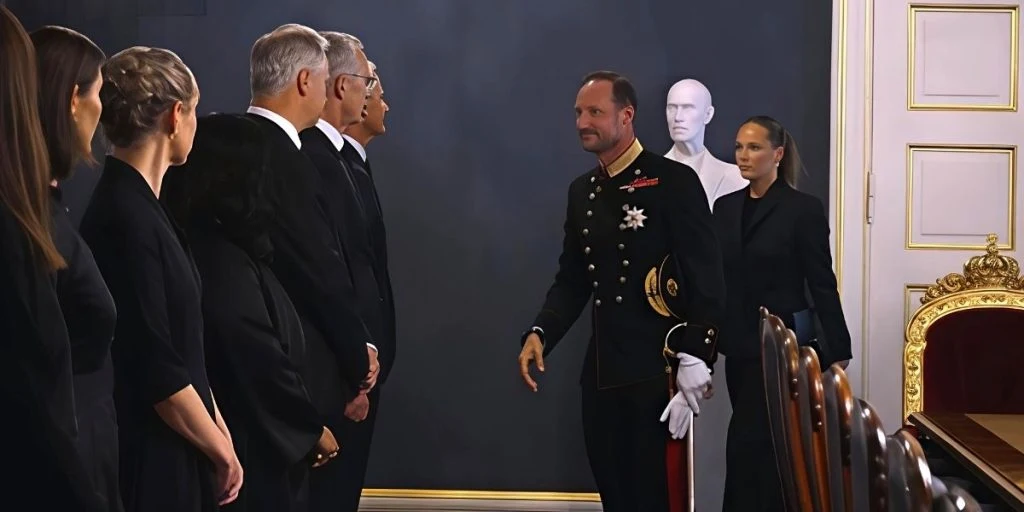
A royal succession usually brings a moment of quiet reflection, yet the weight of history rarely arrives without friction. Staying relevant while serving as a unifying symbol is a delicate balancing act for any modern throne.


Stepping into the role of head of state requires navigating both tradition and public perception. Following the death of King Harald V on August 28, 2026, King Haakon VIII formally took his oath before the Storting, marking the start of a new chapter for Norway.
Born in July 1973 as the second child of then Crown Prince Harald and Crown Princess Sonja, the young prince grew up attending a local public primary school. Though his path was largely set by Norway’s male-preference succession laws of the era, he struggled with his future obligations.
By January 1991, a late-night phone call changed everything. The passing of his grandfather made his father king and instantly elevated the 17-year-old student to crown prince, forcing decisions about his future that could no longer wait, writes DR.
Chosen path
Joining the armed forces was the expected route for a future monarch, but Haakon wrestled with deep moral questions regarding military service before eventually stepping up to fulfill his hereditary obligations.


Seeking a fresh perspective, he later crossed the Atlantic to study political science at UC Berkeley. In California, he embraced a surprisingly modest life, living anonymously in a shared student housing collective and frequenting local coffee shops.
According to DR, his time away proved transformative. He realized after completing his studies in California that he needed to actively choose and embrace his royal path rather than just passively inherit it.
Yet when he returned home, his personal life immediately ignited intense public debate across the nation. His romance with Mette-Marit Tjessem Høiby, a single mother with a background in the Oslo club scene, drew relentless media scrutiny and widespread skepticism.
Undeterred by the fierce public pushback, Haakon stood firmly by his partner and warmly welcomed her four-year-old son, Marius, into his life. The couple exchanged vows in Oslo Cathedral in August 2001, later expanding their family with the births of Princess Ingrid Alexandra and Prince Sverre Magnus.
Gathering storms
Maintaining unity became increasingly difficult for the household as intense scrutiny mounted around members of the extended family. In early 2026, Haakon’s wife Mette-Marit faced severe health struggles, eventually undergoing a complex lung transplant in June following a chronic pulmonary fibrosis diagnosis.
At the exact same time, her eldest son, Marius Borg Høiby, faced serious legal charges in a highly publicized court case. To make matters worse, shocking historical revelations surfaced regarding Mette-Marit’s past contacts with convicted sex offender Jeffrey Epstein.
Rather than hiding behind closed doors, Haakon stepped forward to face reporters directly. He offered steadfast support to his family while firmly defending the royal institution he was about to inherit.
Shifting support
The mounting series of scandals noticeably impacted how Norwegian citizens viewed their traditional head of state. Public backing for the monarchy stood at a soaring 81 percent back in 2017, but it plummeted to 64 percent by May 2026 as the controversies peak.
However, support bounced back to 72 percent shortly after King Harald passed away in August 2026, reports DR. The sudden rebound reflected a wave of national nostalgia and respect for the late monarch.
Now, King Haakon VIII must steer the crown into an uncertain future while relying on the fragile trust of his people. His ability to modernise the palace while keeping voters on his side will define his reign.
Source: DR



