
 Christine Drews Sieger
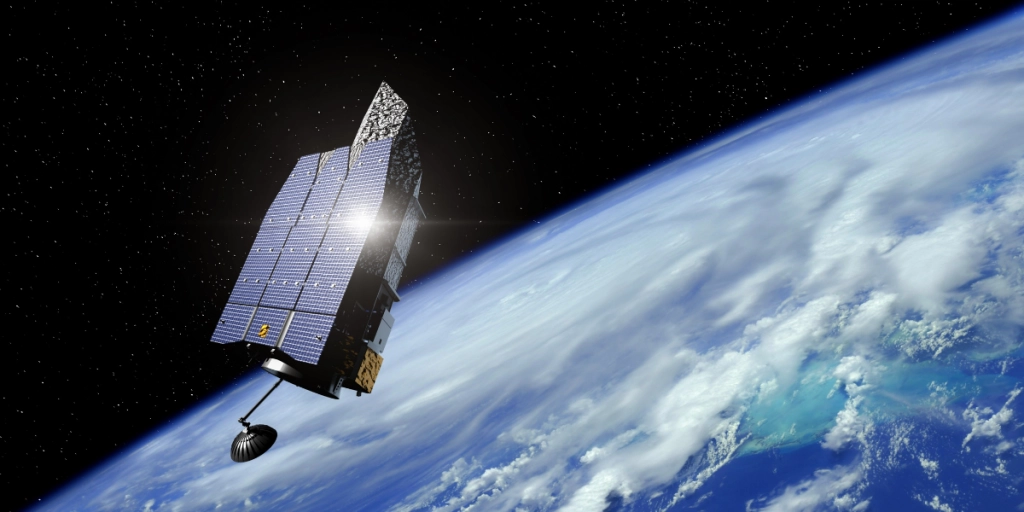
NASA has launched its next-generation Nancy Grace Roman Space Telescope to map billions of galaxies and study the mysteries of the universe.


A massive SpaceX Falcon Heavy rocket blasted off from NASA’s Kennedy Space Center in Florida at 7:26 a.m. ET on Sunday.
Tucked inside the payload fairing, NASA’s Nancy Grace Roman Space Telescope embarked on a $4.3 billion mission—nearly two decades in the making—to map the wide universe.
The vehicle broke through the sound barrier inside sixty seconds and pushed past Earth’s atmosphere, according to NBC News.
Twin side boosters detached cleanly, landing safely back on the coast. Meanwhile, the spacecraft began its journey toward a stable gravitational pocket roughly a million miles out, where it will operate alongside the James Webb Space Telescope.


Sweeping the sky
The observatory’s real strength lies in its vast field of view. While Hubble captured tight close-ups, Roman takes sweeping panoramic shots—covering a footprint 100 times larger per frame to map the sky at a thousand-fold pace.
Over its five-year survey, scientists expect Roman to scan little-explored regions of the Milky Way, uncover over 100,000 alien worlds, and catalog millions of stars.
Researchers hope these vast wide-field images will finally illuminate dark energy and dark matter.
NBC News reported that astrophysicist Neil deGrasse Tyson framed the stakes of this deep-space search:
“Some of our longest-standing mysteries in modern astrophysics are: What is the nature of dark matter and the nature of dark energy?” Tyson said. “We have ideas, but we don’t know what they are. This telescope is going to try to give us the best data available to address those questions.”
Pioneering legacy
The observatory honors Nancy Grace Roman, NASA’s pioneering first chief of astronomy, NBC News reports.
Known as the “mother of Hubble,” she spent decades advocating for space-based observatories before her death in 2018.
Beating its expected deadline by three-quarters of a year was a major triumph for the team, especially after years marked by public health disruptions and federal government halts.
A long journey ahead
According to NBC News, the successful launch marks only the beginning of Roman’s mission.
The telescope will spend more than three months traveling to its final destination at the L2 orbit before turning its instruments toward the cosmos.
Once fully operational, this flagship observatory stands ready to rewrite astronomical history.



