
 Kenneth Glad
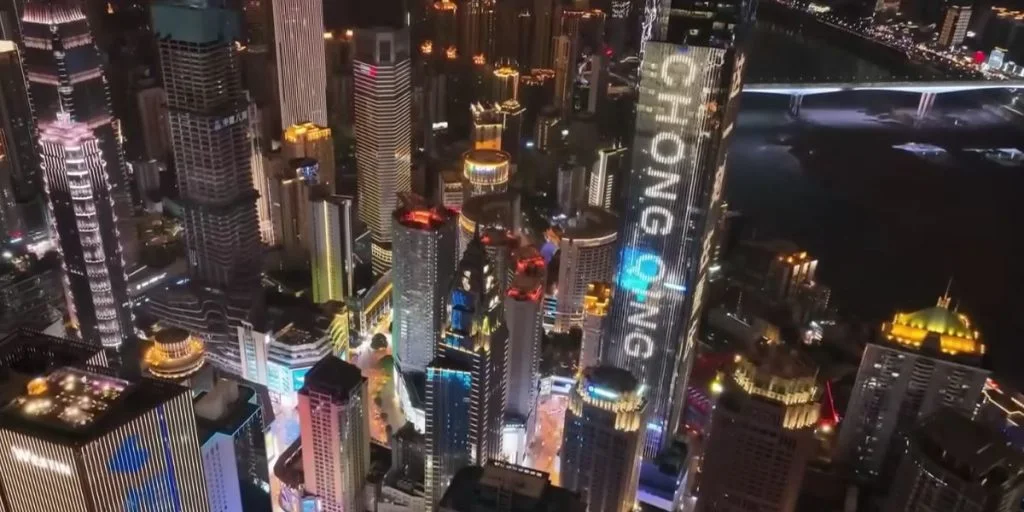
Travel trends usually follow golden beaches or historic ruins. Yet a new breed of global travelers is chasing something far weirder in urban jungles across the globe. They are hunting for surreal cityscapes that feel less like real life and more like video games.


Thousands of visitors gather daily on a crowded sidewalk in southwestern China, holding up their phones. They wait for a monorail train to slice through an eighteen-story apartment building. When it speeds past, tourists open their mouths wide to film the popular optical illusion for social media.
“Nowhere else can you experience the same thing,” said Jun, a tourist from South Korea, as reported by Norwegian broadcaster NRK.
The mega-city of Chongqing has rapidly become China’s influencer capital. Neon lights, cliffside skyscrapers, and sprawling river cables give the metropolis a gritty, science-fiction feel. It draws young travelers who want to step straight inside a dystopian video game.
Hanging by a thread
To capture the ultimate shot, creators pay to hang off high-rise rooftops in safety harnesses. Chinese photographer Zhang told NRK that his platform is a factory for internet fame: “We produce celebrities on a large scale.”


Australian tourist Isobel Scherini strapped into a harness above the abyss for her video: “I went to Chongqing because the lights are beautiful and I like the cyberpunk vibe. I felt like I had to go here right away.”
For local authorities, this viral fascination brings huge economic wins. NRK reported that domestic tourist numbers rose from 7.5 million to 9 million between 2024 and 2026, with 4 million foreign visitors expected this year.
Soft power success
The surge aligns neatly with broader political goals. Originally developed as a state project to boost growth in China’s interior, the city now thrives on global attention. Holidaymaker Kong noted that the trend fits President Xi Jinping’s drive to spread Chinese culture globally.
Officials do not fear that the dystopian sci-fi themes will harm their image. Instead, authorities encourage young tourists to film content and share positive impressions worldwide.
Old and new collide on every corner. Rural grandmothers work as shoeshiners beneath neon towers while influencers dangle overhead. Shoeshiner Dun told the broadcaster that working the streets was “better than looking after grandchildren.”
By letting tourists play in its sci-fi landscape, China is winning an unexpected soft-power victory.
Source: NRK



