
 Jens Asbjørn Bøgen

The latest victim was a security guard on holiday.

In Russia’s vast forests, a quiet shortage has grown dangerous as another winter closes in.
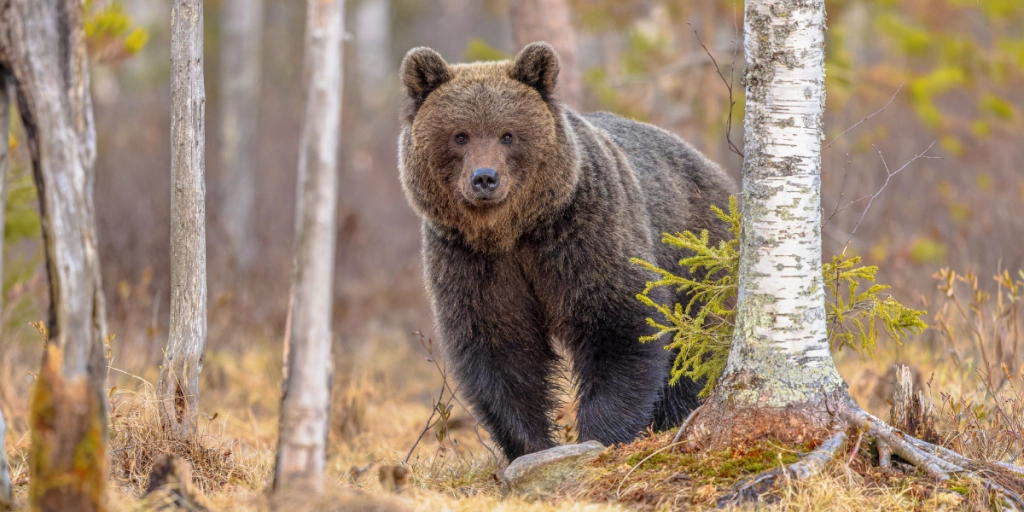
Hunters are disappearing from the woods faster than the forests can afford, and the country’s bear population, long held in check by rifles, is pressing deeper into towns, farms and roadsides.
The toll is now 35 people killed by bears across Russia since the start of spring, up from 22 as of early October, according to reporting from Russian state agency RIA Novosti that was carried onto international wires on Wednesday.
The latest victim was a security guard at a holiday camp in the far-eastern Kamchatka region.


The Kremlin-backed head of the Buryatia region, Alexei Tsydenov, cited Russia’s war in Ukraine as one key factor behind the surge.
Speaking on a televised call-in event on November 8, Tsydenov said the drop in hunters is the reason bears are no longer being shot in the numbers needed.
“We understand that hunters left to defend the motherland. And now the number of hunters has decreased, bears are not being culled,” Tsydenov said, according to news.ru.
A population that has outgrown its handlers
According to Russia’s Natural Resources Ministry, the country’s brown bear population has more than doubled over the last three decades to about 308,000 animals, driven in part by shorter, milder winters.
Yet the country is using only around 27% of its authorized culling quota, zoologist Mikhail Krechmar told the state news agency TASS.
Tsydenov, whose region bordering Mongolia has seen at least two fatal bear attacks this year, also pointed to a poor berry and nut harvest, forest fires, and a collapse in Chinese demand for bear bile and paws as reasons hungry animals are pushing into populated areas.
He said Buryatia alone now holds more than 6,000 bears.
Culling cannot keep up
Buryatia itself has shot 509 problem bears since the start of 2026, Tsydenov told residents during the call-in event, and warned that the coming winter and spring would be tense. The regional government has raised the bounty for culling a dangerous bear to 15,000 rubles to speed up response times.
The federal government announced in September it was drafting measures to make culling easier, but the paperwork alone will not refill the ranks.
Russia’s 2022 mobilization and ongoing contract recruitment for the Ukraine front have drawn heavily from the same rural male population that supplied licensed hunters in regions like Buryatia and across the Far East.
Most bears in Buryatia have already entered hibernation, Tsydenov said, but he warned that some will not den up at all and others may wake early, a bear that stays active through the winter, known in Russian as a “shatun,” is, in his words, the most dangerous encounter of all.
He urged residents not to walk in the forest alone, even in winter.



